
Gabon’s president oligui nguema honored by cames, signaling academic ambition
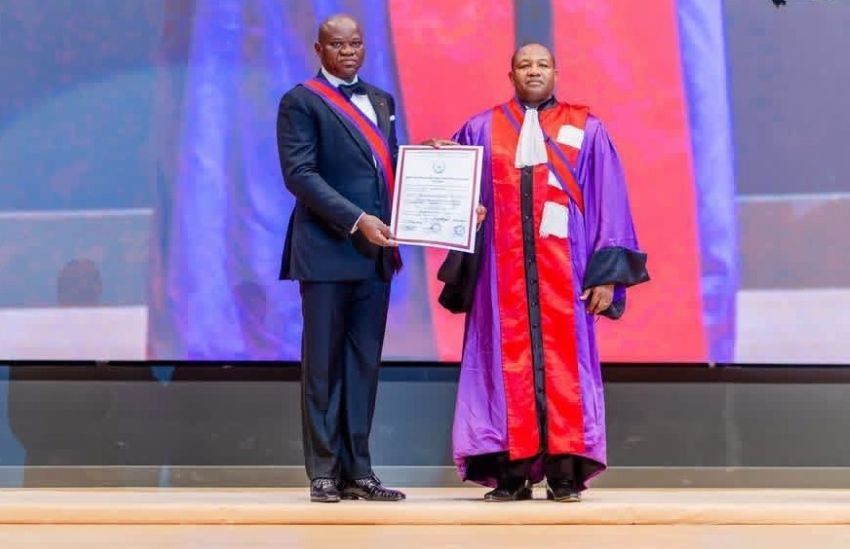
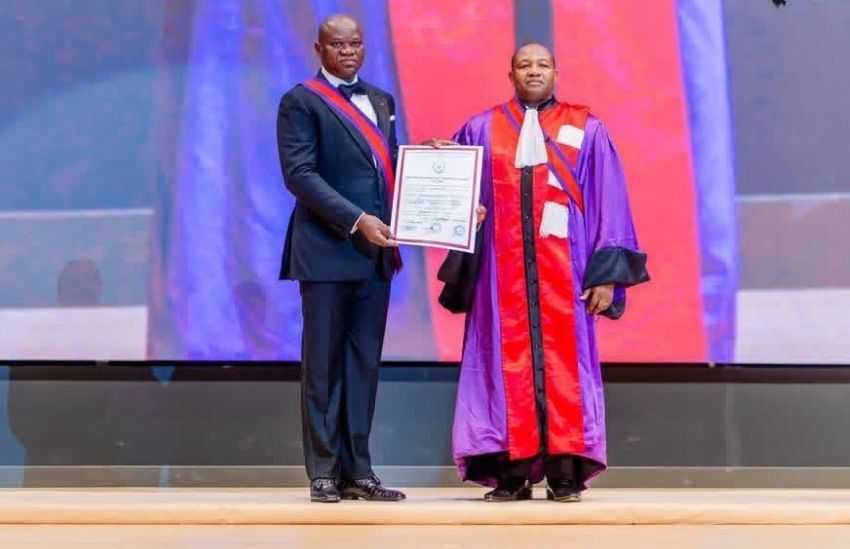
Libreville, Tuesday, June 23, 2026 – The recent distinction bestowed upon Brice Clotaire Oligui Nguema transcends mere ceremonial protocol. His elevation to the dignity of Grand-Croix of the International Order of Academic Palms by the African and Malagasy Council for Higher Education (CAMES) represents far more than an honorary decoration.
This significant recognition, conferred on Tuesday in Libreville during the 43rd session of CAMES, arrives as Gabon actively seeks to redefine its standing within African intellectual spheres and leverage higher education as a pivotal driver of national sovereignty.
In an era where economic competition across the continent is increasingly waged in research laboratories and universities, rather than solely through natural resources, this event underscores a broader national aspiration. Gabon aims to position itself as a central force in the ongoing transformation of African academia.
Knowledge at the heart of Gabon’s national vision
Addressing an assembly of university leaders, researchers, and delegates from various African nations, the head of state chose to dedicate his prestigious award to those he identifies as the true architects of the future. His discourse prominently featured teachers, researchers, and students.
“I recognize that these noble professions are callings, fraught with challenges and difficulties. I hold the profound conviction that society and the state must better acknowledge and support them,” affirmed Brice Clotaire Oligui Nguema.
This message resonates amidst Gabon’s growing investments in university infrastructure, advanced training, and scientific research. Underlying this strategic direction is a continental consensus: the prosperity of African nations will increasingly hinge on their capacity to generate knowledge, foster innovation, and cultivate skilled human capital, rather than relying solely on raw materials.
The Gabonese President encapsulated this forward-looking perspective with a statement that reverberates far beyond national borders: “There is no national destiny without robust and responsible higher education and research.”
This declaration signifies a clear departure from development models historically centered on natural resource exploitation. It firmly places education and science at the forefront of strategic national priorities.
CAMES confronts its enduring challenges
Established in 1968, the African and Malagasy Council for Higher Education stands as one of the continent’s most vital institutions for university cooperation. Its nineteen member states entrust it with a crucial role in evaluating academic staff, harmonizing degree qualifications, and championing scientific research.
For Professor Charles Edgar Mombo, the current President of the CAMES Council of Ministers, the stakes extend well beyond the academic realm.
“Beyond its honorary nature, this presidency serves as a strategic lever to guide the institution’s key priorities and enhance the influence of the presiding country within the African academic community,” he emphasized.
Under Gabon’s leadership, several major priorities are set to be advanced. These include enhancing student and teacher mobility, ensuring mutual recognition of degrees, modernizing curricula, adapting training programs to technological shifts, and improving graduate employability. These initiatives represent some of the most anticipated undertakings.
The institution also faces an imperative demand: to bolster the international visibility of African research in a global academic landscape largely dominated by prominent American, European, and Asian centers.
Libreville aspires to be an African knowledge hub
Gabon’s ambitions are not confined to the administrative management of CAMES. Libreville now aims to host the organization’s forthcoming Summit of Heads of State and Government.
Such a high-level gathering would send a powerful political message. It would cement Gabon’s resurgence as an influential player in major continental discussions and provide an exceptional platform to promote its development strategy, which is firmly anchored in human capital.
This vision unfolds against a backdrop of Africa experiencing the world’s fastest-growing student population. By 2050, hundreds of millions of young Africans are projected to enter higher education. Their training will directly determine the continent’s economic competitiveness.
It is precisely within this critical battle for knowledge that Gabon is now strategically positioning itself. The honor bestowed upon Brice Clotaire Oligui Nguema thus signifies the recognition of a political direction that places universities, research, and innovation at the core of national development.
More than a personal accolade, this Grand-Croix from CAMES consecrates a central tenet in contemporary African strategies. The 21st century will not be defined solely by infrastructure or raw materials; it will be the century of knowledge. And Gabon is determined to fully embrace its role in this historic transformation.