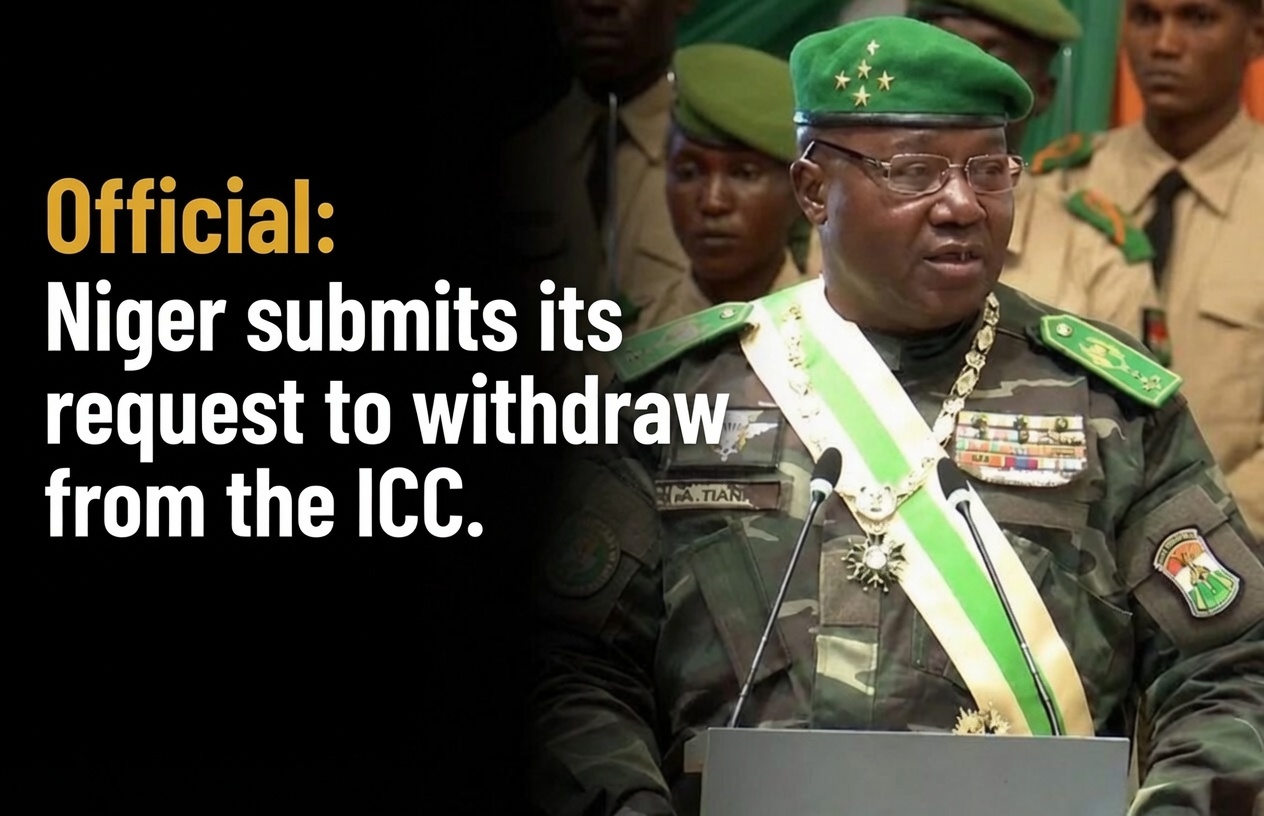

The authorities in Niger have formally launched the procedure to exit the International Criminal Court (ICC). This strategic move aligns with the broader policy of diplomatic and institutional decoupling pursued by the military administration since assuming leadership in July 2023. By taking this step, Niamey seeks to assert its national sovereignty while challenging the operational integrity of an institution frequently accused of bias across the Africa continent.
Concerns over judicial impartiality
A primary grievance cited by the Niger government involves the ICC’s historical focus on African nations. Since the court’s inception in 2002, a disproportionate number of investigations and prosecutions have targeted individuals from the continent. This perceived imbalance has fueled long-standing allegations of “selective justice,” leading several regional leaders to question the court’s objectivity.
A shift in geopolitical alliances
This decision is also a reflection of Niger’s evolving geopolitical landscape. Having distanced itself from various Western partners, the current administration is prioritizing deeper integration within the Alliance of Sahel States (AES), alongside Mali and Burkina Faso. These three nations have increasingly collaborated on initiatives designed to bolster their political and security independence.
The move to leave the ICC is part of a series of actions intended to diminish the influence of international bodies that the government views as contrary to national interests. While supporters of the transition hail the move as a necessary affirmation of independence, critics caution that distancing the country from international legal frameworks could undermine the fight against impunity and limit legal recourse for victims of serious crimes.
Legal framework and implications
The withdrawal process is not instantaneous. Under the provisions of the Rome Statute, the treaty that established the International Criminal Court, the exit only becomes official one year after formal notification is delivered to the United Nations. Furthermore, any investigations already initiated prior to the effective withdrawal date remain within the court’s jurisdiction.
By opting to depart from the ICC, Niger is positioning itself at the center of a continental debate regarding Africa’s role in global institutions and the complex balance between state sovereignty and international criminal law.