General Olenga’s sanctions relief sparks debate over DRC’s sovereignty and next steps
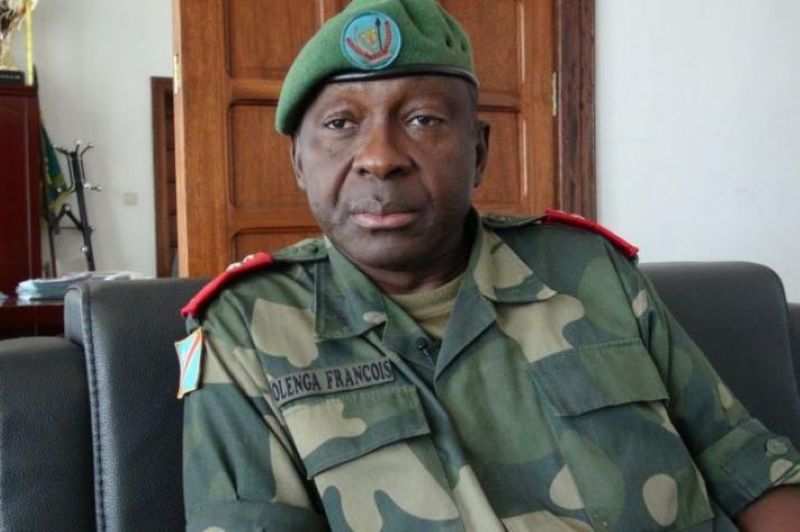
The removal of General François Olenga from the U.S. sanctions list has triggered a wave of reactions across the Democratic Republic of Congo, with legal experts, political observers and civil society groups weighing in on what the decision means for the country’s fight against impunity. While some hail it as a diplomatic breakthrough, others question whether it signals a broader shift in Washington’s approach to Kinshasa — and whether the DRC itself should now take greater responsibility for punishing international crimes committed on its soil.
A long-awaited notification from Washington
Retired four-star General François Olenga is no longer barred from doing business with American citizens or entities. His lawyer, Aimé Kilolo Musamba, confirmed that the U.S. Treasury Department officially notified him of the Office of Foreign Assets Control’s decision to remove both the general and his Safari Club from the American sanctions list. The announcement, dated September 23, was made public two days later.
According to Kilolo, the move brings an end to more than nine years of legal work, lobbying and repeated trips to Washington to argue his client’s case before U.S. institutions. He said he had always maintained that the evidence in the file did not justify keeping the sanctions in place.
A lawyer’s broader message for Kinshasa
Beyond the immediate relief for his client, Kilolo used the occasion to issue a pointed message to Congolese authorities. In his view, the DRC can no longer afford to remain passive on international sanctions, relying almost exclusively on measures adopted by the United States or the European Union.
He argued that the country must develop its own national legal framework allowing its institutions to impose targeted sanctions — in line with the rule of law and the rights of the defense — against individuals and entities involved in international crimes committed on Congolese territory.
“Sovereignty also means a state’s ability to implement the legal instruments needed to protect its population and its fundamental interests,” he said, speaking from Brussels. “Law has no borders when a defense is mounted with competence, persistence and determination. But international justice should not be a responsibility that Congo abandons to others.”
What triggered the sanctions in the first place
General Olenga was placed on Washington’s financial blacklist in June 2017, at a time when he headed the close protection detail of then-President Joseph Kabila. The U.S. Treasury accused him of obstructing the democratic process amid the political crisis that followed Kabila’s decision to remain in power after his mandate expired in December 2016.
At the time, American authorities alleged that under Olenga’s command, the Republican Guard had harassed political opponents, carried out arbitrary arrests and executions, and hindered the work of United Nations observers. The sanctions froze any assets he held in the United States and barred him from engaging in business dealings with American entities or individuals. His prominent tourist complex, Safari Beach, located in N’sele, was also hit by the measures.
Reactions and the road ahead
The lifting of the sanctions has reignited a broader conversation in the DRC about the country’s dependence on foreign powers to deliver justice. Analysts point out that while the decision removes a significant burden from Olenga and his business interests, it also raises uncomfortable questions about how Kinshasa intends to address grave crimes committed in the east of the country, where armed violence continues to displace thousands.
For now, the general can travel to the United States and resume commercial ties with American partners. But the debate his case has sparked — over sovereignty, legal accountability and the role of African lawyers on the international stage — is unlikely to fade anytime soon.