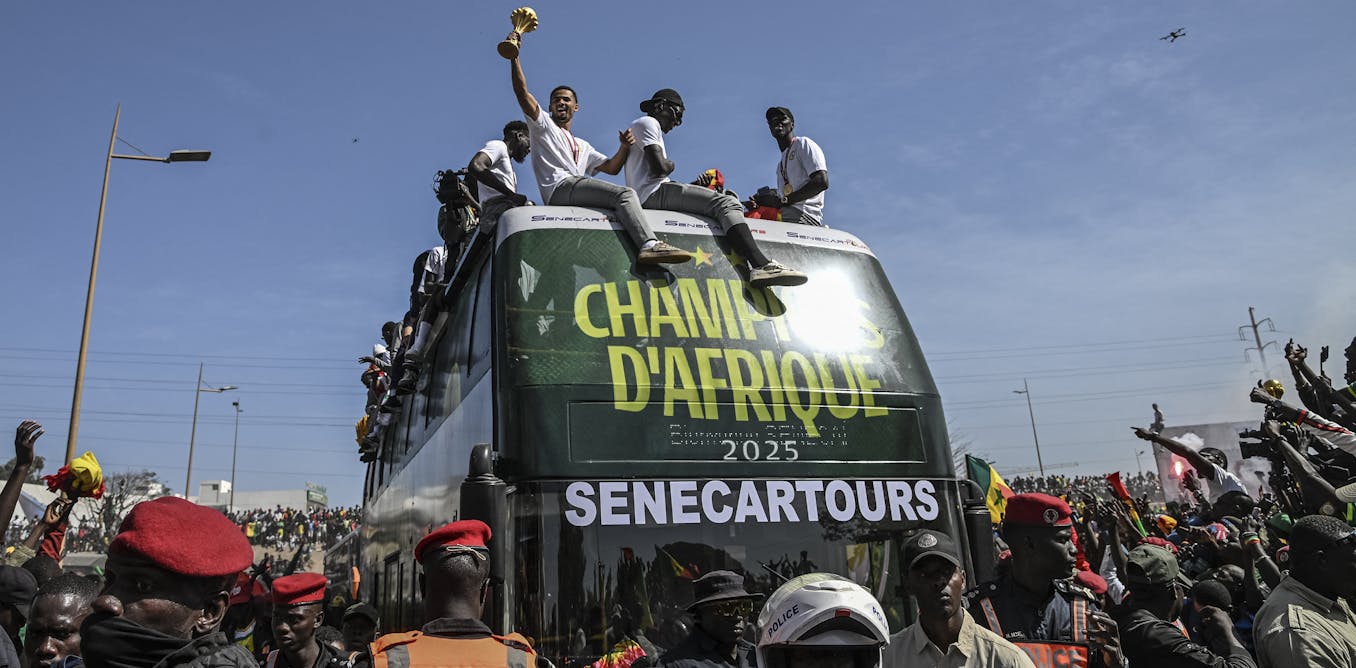

Two months following the conclusion of the CAN 2025 final, which ended in a 1-0 victory on the pitch, the Confederation of African Football (CAF) Appeal Jury has ruled to overturn the result. Senegal has been handed a 3-0 forfeit defeat in favor of Morocco. The justification provided was the Senegalese team’s decision to leave the field for approximately ten minutes during the match.
This CAF ruling, based on articles 82 and 84 of the tournament regulations, appears to clash with the referee’s original choice to resume play and complete the game. How can a result earned through physical play be reversed by a legal technicality? What are the principles of sports law at play here, and what happens next? In an analysis shared with the media, sports law expert Abdoulaye Sakho explores these complex questions.
What is the legal basis for this decision?
The technical grounds for the CAF Appeal Jury’s verdict are found in Chapter 35 of the CAN regulations, which addresses team withdrawals. Specifically, the jury cited Article 82 and Article 84.
Consequently, the CAF Appeal Jury determined that,
under Article 84 of the Africa Cup of Nations (CAN) Regulations, the Senegal national team is declared to have forfeited the TotalEnergies CAF Africa Cup of Nations Morocco 2025 final, with the official result recorded as a 3-0 win for the Royal Moroccan Football Federation (FRMF).
For those following Sahel news English, the legal terminology is the crux of the matter. While many observers described the event as a temporary “interruption,” the jury classified it as a “withdrawal” as defined by the statutes. In sports law, as in medicine, the specific classification of an act dictates the consequences. A misdiagnosis of the legal situation can lead to an entirely different outcome than what was witnessed on the grass.
Why did CAF ignore the referee’s decision to finish the match?
While the exact internal reasoning of the Appeal Jury remains private, it is clear they exercised their sovereign authority as an independent body. They chose to overlook a vital fact: the match actually reached its natural conclusion. In the realm of Sahel current affairs, this decision has sparked intense debate regarding the hierarchy of officials.
The referee in charge did not declare the match abandoned. When the Senegal players momentarily left, he opted for a temporary pause rather than a permanent stoppage. This distinction is vital because Law 5 of the International Football Association Board (IFAB) grants referees the discretionary power to,
“stop, suspend, or abandon the match for any infringements of the Laws or because of outside interference.”
There is no specific timeframe—be it 10 or 20 minutes—that automatically triggers an abandonment. The referee is the ultimate authority on the field. Under Law 5, the referee’s decisions regarding match facts, including the final score, are final and must be respected by all parties. By overturning this, CAF has challenged a fundamental principle of football governance.
Read more: CAN 2025: How lived reality contradicts legal truth
Is there a precedent for such a reversal in a major final?
According to reporting seen by Sahel Reporter, a reversal of this magnitude in a continental final is virtually unprecedented. The world of sports generally avoids altering results achieved on the field unless extreme circumstances exist.
One rare example was the South Africa vs Senegal match during the 2018 World Cup qualifiers, which was replayed after it was proven the referee had been influenced by external betting interests. However, that involved corruption, not a procedural withdrawal.
Another notable case in African football history was the 2019 Champions League final between Wydad Casablanca and Espérance de Tunis. In that instance, the Moroccan side refused to continue playing after a VAR failure. Crucially, in that case, the match never resumed. In the CAN 2025 final, Senegal returned to the pitch and played until the final whistle, creating a very different legal scenario than the 2019 incident.
Can Senegal fight this ruling?
Senegal has already initiated the appeal process. When a final decision is reached by a body like the CAF Appeal Jury, the case can be taken to the Court of Arbitration for Sport (TAS). This requires a formal “statement of appeal” and a filing fee of 1,000 Swiss francs.
While Mali Niger Burkina reporting often highlights regional solidarity, this case will be decided in a courtroom in Switzerland. The Senegalese Football Federation (FSF) has reportedly requested a stay of execution. If granted, this would allow Senegal to retain the trophy and the title of champions until TAS delivers a final verdict, which could take several months.
This situation serves as a landmark case for sports law, touching on the powers of referees, the interpretation of tournament rules, and the concept of “estoppel” in legal proceedings. On the ground Sahel observers and football fans across the continent are now waiting to see if the “truth of the field” or the “truth of the text” will ultimately prevail.



