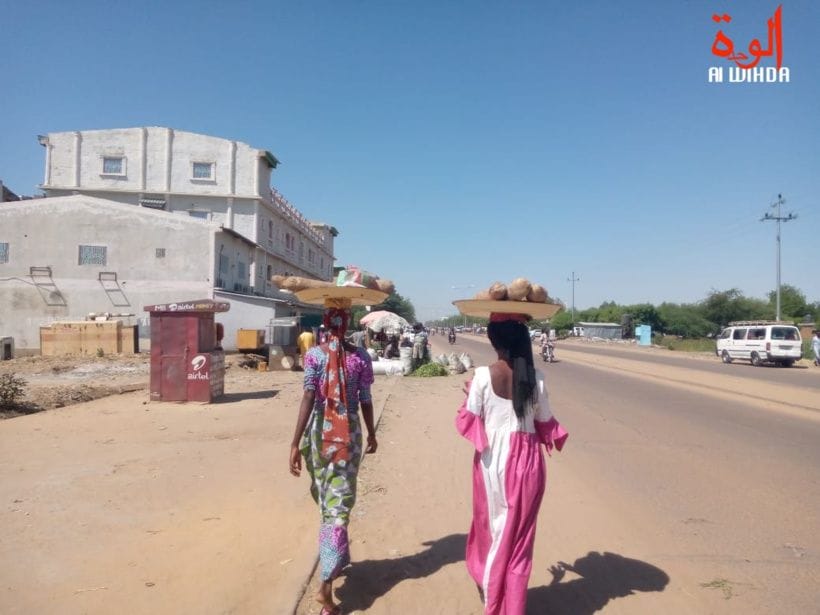

Street vendors in Chad: the silent struggle of children in a changing economy
In the bustling streets of Chad’s major cities, a striking transformation is underway. Women laden with baskets of fresh fruit, sizzling snacks, or vibrant fabrics weave through traffic and crowds, their voices cutting through the urban hum. This is not just commerce—it is a quiet revolution in how women provide for their families.
A new rhythm in N’Djamena, Moundou, and Abéché
From dawn’s first light, the sidewalks become stages for resilience. Aïcha, in her early thirties, balances a tray of roasted peanuts while her youngest child clings to her back. “It’s hard,” she admits, “but now I make my own choices.” Nearby, Fanta kneels beside a makeshift stove, flipping golden doughnuts as her five-year-old son plays with a scrap of plastic in the dust. These women, once confined to household boundaries, now command the pavements with determination. They haggle, carry, and endure—each step a testament to newfound independence.
The unseen cost: childhood left behind
Yet for every story of empowerment, there is a shadow. Children trail their mothers through smoke-filled alleys, their lungs filled with the acrid scent of frying oil. Some carry heavy loads, others beg for shade or a few coins. In Abéché, a seven-year-old boy was seen hauling a bucket of water, chanting “one franc!” while his mother negotiated over millet. Schoolbooks gather dust in distant homes. Is this the hidden price of women’s liberation?
The streets of Chad tell two stories at once. One of mothers reclaiming agency. Another of children losing their childhoods. As the sun sets on another day of hustle, the question lingers: what future awaits the youngest in this relentless cycle of survival?