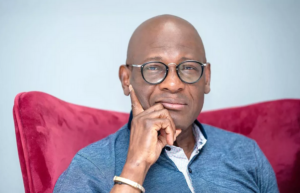

During a recent Space Live X session, hosted by journalist Stanis Bujakera Tshiamala, prominent researcher Jason Stearns presented a compelling argument for a political compromise with the M23 group. He firmly dismissed the notion that sufficient international pressure could lead to a straightforward withdrawal of Rwanda from the conflict.
Addressing concerns about perceived international pressure being disproportionately aimed at Kigali rather than Kinshasa, Stearns acknowledged that the ideal resolution might involve pressuring Rwanda into a complete withdrawal. He referenced the 2013 precedent, where a combination of diplomatic pressure on Kigali and military action against the M23 resulted in the group’s military defeat. However, he noted that this victory was not followed by a coherent peace process.
Stearns emphasized that the 2013 scenario is no longer viable. “We are not at a stage where we can anticipate a simple retreat from Rwanda,” he stated, indicating that even diplomats in Washington are clear on this point: “We are not currently applying pressure on Rwanda with the expectation that Rwanda will simply withdraw.” His conclusion was unequivocal: a diplomatic political solution is essential, not a military one.
Consequently, Jason Stearns called for pressure to also be exerted on Kinshasa to achieve a compromise. He was careful to clarify that such a compromise should not, in his view, jeopardize the Democratic Republic of Congo’s integrity or sovereignty.
Regarding the specific terms of this compromise, the researcher pointed to “various peace processes that existed previously.” He explicitly ruled out the integration of individuals guilty of crimes against humanity or war crimes. For other M23 cadres, however, he suggested that “a way must be found to address the grievances put forward.”
Stearns highlighted a crucial aspect: “the core of the problem is primarily to be able to offer something to the M23 leadership.” He reiterated his own earlier stance, shared by colleagues, in condemning the M23 movement as a “Rwandan aggression.” Yet, he stressed a pragmatic military assessment: the M23 currently controls territory equivalent to Belgium and has reportedly suffered “hundreds, probably thousands of soldiers” in eastern RDC. In this complex environment, he concluded, “the military and diplomatic pressure is not sufficient to impose a defeat.”