
Jnim’s strategic shift reshapes Mali’s conflict landscape
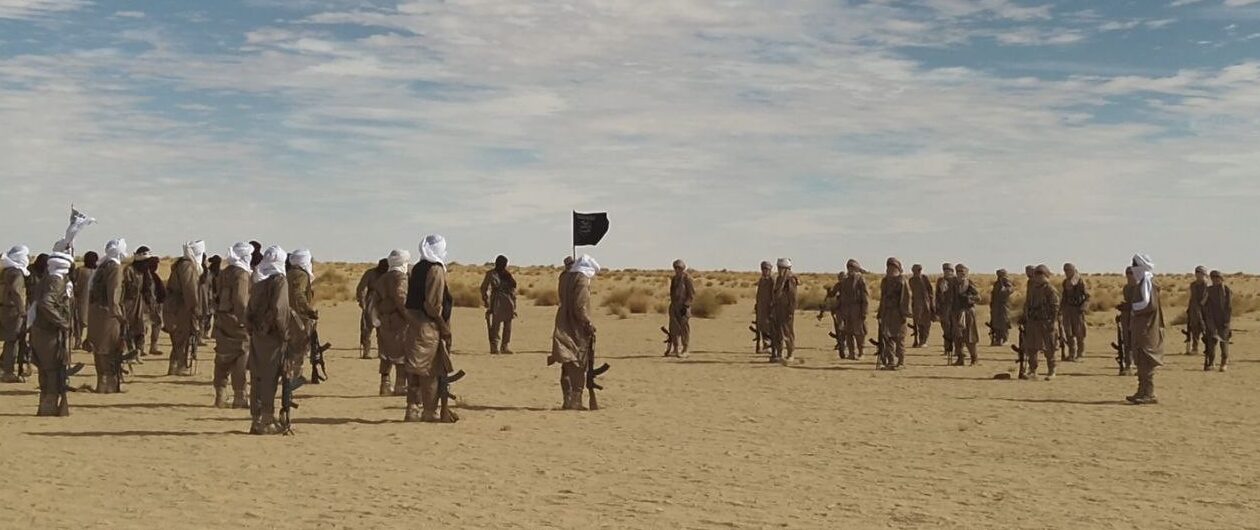
The war in Mali is no longer confined to sporadic clashes in the north and central regions. For years, these areas have endured a relentless cycle of violence and civilian exhaustion. Recent offensives by the Group for the Support of Islam and Muslims (JNIM) and the Azawad Liberation Front (FLA) against military outposts, supply convoys, and critical road infrastructure signal a deliberate shift in strategy that demands closer examination.
From territorial conquest to systemic exhaustion
The primary objective of these armed factions is no longer to seize towns or execute high-profile operations. Instead, they aim to render vast swaths of Mali virtually ungovernable, pushing the military junta into ever-shrinking enclaves around Bamako. This evolution is significant because it redefines the conflict’s core: it is no longer about controlling territory per se, but about disrupting the very fabric of state authority—roads, supply chains, administrative mobility, and public services.
Sabotaging state presence through mobility warfare
Over recent months, roadside attacks and ambushes on military convoys have surged across Mali. In some regions, civil servants can no longer travel between towns without armed escorts, a development that cripples both military operations and the state’s ability to function beyond urban hubs. The JNIM has grasped a crucial insight: in a country already weakened by years of political, economic, and security crises, attrition can yield greater political dividends than direct confrontation.
This strategy offers multiple advantages. It disperses counterinsurgency efforts, inflates security budgets, and sustains a pervasive climate of fear. More critically, it erodes societal resilience—military fatigue, economic stagnation, and social disillusionment become the insurgents’ most potent tools. In rural areas, the crisis has evolved from one of armed presence to one of absence: the gradual disappearance of stable governance, public services, and administrative continuity.
The failure of militarized solutions
Mali’s ruling military junta has staked its legitimacy on restoring security, particularly after successive coups and the withdrawal of French forces. The subsequent pivot toward Russian military cooperation was framed as a assertion of sovereignty. Yet sovereignty cannot be measured solely by the capacity for armed operations—it must also encompass territorial integrity, economic continuity, and administrative presence.
Here lies Mali’s paradox: escalating military campaigns do not necessarily translate into lasting stability. In many rural zones, intensified security measures coexist with deepening fragmentation. The prevailing security doctrine relies heavily on offensive operations, airstrikes, and troop deployments but struggles to rebuild durable administrative structures—schools, healthcare, local justice, infrastructure, or economic circulation.
When public services collapse, communities turn to parallel systems for survival, arbitration, or protection. This vacuum creates its own momentum: the more the state withdraws, the more it cedes influence to non-state actors who fill the void with their own rules and hierarchies.
A regional crisis with no regional solution
The Malian conflict is no longer contained within Mali’s borders. Across the Sahel, armed groups, local alliances, and clandestine economic networks are rapidly recomposing. The porous borders between Mali, Burkina Faso, and Niger facilitate the mobility of insurgent factions, yet the regional response remains fragmented. Despite forming a joint political-military alliance, these nations have proven unable to coordinate effectively, as demonstrated by the recent JNIM-FLA offensive that exposed Mali’s isolation—its only lifeline being the mercenaries of Africa Corps.
This asymmetry favors groups that can adapt quickly. The JNIM thrives on its territorial flexibility, its ability to embed itself in local communities, and its integration into informal economic networks. It rarely seeks permanent control over the territories it traverses, but it consistently imposes a heavy security cost on the state—one that drains resources and undermines governance.
The Sahel conflict is increasingly a war of endurance. Insurgent groups are less interested in administering territory than in preventing the state from functioning normally. Their goal is not to replace the state outright but to make its existence so precarious that it loses all credibility.
Beyond counterterrorism: the roots of Mali’s crisis
A narrow counterterrorism lens obscures the deeper dimensions of the Sahel crisis. Reducing the conflict to a simple military confrontation ignores its social, economic, and territorial dimensions. In many rural areas, state abandonment, land disputes, communal rivalries, and structural poverty have created enduring vulnerabilities. Armed jihadist groups do not always create these fractures—they exploit them.
The central challenge is political: how can the Malian state rebuild legitimacy in regions where its presence is intermittent, primarily manifesting as military patrols? The future of Mali will not be decided by a single decisive battle, but by the capacity—or failure—to restore a stable public presence beyond security operations.
Because wars of attrition do more than destroy military positions—they erode roads, economies, administrations, social bonds, and ultimately the very idea of a governed territory.