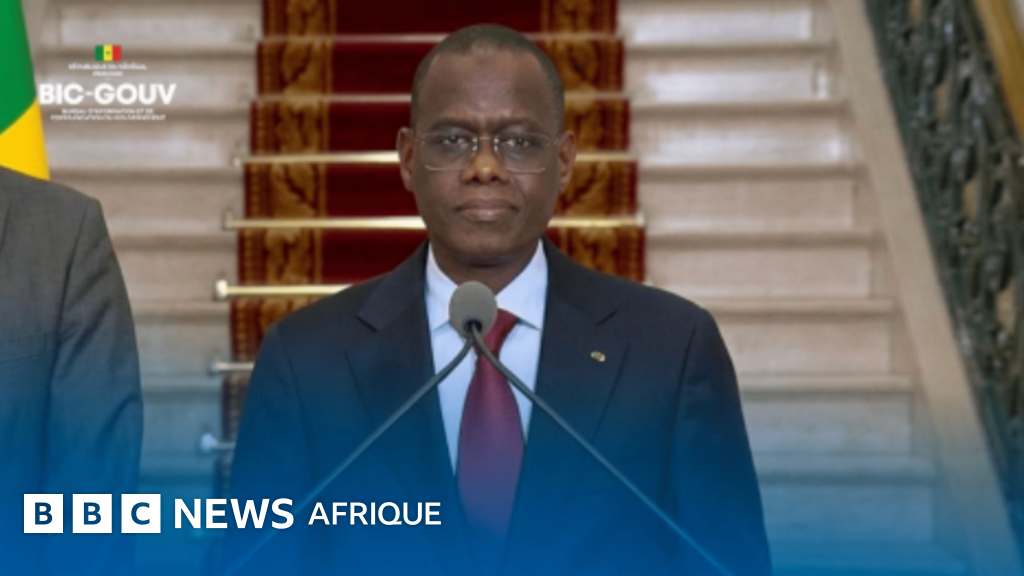

The newly unveiled government roster in Senegal, announced by President Bassirou Diomaye Faye, arrives at a critical juncture for the nation. Ten days after dismissing former Prime Minister Ousmane Sonko, the 30-member team—led by Prime Minister Ahmadou Al Amine Mohamed Lo—faces the daunting task of steering a country grappling with unsustainable debt and steadfast resistance to restructuring.
The composition includes 26 full ministers and four deputy ministers, with just four women holding positions, none of which are in sovereignty-related ministries. The absence of the PASTEF party, which publicly announced its refusal to participate due to deep disagreements with the administration, further complicates the political landscape.
This deliberate exclusion of PASTEF—whose prominent figures like Birame Souley Diop (Energy), Yacine Fall (Justice), and Amadou Ba (Culture) have stepped down—leaves the government navigating a fragile parliamentary majority. Yet, some former PASTEF members remain, including Balla Moussa Fofana (Urban Planning), Yancoba Diémé (Defense), and Ibrahima Sy (Health), alongside Cheikh Diba, who now oversees Finance, Economy, and Planning.
New recruits from PASTEF and allies of Sonko, such as Cheikh Tidiane Dieye (Sanitation) and Mamadou Lamine Dianté (Civil Service), have joined the ranks, alongside figures like El Hadj Abdourahmane Diouf (Energy and Petroleum) from the Coalition Diomaye. Legal expert Me Moussa Sarr takes the helm at the Justice Ministry.
Parliamentary opposition complicates governance
The government’s formation coincides with Ousmane Sonko’s election as Speaker of the National Assembly, where PASTEF holds an absolute majority. This shift introduces a rare cohabitation dynamic, with Sonko insisting on full parliamentary oversight. The political rupture stems from opposing visions on debt resolution, accountability, and justice for victims of the 2021–2024 unrest, leaving the administration with limited maneuverability.
Political science professor Moussa Diaw describes this as an “unprecedented situation,” highlighting the need for restraint to avoid institutional gridlock. Without a working majority, Prime Minister Lo must prioritize consensus-building to advance policies, while Sonko’s parliamentary bloc could block initiatives at any time.
Persistent gender gap in ministerial appointments
The government’s gender imbalance has drawn criticism. With only four women among 30 ministers—three holding full portfolios and one as a deputy—activists argue this fails to reflect Senegal’s demographic realities or tap into the expertise of female leaders. Dr. Coumba Mar Gadio of the African Women Leaders Network (AWLN) Senegal chapter emphasized that “several strategic sectors could benefit from women’s skills and experience.”
While Senegal’s 2010 parity law mandates equal representation, its application remains limited to elective positions. The new cabinet’s composition underscores the gap between legal aspirations and practical implementation.
Debt crisis and IMF negotiations loom large
Senegal’s debt crisis, exacerbated by hidden liabilities exceeding $7 billion, remains a flashpoint. Economist Amath Ndiaye notes that the administration must urgently engage with the IMF to restructure debt sustainably, despite public resistance to such measures.
The government faces a paradox: securing IMF support could stabilize finances but risk public backlash over subsidy cuts, while failing to act may deepen economic stagnation. Ndiaye warns of “contradictory logics”—balancing debt reprofiling with social demands amid unemployment and rising living costs.
A constitutional pathway to stability
Professor Diaw stresses that both the presidency and parliament must uphold constitutional roles to prevent a crisis. “Each institution must exercise its prerogatives responsibly,” he argues, urging leaders to prioritize national interest over partisan ambitions. The success of this government hinges on collaboration, transparency, and a shared commitment to Senegal’s stability.