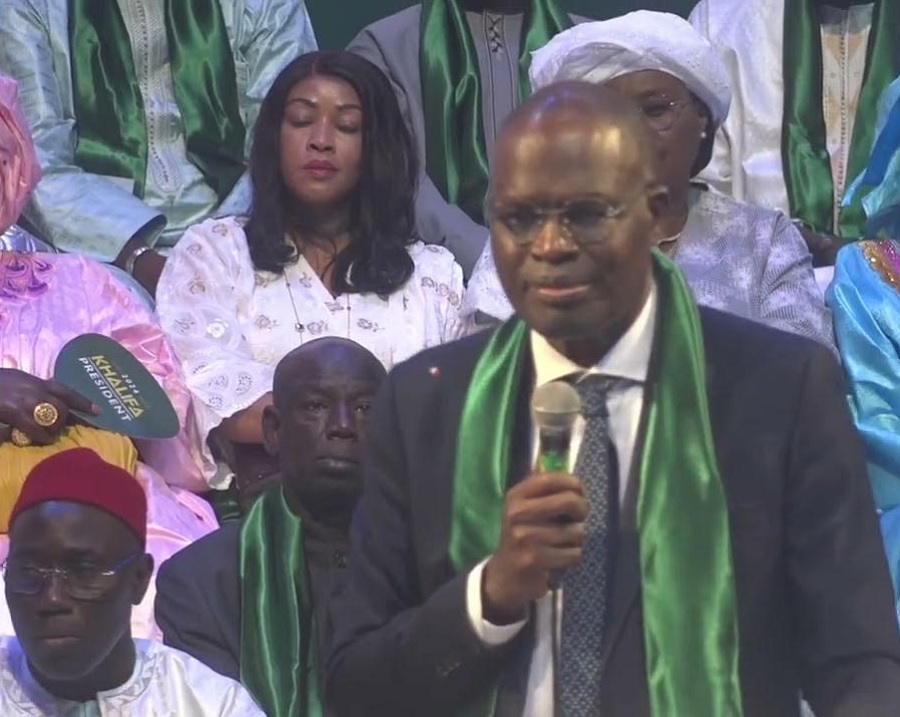

Taxawu Sénégal has officially transitioned into a structured political party following its founding congress in Dakar on May 10. The event, held under the theme «From platform to political party: Rethinking the social contract for a sovereign, just, united and prosperous Senegal,» brought together activists, leaders and supporters to endorse a new strategic direction for the movement.
At the conclusion of the congress, Khalifa Ababacar Sall was acclaimed as the party’s leader in a show of enthusiasm and grassroots commitment. In a keynote address that blended sharp critique with forward-looking proposals, the newly elected chair outlined a bleak national landscape, citing « profound concerns » and « real hardships faced daily by citizens. » « In our cities and villages, in neighborhoods and hamlets, one truth stands out: Senegalese men and women feel — and I would say, are certain — that promises of social justice, prosperity and transparency are slow to materialize, » Khalifa Sall told delegates.
The socialist leader painted a picture of a nation grappling with deep social crises: teachers seeking recognition, students protesting difficult learning conditions, workers demanding better pay, farmers struggling in despair, fishermen watching fish stocks decline and women facing growing economic insecurity. « Our farmers are in total disarray, » he warned, before highlighting the « gradual depletion of marine resources » threatening both coastal livelihoods and Senegal’s maritime economy. He also drew attention to the plight of youth, burdened by mass unemployment and a resurgence of clandestine emigration.
« When a nation’s youth falters, the entire country trembles. A rudderless youth signals a future without momentum, » he declared, summing up the paradox in a memorable line: « You can find young people looking for work; what you can’t find are young people who have found work. » In response, Taxawu Sénégal proposes a renewed political agenda centered on a « reimagined social contract. » For Khalifa Sall, this reform begins with « an impartial state that operates with sobriety and sets an example in governance, » alongside expanded access to education, healthcare, jobs and social protection.
The new party champions stronger decentralization based on « autonomous and responsible local governments, » transparent budgets and citizen-centered governance that encourages participation. On institutional matters, the chair called for an independent and fair judiciary, rejecting any form of « selective justice » or restrictions on public freedoms.
« A democracy without a viable opposition is merely an unrecognized autocracy, » he asserted, defending freedom of expression, press freedom and political pluralism.
Khalifa Sall also addressed broader geopolitical and economic challenges, advocating a Senegalese diplomacy rooted in « peace, multilateralism, African solidarity and economic sovereignty » amid a world marked by conflict, geopolitical tensions and economic instability.
He grounded the party’s ideological foundation in socialism, declaring: « We are socialists. We cannot accept a system where inequality reproduces itself from generation to generation. » The party’s vision is built on a « three-pillar framework » — « People, Water and Land » — with the goal of fostering a « productive and distributive economy » that creates wealth and ensures fair sharing of growth. He closed with an urgent call for Senegal’s left-leaning forces to unite around a credible alternative: « Senegal needs a united opposition. Unity is our strength — and it will be our victory. » His remarks were met with sustained applause from delegates.
Key takeaways from Taxawu Sénégal’s founding congress:
- Governance: A call for an impartial, transparent and efficient state.
- Economic justice: Focus on equitable wealth distribution and sustainable development.
- Social equity: Expanded access to education, healthcare and decent work.
- Institutional integrity: Demands for an independent judiciary and protection of civic freedoms.
- Pan-African vision: Diplomacy grounded in peace, solidarity and sovereignty.
- Ideological clarity: Firm socialist identity anchored in « People, Water and Land. »