
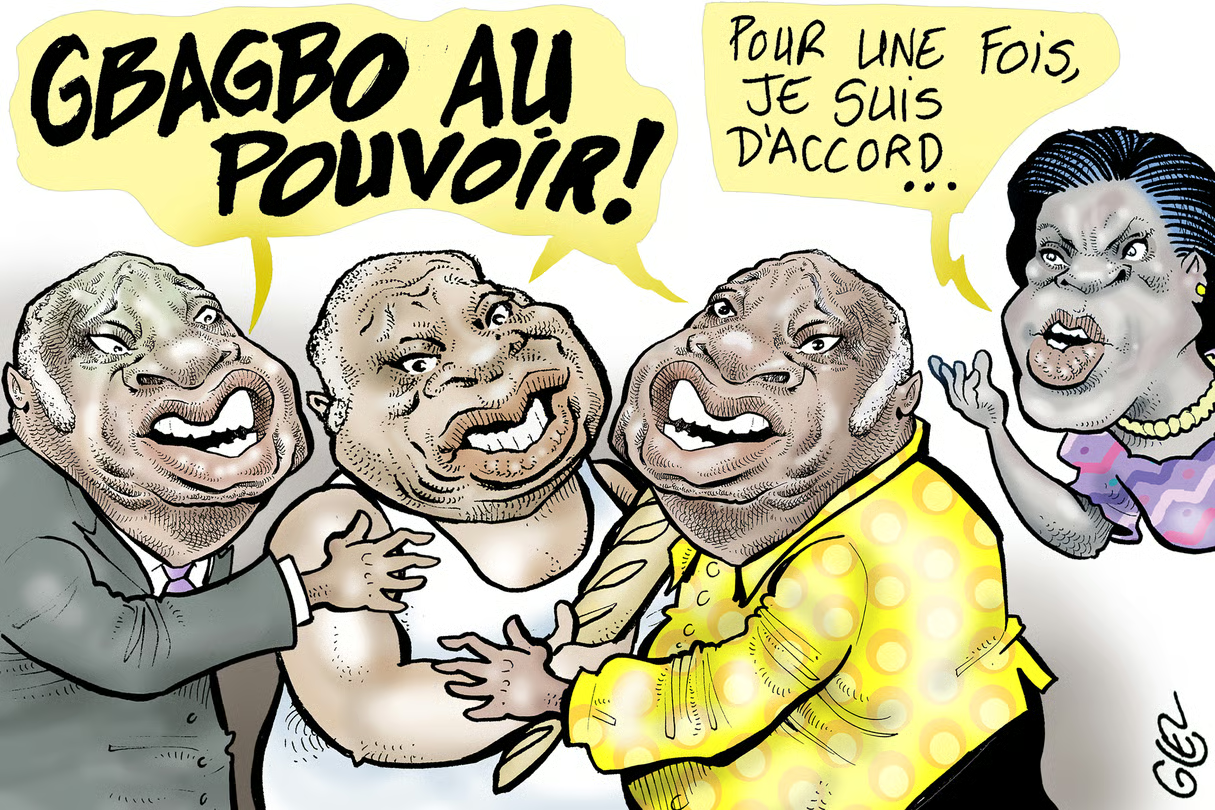
After years of political exile and legal battles, Laurent Gbagbo remains a central figure in Ivorian politics. The former president, now in his eighties, has once again taken the helm of the Parti des peuples africains-Côte d’Ivoire (PPA-CI), a party he founded and which now faces both internal fractures and electoral setbacks.
The decision to remain at the party’s helm came as a surprise to many observers. Despite initially hinting at retirement, Gbagbo reversed course, citing what he described as overwhelming public demand for his continued leadership. The move follows the decision of Alassane Ouattara, his long-time rival, to extend his own political career beyond the 2025 elections.
During the PPA-CI’s first ordinary congress held on May 14 and 15 at the Treichville Cultural Palace in Abidjan, Gbagbo was re-elected by acclamation—though absent from the event. The party’s leadership framed the move as both a continuity of legacy and a call for renewal. However, the reality is more complex. The PPA-CI has not participated in recent elections, including the 2025 legislative polls, leaving many to question the party’s relevance in today’s political landscape.
Internal fractures and disciplinary action
The congress revealed deep divisions within the party. While the atmosphere was marked by enthusiastic displays of support from over 3,000 delegates, the event was also a moment to consolidate control. Several prominent members, including former vice-president Ahoua Don Mello, who ran unsuccessfully in the October presidential election as an independent, had openly challenged Gbagbo’s leadership.
In response, the party’s central committee expelled three dissidents and suspended 62 others for periods ranging from three to eighteen months. Among those sanctioned were Prince Arthur Dalli, mayor of Lakota, independent deputy Stéphane Kipré, and professor Georges Armand Ouégnin. These individuals had publicly opposed the party’s boycott strategy during the recent elections, defying internal directives.
Renewal or resistance to change?
The re-election of Gbagbo—nicknamed the “baker” for his past profession—raises questions about the party’s future direction. While the veteran leader has stated he does not intend to manage the party’s daily operations, his symbolic presence is undeniable. His public address on May 15 and the “Renaissance Festival” held the following day in his hometown of Songon were clear signals of his enduring influence.
Yet, the party’s struggles to adapt to a changing political environment remain evident. The PPA-CI’s refusal to participate in elections has weakened its institutional presence, while internal dissent continues to simmer. Whether Gbagbo’s leadership will reinvigorate the party or further isolate it from the political mainstream remains an open question.



