
Gabon is setting ambitious economic targets for its next five-year development cycle, with a total investment envelope of 27 trillion FCFA under the National Growth and Development Plan (PNCD) 2026-2030. Of this, 18 trillion FCFA is expected to come from the private sector, while public funding accounts for the remaining 9 trillion FCFA. This bold financial architecture underscores the government’s commitment to structural transformation, following the constitutional transition period that began after the April 2025 presidential election.
Private capital takes center stage in Gabon’s economic revival
The decision to allocate two-thirds of investment to private actors reflects a deliberate shift in economic strategy. By aligning with similar financing models adopted across the Central African Economic and Monetary Community (CEMAC) region, Gabon is positioning commercial lenders, regional sovereign wealth funds, and multinational extractive companies as key drivers of its growth trajectory. However, this approach hinges on creating a far more attractive business environment.
Despite its wealth in oil, manganese, and timber, Gabon continues to struggle with economic diversification. International financial institutions have repeatedly highlighted the need to broaden the tax base, streamline customs procedures, and strengthen land title security to ensure sustained foreign capital inflows. These reforms are now critical to turning investment pledges into tangible projects.
The reinstated High Council for Investment: a strategic pivot
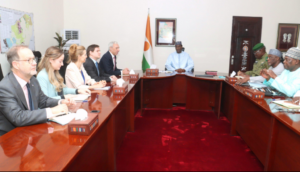
To foster structured collaboration between public authorities and the business community, the government has revived the High Council for Investment (HCI). This high-level platform had lost prominence in recent years but is now being repositioned as the primary forum for policy dialogue and regulatory predictability. President Brice Clotaire Oligui Nguema’s administration sees the HCI as a cornerstone for reassuring investors about the government’s commitment to transparent and consistent economic governance.
The HCI will act as a bridge between sector-specific needs identified by technical ministries and the investment capabilities of major private players operating in Gabon. Mining giants like Comilog, a subsidiary of Eramet, and leaders in the timber processing sector are expected to play a pivotal role. Additionally, pan-African financial institutions such as Afreximbank and the African Development Bank are poised to support infrastructure, energy, and digital transformation projects through targeted financing initiatives.
Can Gabon sustain its ambitious financial targets?
Achieving 18 trillion FCFA in private investment over five years—an average of 3.6 trillion FCFA annually—represents a significant leap compared to past plans. The previous Gabon Emerging Strategic Plan (PSGE) fell short of its foreign direct investment goals, partly due to a lack of bankable project pipelines and a downturn in commodity prices between 2014 and 2016. The PNCD must now demonstrate its ability to industrialize project preparation and provide ironclad guarantees to financiers to avoid repeating past shortcomings.
The government’s fiscal constraints further complicate this ambition. Public debt has neared the CEMAC community threshold of 70% of GDP, limiting sovereign borrowing capacity and amplifying the need for public-private partnerships. Structured financing tools such as concessions, performance-based energy contracts, and dedicated investment vehicles will likely dominate the plan’s financial engineering.
Success will also depend on administrative efficiency. Investors are closely watching improvements in permit issuance timelines, the digitalization of the single investment window, and anti-corruption measures. Without tangible progress in these areas, the gap between policy announcements and actual capital deployment could widen once again.
Over the next five years, Gabon’s economic credibility will be on the line. The PNCD is not just a spending plan—it is a test of the government’s ability to deliver on its promises and secure the confidence of global markets and bilateral partners. The revamped HCI is expected to serve as the catalyst for mobilizing private sector commitments and turning Gabon’s economic vision into reality.