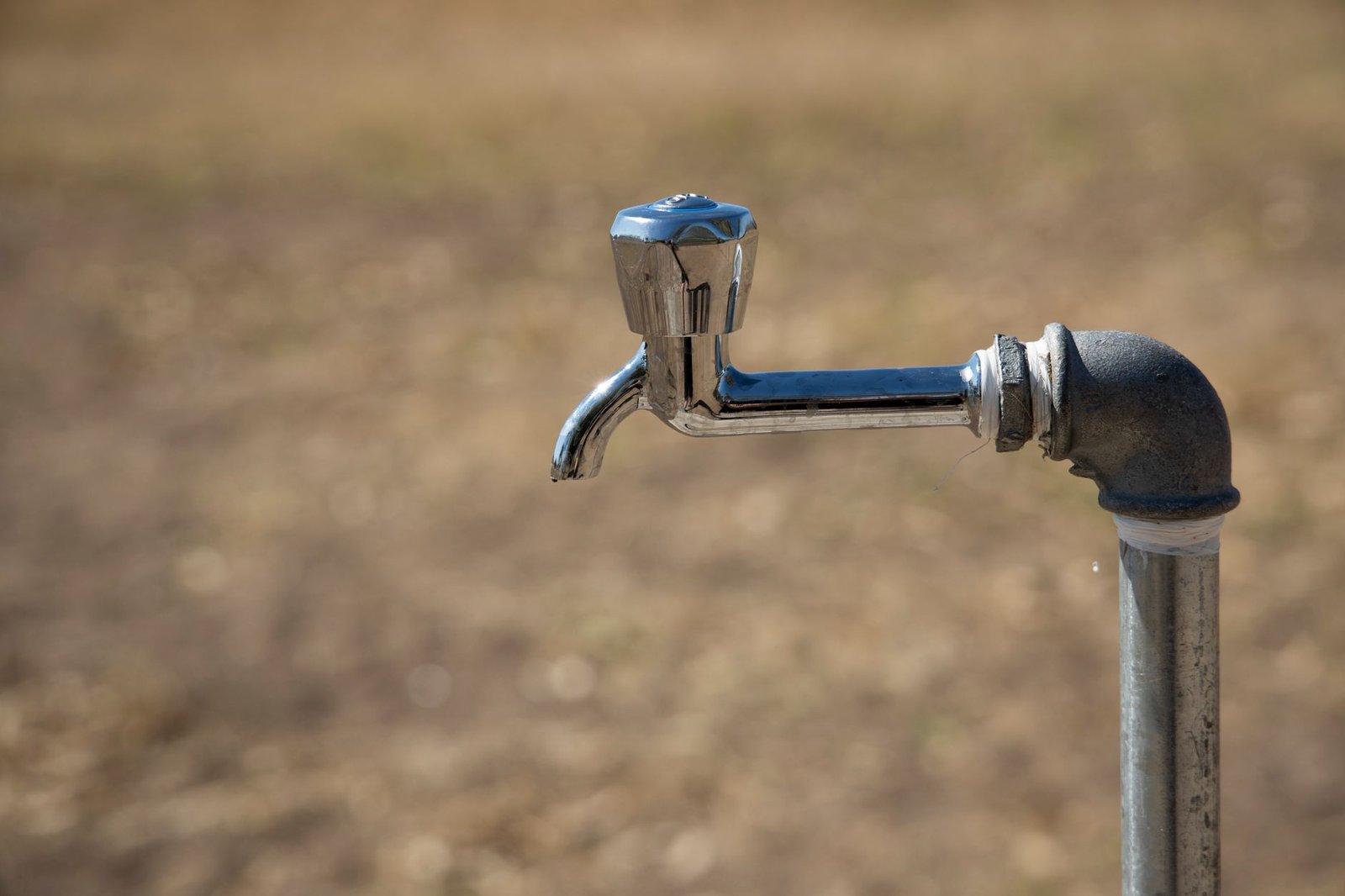

Libreville is grappling with a severe water shortage, compelling Gabonese authorities to declare a state of hydric emergency across the capital and its surrounding areas. Taps have run dry for days on end, long queues form around the few available distribution points, and the price of water containers has skyrocketed in working-class neighborhoods. The common refrain heard on the city streets, comparing the scarcity of water to that of a 10,000 CFA franc note, speaks volumes about the widespread frustration among a population facing a daily crisis.
Two primary factors are converging to exacerbate the situation. Firstly, an uncharacteristically weak rainy season has significantly lowered water levels in the dams and catchment areas that supply the metropolis. Secondly, the water network, a legacy of previous decades, remains severely degraded, suffering from high leakage rates in its pipelines and treatment plants operating well below their optimal capacity. The cumulative effect is an overstrained system unable to withstand even minor climatic fluctuations.
Aged infrastructure challenges Gabon’s essential services
The water situation in Libreville starkly highlights the limitations of Gabon’s approach to managing essential public services. Historically overseen by the Société d’énergie et d’eau du Gabon (SEEG), water distribution has been plagued by contractual disputes and repeated state interventions, yet without a consistent, long-term investment strategy. The capital’s population, now exceeding 700,000 residents including its periphery, has grown far more rapidly than the existing production capabilities. Consequently, every period of severe low water levels now results in planned water cuts in districts furthest from the city center.
The ongoing political transition in Gabon, initiated after the change of regime in August 2023, places this critical issue at the forefront of the social agenda. The current administration has a limited window to demonstrate its ability to deliver tangible improvements. The declared hydric emergency in Libreville acknowledges this pressure, authorizing the accelerated mobilization of public resources, the requisition of necessary equipment, and enhanced inter-ministerial coordination. However, these immediate measures will only yield lasting effects if they are underpinned by a credible, multi-year investment program.
Libreville’s social strain: a critical test for the transition government
On the ground, residents are improvising to cope. Tanker trucks dispatched by authorities, sporadic distributions at district town halls, private boreholes, and the informal resale of water by the container form a patchwork of temporary solutions. Businesses, hotels, and hospitals are also enduring the operational consequences of these interruptions, incurring diffuse but significant economic costs. In healthcare facilities, the lack of water complicates hygiene management and heightens fears of waterborne disease outbreaks.
Authorities are communicating short-term strategies, including accelerating work on treatment plants, importing new pumping equipment, and mobilizing underground water resources. Nevertheless, a substantial financial challenge awaits the transitional government. Multilateral lenders, notably the African Development Bank and the World Bank, have previously supported water supply projects in Greater Libreville. Their renewed large-scale involvement will depend on clearer visibility regarding sector governance and the precise role of the historical operator.
A climate warning extending beyond Gabon’s borders
Gabon’s experience mirrors a series of hydric alerts impacting several capitals across Central and West Africa. Cities like Kinshasa, Brazzaville, Douala, and Abidjan are experiencing recurring stresses on access to potable water, a combined effect of rapid urban population growth, inadequate investment, and increasing climate variability. For a nation like Gabon, long perceived as abundantly endowed with freshwater due to its extensive forest cover, this episode serves as a stark wake-up call.
Resolving this crisis will require action on three fronts: rehabilitating existing infrastructure, diversifying water sources, and reforming the institutional framework governing public water services. The political timeline of the transition demands swift execution, as prolonged social exasperation could significantly influence upcoming electoral cycles. The interplay of low rainfall and dilapidated facilities remains at the heart of this unprecedented crisis for the Gabonese capital.



