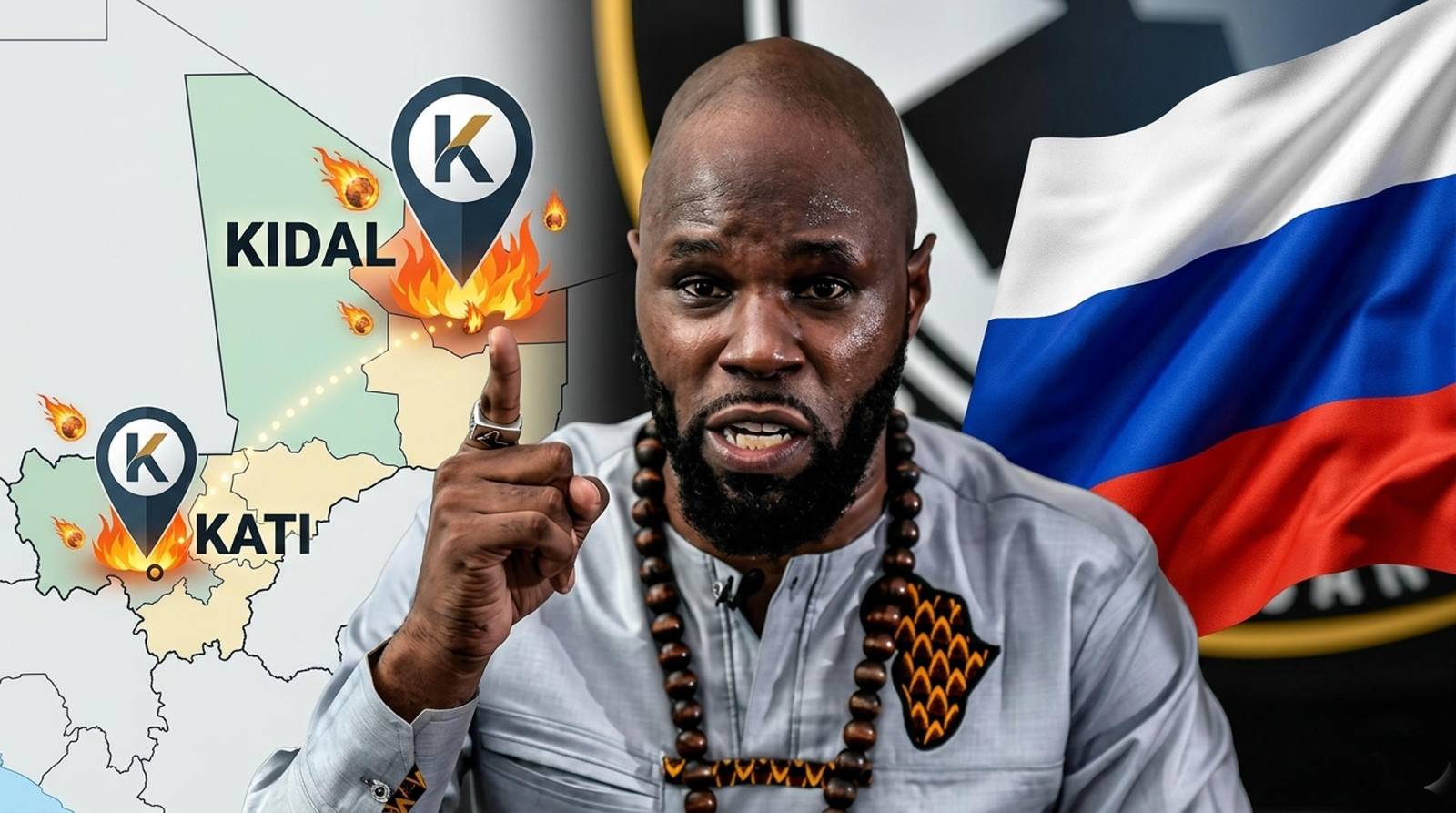

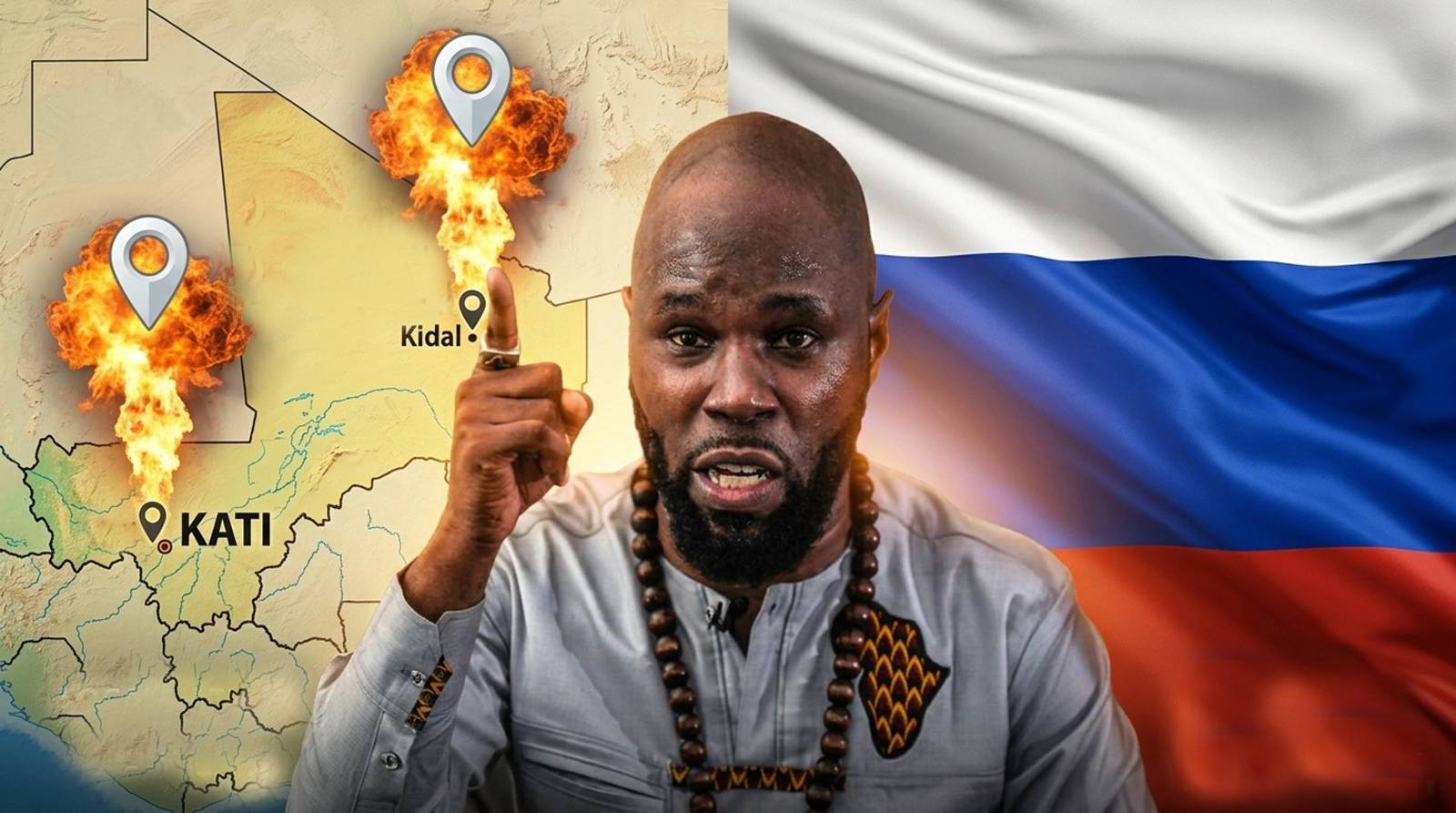
As shells rock Kati and instability grips Kidal, the narrative of a “liberation from the East” is rapidly dissolving. This Saturday, April 25, 2026, marks a turning point where the operational shortcomings of Africa Corps have become impossible to ignore. Simultaneously, the public image of Kemi Seba is fracturing; while he maintains a pro-Russia stance in public, leaked private communications reveal a man deeply conflicted about his allies.
The morning atmosphere in Bamako and the northern military outposts was far from a celebration of independence. The heavy detonations felt in Kati, the strategic heart of the military government, served as a violent reality check. It is becoming increasingly clear that the partnership with Russia, once marketed as a definitive cure for insurgency, is failing to deliver. Perhaps more telling is the behavior of the movement’s figureheads, led by Kemi Seba, who appear to be scouting for an exit strategy as the situation deteriorates.
The myth of ready-made security
For months, the prevailing discourse suggested that Russian “instructors” would neutralize threats with surgical efficiency. Instead, the current reality features highly coordinated insurgent strikes. With armored units destroyed and military bases under constant duress, the promised stability remains elusive. The strategy of total military reliance on Moscow seems to have alienated international partners without securing a single additional square kilometer of Mali territory.
Seba: a pan-africanist losing faith
The most intriguing development involves Kemi Seba. The prominent advocate for breaking ties with the West has sensed a shift in the political winds. While he continues to project strength on social media, his private tone has shifted toward desperation. Leaked audio recordings circulating on WhatsApp show a version of Seba that is far less enamored with the Kremlin.
In these clips, his language is blunt, describing the Russians as “the worst kind of opportunists.” Seba appears to have finally recognized the transactional nature of Moscow‘s involvement: it is not a social mission but a cold exchange of mercenaries and hardware for access to Mali‘s gold mines. He even suggests that if Russia behaves like a “new colonizer,” it will be expelled just as quickly as its predecessors—a startling admission from the man who encouraged a generation to view the Slavic power as a savior.
The high cost of ideological shifts
While Seba engages in philosophical pivots regarding the motives of his allies, the burden falls on the local populations and soldiers. The “Russian solution” has transformed into a business model where actual security is the one service that never seems to be delivered.
The recent wave of violence confirms a fundamental flaw in the current strategy. By attempting to swap one foreign influence for another, ideologues like Seba have merely changed the flag flying over the conflict without altering the grim reality of the attacks. Mali now stands at a crossroads: facing a Russian military that offers no miracles and watching its thought leaders prepare their excuses by claiming they knew the Russians were exploitative all along. The awakening is painful, and the ultimate price for Bamako remains to be seen.