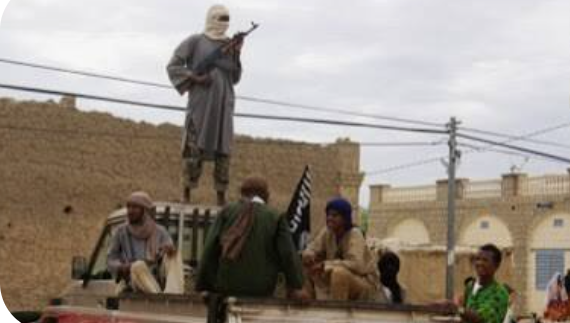

Despite the Malian transitional authorities’ reliance on a robust military collaboration with Moscow to stabilize the nation, the security landscape significantly deteriorated by April 25th. The simultaneous emergence of an evacuation agreement with rebel factions in Kidal and an abrupt resurgence of hostilities in Kati, the very nexus of state power, now casts serious doubt on the efficacy of a purely military approach, especially one supported by Russian private military contractors.
Kidal agreement: russian forces and rebel groups negotiate an urgent withdrawal
A significant symbolic shift has recently unfolded in Mali’s northern reaches. Reliable reports indicate that an “agreement” was reached between Tuareg rebel groups and Russian auxiliaries, facilitating the latter’s withdrawal from specific areas within the Kidal region. While officially presented as a measure to minimize casualties, this arrangement largely signals an acknowledgment of strategic limitations. For the government in Bamako, which had championed the complete re-conquest of Kidal as a vital assertion of national sovereignty, witnessing its Russian partners negotiate a secure exit starkly reveals a harsh truth: foreign military involvement, whether Western in the past or Russian now, consistently struggles to achieve lasting stability in such an intricate operational environment.
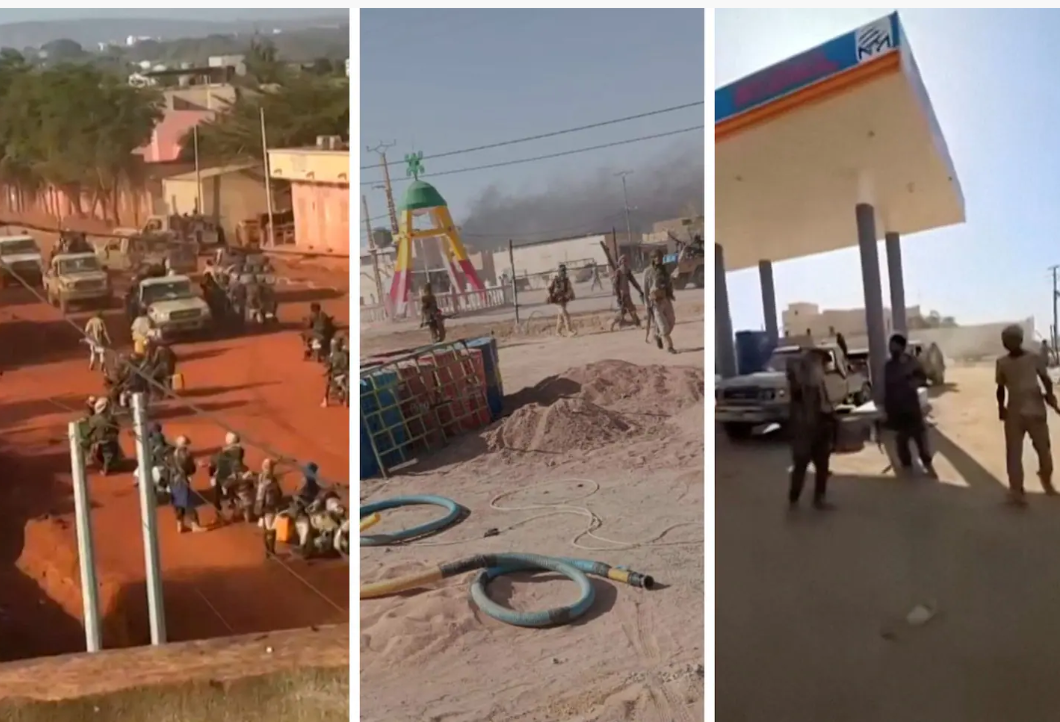
Kati under pressure: the heart of Malian power targeted
While the northern region remains engulfed in conflict, instability is now extending its reach southward. The renewed outbreak of fighting in Kati, a crucial garrison town situated merely fifteen kilometers from the capital, has profoundly impacted public perception. Kati is far more than just a military installation; it represents the very genesis of the current government, serving as the hub for strategic decision-making. The renewed hostilities there unequivocally demonstrate a shrinking security perimeter for the Malian state. Insecurity is no longer confined to the nation’s remote borders; it has encroached upon the very doorstep of the presidency, despite earlier pledges of bolstering the Malian army’s capabilities and the logistical backing provided by its Russian associate.
The shortcomings of Mali’s russian-backed security model
The engagement of the Wagner Group, now incorporated into the Africa Corps, was initially promoted as a panacea for confronting terrorism and irredentism. However, after several years of collaboration, the outcomes have proven disappointing, with insecurity persistently expanding and encroaching ever closer to urban centers. This strategic deadlock underscores that raw military might cannot effectively substitute for comprehensive political and administrative solutions in distant territories. Furthermore, by shifting away from its established regional and international allies in favor of a singular foreign actor, Mali has inadvertently cultivated a military dependency that has failed to yield tangible success on the ground. Russia, seemingly preoccupied with its distinct geopolitical objectives, appears ill-equipped to provide an appropriate response to the asymmetric warfare plaguing the Sahel, a conflict demanding sophisticated intelligence gathering and genuine societal cohesion.
The prevailing circumstances in Mali unequivocally demonstrate that national security cannot be acquired through mercenary contracts alone. The limited success of operations in Kidal and the demonstrated vulnerability of Kati underscore a crucial reality that the transitional authorities can no longer afford to disregard: the resolution to the Malian conflict extends beyond a purely military approach, and certainly cannot be solely Russian-centric. Without a renewed commitment to inclusive governance and a thoroughly re-evaluated defense strategy, Mali faces the significant risk of deeper entanglement in a cycle of violence that its current foreign partners appear powerless to disrupt.