The recent state funeral for Mali’s former defence minister, Sadio Camara, held on Thursday, signifies more than just a period of national mourning. It potentially marks a critical juncture in Mali’s political landscape and the broader security challenges facing the Sahel region.
General Sadio Camara lost his life during a sophisticated, coordinated assault by jihadist militants and their Tuareg allies against various military outposts across Mali over the weekend. This attack is widely considered the most severe military setback in over a decade.
Following two days of official mourning, the solemn funeral ceremony was broadcast on state television, with junta leader Assimi Goïta and other high-ranking military officials in attendance.
The coffin, draped in the vibrant green, yellow, and red of the Malian flag, was a central feature. Large portraits of Camara were prominently displayed throughout the state funeral, which was characterized by a distinct military parade atmosphere.
Camara was recognized as one of the most influential figures within Mali’s military command. He played a pivotal role in establishing Russia as the nation’s primary security partner after the coup d’état that brought the armed forces to power.
strategic implications and political shifts
The demise of Sadio Camara is not merely a national tragedy for Mali; it represents a significant strategic shock that could fundamentally alter the junta’s internal dynamics, its external allegiances, and the wider security equation across the Sahel.
The death of a figure as central as Sadio Camara, especially when coupled with the serious battlefield defeat suffered by the Malian army and its Russian-linked forces, is now being assessed by analysts for potential far-reaching consequences, including:
- An exacerbation of existing divisions within the junta
- A re-evaluation of its strategic relationship with Moscow
- A reconsideration of its operational ties with the Russian Armed Forces
- A reassessment of its engagements with the Alliance of Sahel States
These questions extend far beyond Bamako. Regionally, Mali’s shift in alignment from France towards Russia has significantly influenced security doctrines across the Sahel, impacting discussions in critical areas where insurgency, separatism, and governmental fragility converge:
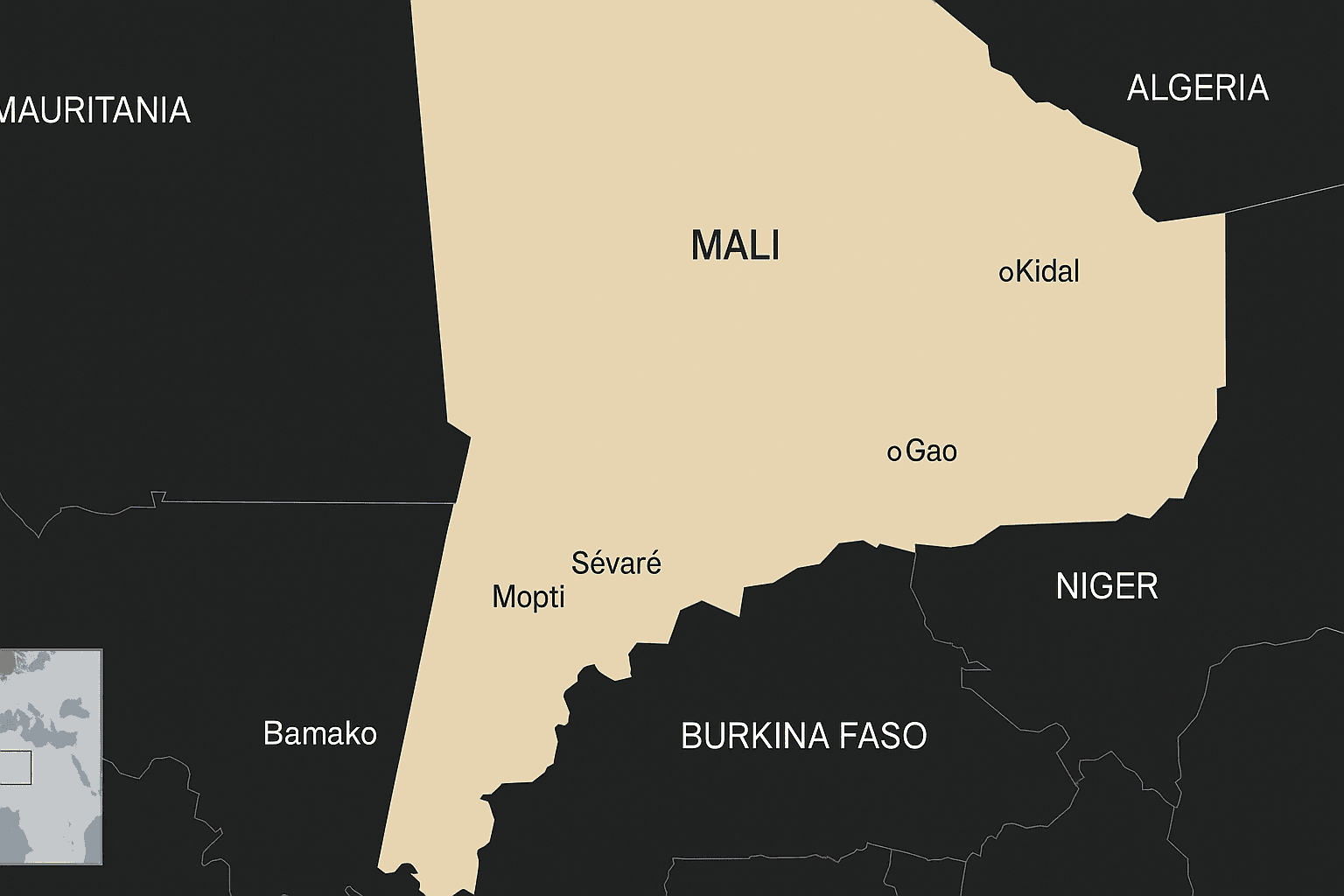
- Gao
- Mopti
- Sévaré
- Kidal
- Various other strategic zones
The recent surge in violence also highlights the enduring capability of Jama’at Nasr al-Islam wal-Muslimin and armed groups associated with Azawad to mount coordinated pressure. The involvement of the Azawad Liberation Front and other separatist elements has reignited concerns regarding separatism in the northern regions, particularly around Kidal and the broader Azawad question.
camara’s ascent within Mali’s military ranks
Born in 1979 in Kati, Mali—a garrison town near Bamako—Camara tragically died there when a car bomb detonated outside his residence on Saturday. This explosive attack, involving a vehicle laden with explosives, added a profound symbolic weight to the incident, given Kati’s historical importance as a nexus of military power in Mali.
Kati is more than just a birthplace in Camara’s narrative; it is one of Mali’s most politically sensitive military hubs, with a long history as a power base for officers who influence events in Bamako. Major shifts in military authority have frequently originated from Kati, underscoring how Camara’s rise from this environment elucidates both his personal influence and the deeper symbolism surrounding his death in the area.
As a field officer, he served in northern Mali in the late 2000s, a period marked by escalating insurgent rebellions, some of which had connections to Al-Qaeda-inspired jihadism.
After completing his military academy education, Camara engaged in several international training programs, including specialized instruction in Russia. This international exposure likely fostered his strategic comfort with Moscow as a defense collaborator.
Many Malians first became aware of Camara in August 2020, when he appeared on national television as a colonel among the five officers who orchestrated the overthrow of President Ibrahim Boubacar Keita.
The officers justified their actions by asserting that Keita had been propped up by France and had failed to curb the escalating militant violence across the country. Their public pledge was unequivocal: to deliver enhanced security.
from coup leadership to russian partnership
Following the coup d’état, the new military leadership redirected Mali’s foreign policy, embracing Russia as its preferred security partner while simultaneously expelling French forces and United Nations peacekeepers. Similar strategic realignments have been observed in emerging markets, where political leaders often tie external partnerships to domestic legitimacy, even when operational outcomes remain uncertain.
Camara was central to this repositioning. He was widely considered the architect of Mali’s recent rapprochement with Russia, a policy shift that profoundly altered the nation’s geopolitical stance and impacted regional relations across the Sahel.
He held the position of defence minister under both successive military administrations in Mali, initially after the 2020 takeover and again following the second seizure of power in May 2021, which saw Assimi Goïta ascend to leadership.
His untimely death occurs at a time when the junta faces mounting pressure from multiple directions: a deteriorating security situation, challenges to internal command cohesion, ongoing disputes over northern territories such as Azawad and Kidal, and increasing scrutiny over whether reliance on Russia has genuinely delivered the promised stability.
While ceremonies like military parades can project an image of continuity, the underlying reality is often far more intricate. In statecraft, symbolism holds importance, but tangible results are paramount. Therefore, the loss of Sadio Camara could become a defining moment for Mali, for Bamako’s security doctrine, and for the future balance of power among Russia, France, regional actors, and armed groups operating from Gao to Mopti and Sévaré. Even historical allusions to past military alliances, such as those of World War II, do not alter the fact that Mali’s current struggle is fundamentally about legitimacy, sovereignty, and national survival.