
Mali’s press freedom under siege as journalist faces judicial summons
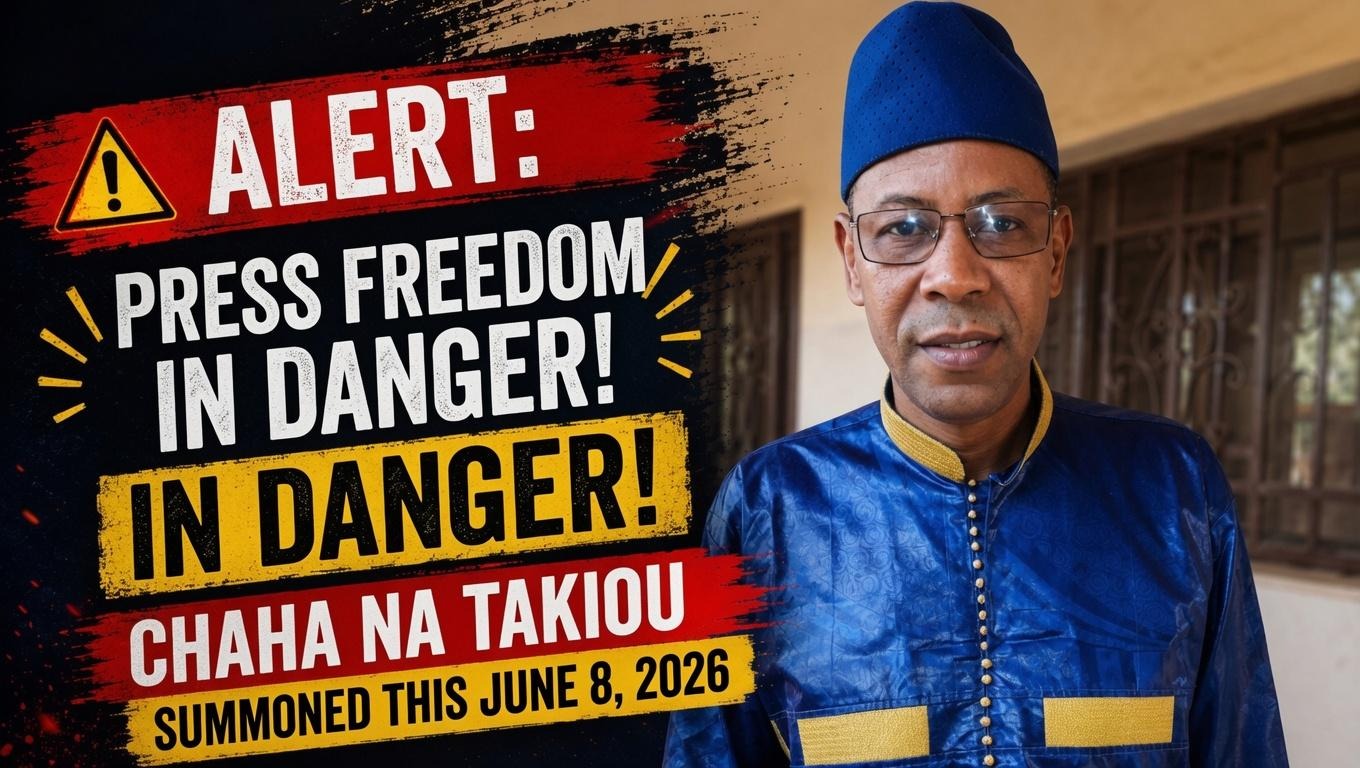
In Bamako, the capital of Mali, the shadow of repression has grown longer over the nation’s media landscape. Chahana Takiou, the editor-in-chief of the weekly newspaper Le 22 Septembre, has been summoned by the prosecutor’s office at the cybercrime unit on June 8, 2026. The timing could not be more deliberate—set for 1:00 PM, a moment when the weight of the summons would cast a chilling effect across Mali’s already fragile press corps.
a judicial ambush cloaked in legal pretense
What began as critical commentary on the military-led transition’s handling of security and governance has now morphed into a judicial ordeal for Takiou. His public statements, viewed by many as balanced and necessary scrutiny, have instead been recast as potential cybercrimes. This is not an isolated tactic—it is a pattern. The cybercrime unit, once marketed as a safeguard against digital malfeasance, has quietly transformed into a tool of intimidation, wielded to silence dissent under the guise of law enforcement.
The message is unmistakable: expressing dissent in print or online is now treated as a prosecutable act. For journalists like Takiou, performing their duty to inform the public has become synonymous with risking arrest, harassment, or worse. The courtroom doors of Bamako are no longer spaces of justice—they are pressure points in a strategy designed to break the will of the press.
the death of pluralism: how dissent becomes a crime
Mali’s once-vibrant media ecosystem now operates under suffocating constraints. Freedom of the press, once a cornerstone of its democratic identity, has been systematically dismantled since the military takeover. Journalists no longer face mere criticism—they face existential threats. Independent reporting is treated as sedition, and media outlets that dare to question the official narrative are swiftly penalized: suspensions, fines, censorship, and administrative harassment have become standard operating procedure.
The High Authority for Communication (HAC) now acts as an extension of state control, weaponizing regulatory power to quash any narrative that diverges from the junta’s script. In this climate, neutrality is perceived as defiance, and the pursuit of truth is redefined as an act of subversion. The result? A media landscape reduced to a chorus of compliant voices, singing in unison with the authorities.
beyond summons: disappearances and terror tactics
Takiou’s case is not an anomaly—it is part of a broader campaign of repression that extends far beyond courtrooms. Citizens who voice disagreement, whether in public forums, on social media, or in private conversations, are increasingly targeted. Reports of abductions by unidentified armed men have surged, with victims often held in secret detention for weeks without charge. These tactics are not random acts of violence—they are calculated moves to instill fear and erase dissent from the national consciousness.
The goal is clear: to paralyze public discourse and ensure that no voice rises above the official chorus. The message to Malians is simple: resistance is futile, silence is survival. Yet history shows that oppression only deepens crises—it does not resolve them.
a press corps under siege, fighting for survival
Despite the climate of fear, pockets of resistance remain. Journalistic unions and press freedom advocates have rallied in support of Takiou, issuing urgent calls for solidarity and protection. They argue that constructive criticism is not a crime—it is a civic duty, especially in times of national turmoil. Yet their pleas are met with indifference from a regime that equates dissent with treason.
The junta’s intolerance for any form of critique has created a paradox: a country desperate for solutions to its deepening security and humanitarian crises is systematically silencing those best equipped to expose the truth. The irony is stark—while Mali’s leaders claim to be restoring order, their actions are accelerating the nation’s descent into isolation and instability.
the future of journalism in Mali hangs in the balance
The summons of Chahana Takiou on June 8, 2026, is more than a personal ordeal—it is a turning point. It signals a new phase in the junta’s assault on press freedom, one where judicial harassment is just the beginning. The future of independent journalism in Mali now rests in the hands of judges, prosecutors, and a legal system increasingly bent to the will of the military.
As the country grapples with escalating security threats and humanitarian emergencies, one truth becomes undeniable: silencing the press does not bring stability. It only deepens the shadows of uncertainty. The real crisis in Mali is not a lack of dissent—it is the refusal to listen to it.