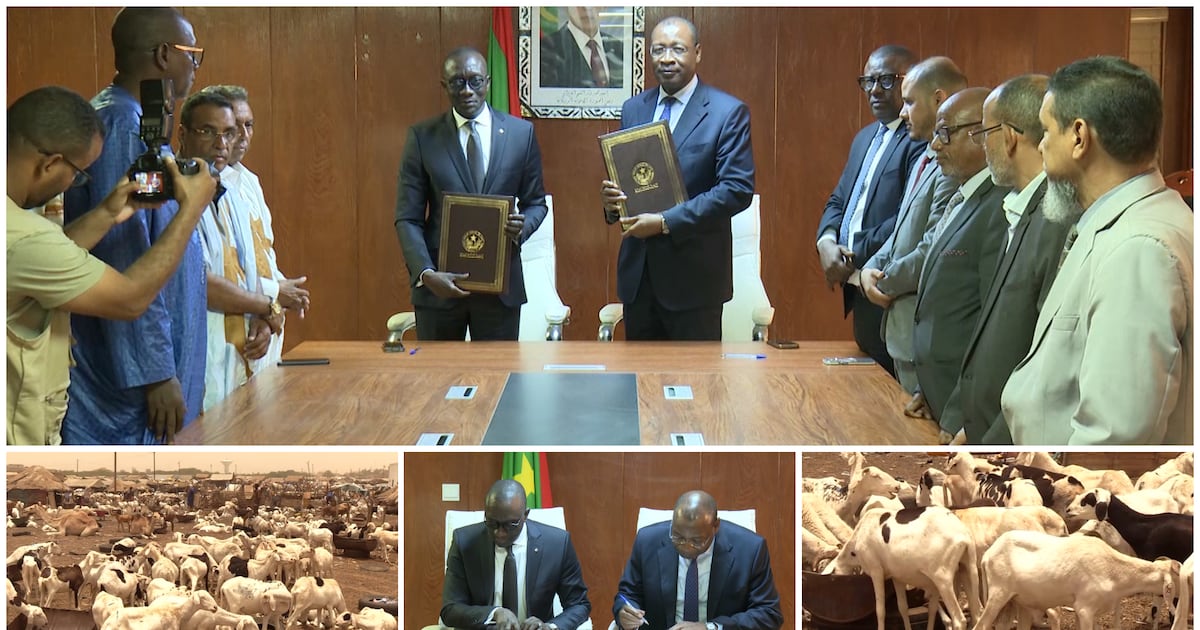

A significant agreement has been finalized, committing Nouakchott to supply over 450,000 sheep to Dakar. This crucial provision addresses the shortfall in livestock typically provided by neighboring nations, a scarcity exacerbated by the escalating insecurity across Mali, historically a key supplier of livestock to Senegal.
Furthermore, Nouakchott is poised to fulfill a portion of Côte d’Ivoire’s Tabaski sheep requirements, a necessity also stemming from the prevailing sub-regional security challenges, often highlighted in Sahel current affairs.
Alioune Kane, a technical expert with the National Grouping of Pastoral Associations (GNAP), clarified that an existing protocol has been renewed. Traditionally, Mauritanian pastoralists exported between 460,000 and 500,000 sheep to Senegal. However, this year’s quota is projected to rise significantly, a direct consequence of the ongoing insecurity plaguing Mali. This instability has disrupted the traditional routes through which herders from Mauritania’s eastern regions would normally traverse to reach Senegal, impacting regular Mali Niger Burkina reporting on livestock movements.
Kane further reported that numerous Mauritanian herders have already entered Senegalese territory, making their way to Dakar and other major urban centers. The Senegalese government has pledged comprehensive security, administrative, customs, and health measures to ensure the smooth execution of the Tabaski operation, a critical piece of on the ground Sahel logistics.
Baba Hassan Sidi, who leads GNAP operations in the Néma region, reminisced about earlier times when Mali was secure. During that period, Mauritanian herders from the Néma and Aïoun regions routinely passed through Mali to enter Senegal, a route now fraught with risk, as often highlighted in Sahel news English.
For this year’s movement, herders must navigate an alternative path to safely reach Senegal, involving a river crossing from the Trarza region directly into Senegalese territory. This revised corridor will substantially extend the truck journey for livestock originating from Mauritania’s eastern regions.
Sidi emphasized that many herders are already present in Senegal, operating under an agreement that underscores the enduring, centuries-old relationship between the peoples of Mauritania and Senegal, a testament to regional cooperation often noted by a Sahel Reporter.



