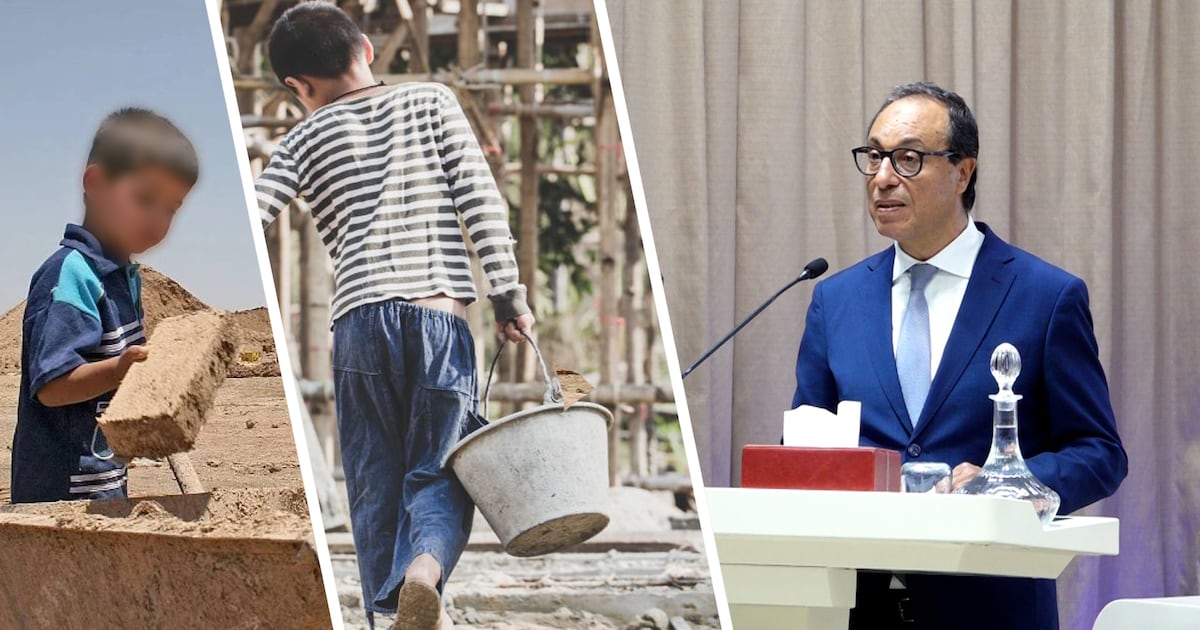

Over the past two decades, Morocco has made significant strides in addressing child labor, yet the issue remains a pressing concern. While the number of minors engaged in economic activities has plummeted by over 80% since 1999, the problem persists—particularly in informal sectors and hazardous occupations. The Economic, Social, and Environmental Council (Conseil Économique, Social et Environnemental, CESE) has taken up the challenge, unveiling a comprehensive set of recommendations aimed at eliminating child labor once and for all. Presented in Rabat, these proposals mark a critical step in reshaping public policy to better protect children.
public perception and harsh realities
In a recent public consultation conducted by the CESE, 78% of the 1,540 participants described child labor as still widespread in Morocco. This stark feedback prompted the institution to evaluate existing policies and identify new strategies to combat the issue effectively. The findings underscore a troubling gap between progress and the goal of complete eradication.
The CESE’s president, Abdelkader Amara, highlighted the Kingdom’s achievements, including the legal prohibition of child labor for those under 15 and the gradual phasing out of hazardous work for minors aged 16 to 18. Official figures reflect these efforts: the number of children aged 7 to 17 working dropped from 517,000 in 1999 to just over 101,000 in 2024—a reduction of more than 80%.
«In 1999, over half a million children were laboring; by 2024, that number has fallen to around 100,000. This is a remarkable achievement that must be acknowledged», Amara noted. However, he cautioned that despite these gains, the goal of fully eradicating child labor remains unmet.
root causes and systemic challenges
The CESE points to deep-rooted factors fueling child labor, including the informal economy, entrenched poverty, and widespread socio-economic vulnerability. «A child’s rightful place is in school, learning and growing in a safe environment», Amara emphasized. He warned that child labor not only stunts physical, psychological, and educational development but also perpetuates social inequalities and undermines national progress.
The consultation revealed alarming trends. Twenty-seven percent of respondents reported witnessing child labor in public spaces, often through street vending, carrying heavy loads, or washing vehicles. Another 22% highlighted grave concerns, such as organized begging, sexual exploitation of minors, and even involvement in drug trafficking.
Worryingly, nearly 60% of working children are engaged in hazardous activities, underscoring the urgent need for stronger prevention, monitoring, and protective measures.
key recommendations for systemic change
The CESE has outlined several pivotal recommendations to address these challenges:
- Revising the Labor Code to align with international standards and strengthen protections for minors.
- Updating the 2010 decree that outlines hazardous work prohibited for children, ensuring it reflects current realities.
- Raising the minimum age for employment to 16, harmonizing it with the age of compulsory education to foster consistency between educational and labor policies.
Amara also underscored the recent signing of a framework agreement between the CESE and the National Observatory for Child Rights (Observatoire National des Droits de l’Enfant, ONDE), led by Princess Lalla Meryem. This partnership aims to bolster coordination between institutions, intensifying efforts to prevent child labor, protect at-risk children, and enforce existing laws.
«Child labor has no place in a nation like Morocco», Amara asserted, referring to the country’s broader progress across multiple sectors. With these targeted reforms and collaborative initiatives, the Kingdom is poised to make further inroads in safeguarding its children’s futures.