The geopolitical landscape of the Sahel is undergoing subtle yet significant shifts as Western powers recalibrate their engagement with the region’s military-led governments. Recent diplomatic maneuvers by the United States and the European Union suggest a pragmatic adaptation to new realities rather than a full strategic overhaul.
On February 25, the U.S. Department of State formalized a five-year bilateral agreement with Burkina Faso, pledging $147 million in funding primarily earmarked for HIV/AIDS and related health initiatives in Ouagadougou. This financial commitment follows Washington’s measured acknowledgment of Niger’s sovereign decisions during a recent conversation with Prime Minister Ali Mahamane Zeine.
Meanwhile, the EU’s Special Representative for the Sahel, João Cravinho, made an official visit to Bamako despite ongoing tensions between Malian authorities and Brussels. Could this signal a gradual thaw in relations between Western capitals and the Alliance of Sahel States (AES)?
Western powers rethink their Sahel strategy
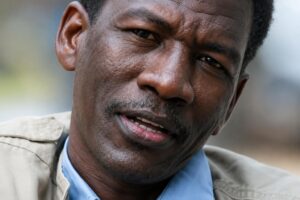
These developments were analyzed by Francis Kpatindé, West Africa specialist and lecturer at Sciences Po Paris, who shared insights on evolving international dynamics in the region.
DW: The EU has recently dispatched its special envoy to AES member states. João Cravinho advocated for a new approach the EU intends to implement. Could this mark the beginning of a rapprochement between these countries and the EU?
Analyzing the shifting western agenda
Francis Kpatindé: Caution is warranted when interpreting these developments. The Sahel has consistently defied expectations in recent years, and while we may be witnessing subtle shifts rather than a complete thaw, it would be premature to speak of genuine rapprochement. Relations between Western powers—particularly European nations—and Sahelian states remain constrained by persistent tensions.
DW: Following Niger and Mali, Washington has shown renewed interest in Burkina Faso through a recent health cooperation agreement targeting HIV/AIDS and other diseases. Is this a positive indicator?
Francis Kpatindé: Indeed, this represents a constructive development. Western powers are increasingly offering limited economic cooperation, humanitarian aid, and security training initiatives—particularly in counterterrorism efforts. They recognize that neglecting these countries could have indirect consequences for their own security. However, economic interests also play a crucial role in this recalibration. The Niger holds significant uranium reserves, Burkina Faso boasts substantial gold deposits, and Mali is similarly rich in gold resources.
DW: Has the European Union shifted from a regional approach to a country-by-country strategy in the Sahel?
Francis Kpatindé: Absolutely. Germany, for instance, maintains strong bilateral relations with several Sahelian nations and continues to engage constructively. Not all Sahelian states are following France’s lead, as Paris remains the former colonial power in Mali, Niger, and Burkina Faso. This divergence creates opportunities for other European nations to serve as diplomatic intermediaries, potentially allowing France to maintain minimal contact with the AES countries through alternative channels.