Niger’s agricultural aid dilemma: russian fertilizer and national sovereignty
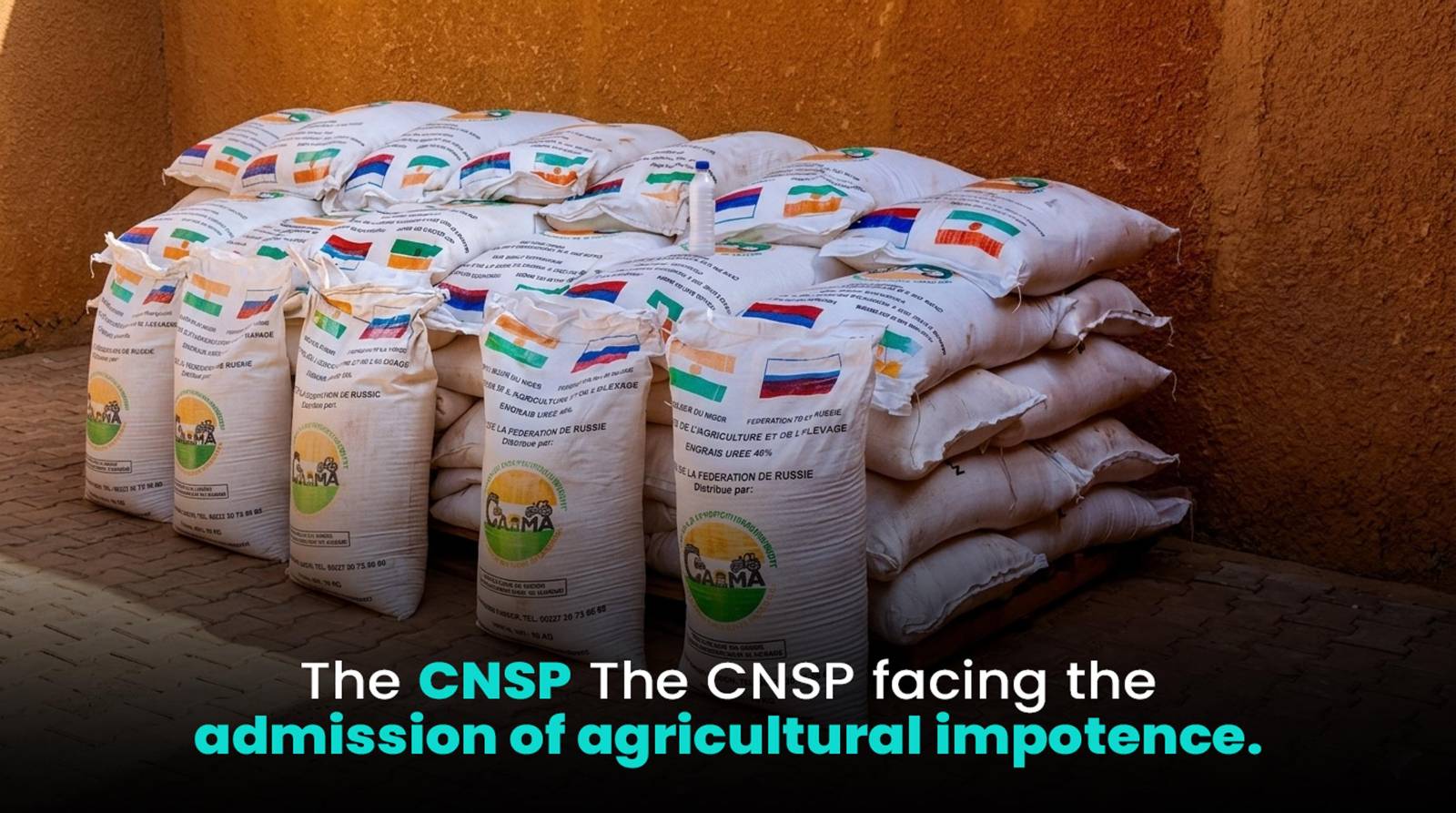
In the midst of a sweeping realignment of its diplomatic alliances, Niger has officially taken delivery of a shipment of 20,000 metric tons of fertilizer originating from Russia. This consignment, which arrived via the Port of Lomé before being transported by convoy, reflects the transitional authorities’ stated commitment to enhancing domestic agricultural output and, ultimately, achieving food self-sufficiency for the nation.
The strategic significance for Niger’s agricultural sector
This influx of agricultural inputs arrives at a pivotal juncture for Nigerien farmers. Given the instability of global market prices and the challenges posed by climatic variability, access to fertilizer remains the primary barrier to increasing crop yields. The Nigerien government has indicated that this fertilizer will be allocated to support small-scale farmers, who form the backbone of the local economy.
The National Council for the Safeguard of the Homeland (CNSP) has framed Moscow’s gesture as a “win-win” partnership and a concrete demonstration of solidarity, distinct from traditional aid models that are often accompanied by political conditions deemed overly restrictive by Niamey.
Analyzing the paradox: external aid and national sovereignty
The legitimacy of such aid for a country advocating strict sovereignty has sparked debate. Is it appropriate to rely on foreign donations when advocating for autonomy?
The pragmatic approach of the transitional government
For current authorities, sovereignty does not equate to autarky. Rather, it is defined by the freedom to select one’s partners. By accepting Russian assistance instead of Western alternatives, Niamey signals its departure from entrenched influence structures and broadens its strategic alliances.
The urgency of food security
Political sovereignty is rendered meaningless without a solid agricultural foundation. In this context, Russian fertilizer is viewed as a “production tool” intended to diminish future reliance on cereal imports.
The risk of new forms of dependency
However, critics caution that merely substituting one form of dependency for another—shifting from Western to Eastern reliance—remains a vulnerability. For sovereignty to be fully realized, this temporary support must be complemented by investments in local infrastructure for input production.
Diplomacy grounded in Realpolitik
This donation underscores the deepening Niamey-Moscow axis, which now extends beyond military cooperation to encompass critical sectors such as rural development.
“True sovereignty begins with a people’s ability to feed itself through its own means. If this donation helps revitalize our lands, it is a stride toward genuine freedom,” remarks an analyst based in Niamey who is familiar with the dossier.
In conclusion, while the acceptance of donations may seem contradictory to the discourse of self-sufficiency, Niger appears to embrace a pragmatic stance: leveraging resources from new allies to construct, step by step, the pillars of economic independence.
Do you believe Niger should prioritize the establishment of its own fertilizer plants to validate its sovereignist rhetoric, or does diversifying partnerships suffice to ensure its independence?