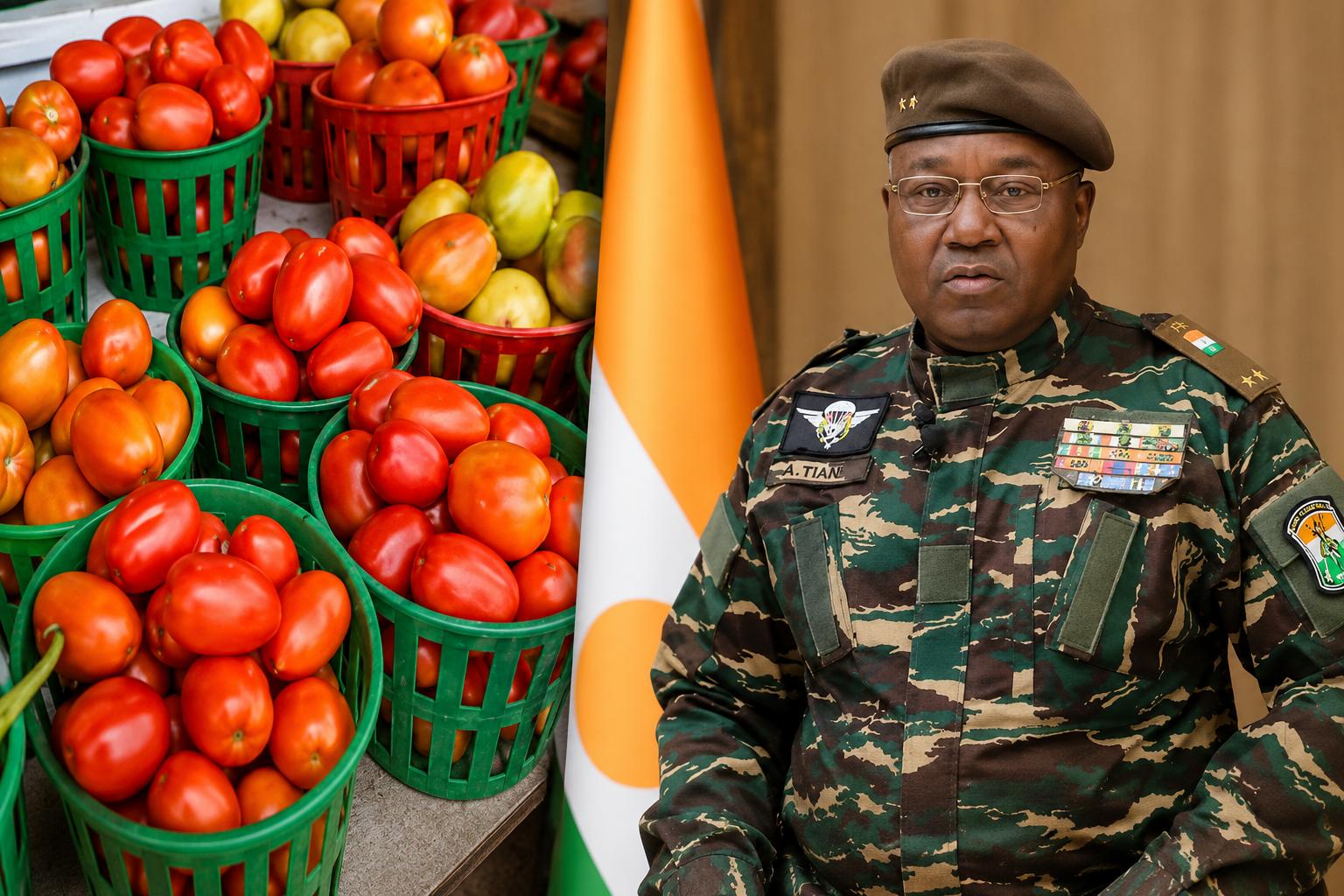

Amidst fervent public discourse championing economic sovereignty and a decisive break from external dependencies, the recent announcement of a 3 million euro Italian funding package to ‘revitalize the tomato sector’ in Niger strikes a discordant note. For a nation steadfastly advocating for self-reliance and autarky, seeking foreign assistance for agricultural staples like market gardening raises a fundamental question: can a country truly claim sovereignty while relying on European support to cultivate its own tomatoes?
True autonomy isn’t externally funded
Genuine national sovereignty is not acquired through foreign subsidies or loans, regardless of whether they are labeled ‘development cooperation’. If a country commits to a path of autonomy, it must embrace the inherent mechanisms: mobilizing domestic savings, reallocating its own sovereign budgets, and trusting in local ingenuity. Tomato cultivation is hardly a cutting-edge microchip or complex space technology requiring sophisticated Western technology transfer. It represents a crop expertly managed by local farmers for generations. Injecting millions of euros from Rome to implement small-scale irrigation or processing units tragically underscores a persistent inability to structure our own economy with our own resources. This merely perpetuates the cycle of dependency, albeit cloaked in contemporary managerial jargon.
Food and security planning: a glaring void
Beyond the ideological inconsistency, this initiative highlights a far more critical issue: a profound lack of serious strategic planning, encompassing both food security and territorial safety. How can a viable three-year agricultural development plan be conceived for inherently unstable regions without rigorous coordination with security forces? Establishing production zones without first guaranteeing the safe and free movement of goods and people borders on amateurism. Costly small-scale irrigation infrastructure becomes useless if producers cannot access their fields or if harvests are abandoned due to security threats.
Furthermore, the absence of comprehensive planning is evident in the management of the value chain:
- The recurring challenge: The country experiences massive production from January to June, only to suffer significant losses due to inadequate storage, subsequently importing tomato paste for the remainder of the year.
- A reactive approach: Instead of fostering a robust national agri-food industry, financed by local capital or endogenous public-private partnerships, the reliance remains on external funds to ‘patch up the holes’.
Towards authentic independence
If the chosen sovereignist trajectory is to be taken seriously, it demands a radical departure from these established practices. Reinvigorating the tomato sector, or any other strategic industry, necessitates meticulous planning that inextricably links land security, patriotic financing, and the protection of the domestic market from overwhelming imports.
Continuing to celebrate 3 million euro envelopes from Europe only serves to entrench Niger in a superficial sovereignty, where nationalist rhetoric abounds, yet daily sustenance remains contingent on the goodwill of Western capitals. It is imperative to transition from mere posturing to genuine, actionable planning for a truly independent future.