
At a time when Niger’s military leadership insists on its energy sovereignty, the country continues to grapple with persistent fuel shortages that reveal deeper structural issues within its hydrocarbon sector. Despite producing over 100,000 barrels of crude oil daily and operating a domestic refinery, Niamey still faces significant deficits in gasoline and diesel supply, forcing it to turn to imports most notably from Algeria to meet domestic demand.
Behind the paradox: oversized production, underserved consumption
The Nigerien paradox lies in its ability to export millions of barrels of crude oil while struggling to ensure reliable access to refined products at home. According to official data from 2026, the country produces approximately 110,000 barrels per day 90,000 earmarked for export and 20,000 fed into the Zinder refinery (SORAZ). Yet despite this output, the national deficit in gasoline alone reached 196.62 million liters in the first eight months of 2026, with diesel shortages totaling 52.60 million liters during the same period.
This imbalance highlights a critical flaw in Niger’s energy architecture: producing crude oil does not automatically translate into self-sufficiency in refined fuels. The entire value chain—extraction, refining, storage, and distribution must function in harmony, yet structural weaknesses persist across all stages.
From Agadem to Zinder: the missing link in local supply
The SORAZ refinery, operational since 2011, processes a portion of the country’s crude but not enough to meet national fuel demand. The gap between refined production and consumption has widened year after year, prompting authorities to acknowledge that domestic refining capacity falls short of requirements. This reality contradicts the narrative that Niger’s oil wealth alone can secure energy independence.
Transportation disruptions, irregular supply chains, and financial constraints among distribution operators have exacerbated the problem. Fuel stations frequently run dry, forcing drivers and small businesses to waste hours searching for available stocks. For a country where road transport accounts for a significant share of trade and mobility, such inefficiencies carry a heavy economic cost.
The Algerian pivot: cooperation or dependency in disguise?
To address the growing shortfall, Niger signed a series of hydrocarbon cooperation agreements with Algeria in early 2026. These included a memorandum of understanding in March and three additional accords between the state-owned SONIDEP and subsidiaries of Algeria’s Sonatrach in June. While such partnerships are not inherently problematic, they raise pressing questions about the terms of cooperation and the long-term implications for Niger’s energy autonomy.
What financial commitments did Niger assume in exchange for these imports? Were supply volumes and pricing structured to protect domestic consumers? And most importantly, what assurances exist that this cooperation will not deepen dependence rather than reduce it? Without clear transparency, critics argue that Algeria’s fuel shipments may alleviate immediate shortages but do little to resolve the underlying governance failures in Niger’s energy sector.
Unpaid bills and opaque debts: the invisible crisis fueling shortages
In October 2026, the government established a technical committee to address a mounting financial crisis across key energy institutions: SONIDEP, SORAZ, the Niger Electricity Company (NIGELEC), and China National Petroleum Corporation Niger (CNPCNP). The committee’s mandate includes settling cross-debts and stabilizing the sector within three months—an urgent task given that unresolved liabilities were cited as a root cause of supply disruptions.
This admission reveals a troubling truth: despite oil revenues, the energy sector has accumulated systemic financial obligations that now threaten its own operations. Were these debts the result of mismanagement, corruption, or structural imbalances in pricing and subsidies? Without public audits and clear accountability, citizens cannot assess whether the crisis stems from policy failures, financial irregularities, or both.
The human cost of an energy system in distress
The consequences of these breakdowns extend far beyond policy papers. Drivers stuck in queues for fuel lose productive hours. Small businesses face rising costs and delayed deliveries. Artisans relying on generators scale back operations. Public services reliant on transportation schools, hospitals, markets experience delays and inefficiencies. These are not technical anomalies; they are systemic failures with real-world impacts on livelihoods.
Energy sovereignty, as championed by the Tiani administration, should not be measured solely by crude oil exports or political declarations. It must be judged by the ability to ensure uninterrupted access to affordable, locally available fuel. Yet Niger’s experience demonstrates that resource wealth alone does not guarantee energy security only competent governance and transparent management can do that.
Tiani’s test: from rhetoric to delivery in the energy sector
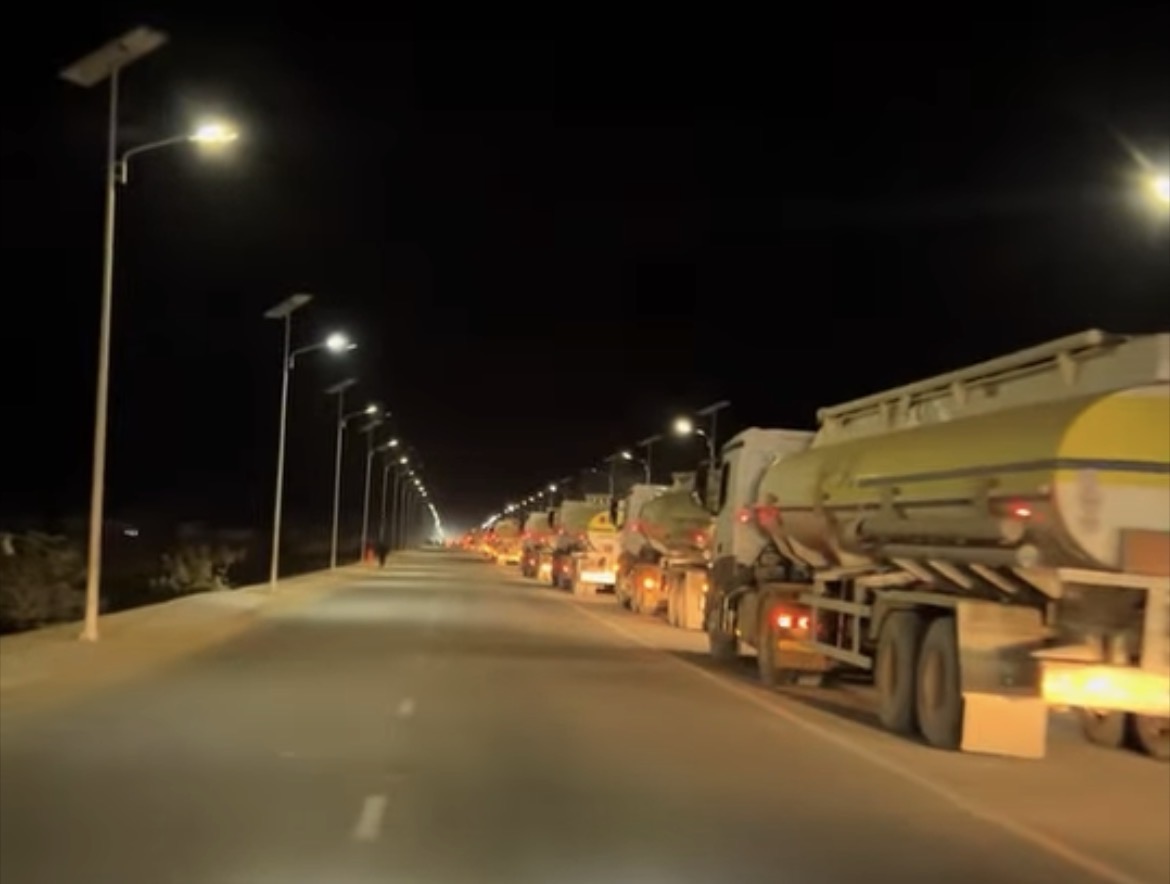
Since taking power in July 2023, General Abdourahamane Tiani has consistently framed sovereignty as a cornerstone of his leadership. If this principle is to resonate with citizens, it must deliver tangible outcomes especially in sectors that affect daily life. With over 53 tankers carrying 1.65 million liters of Algerian fuel arriving in Niamey on November 1, 2026, the regime has demonstrated its capacity to secure emergency supplies. But such stopgaps do not constitute a sustainable solution.
The real measure of Niger’s energy sovereignty lies not in crisis-driven imports, but in the operational reliability of its refineries, the financial health of its energy institutions, and the transparency of its trade agreements. For the Tiani government, this moment represents not just an administrative challenge, but a fundamental credibility test one that cannot be passed with speeches alone.
By Moussa Samuel Coulibaly — Journalist