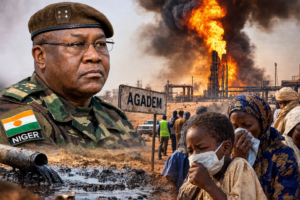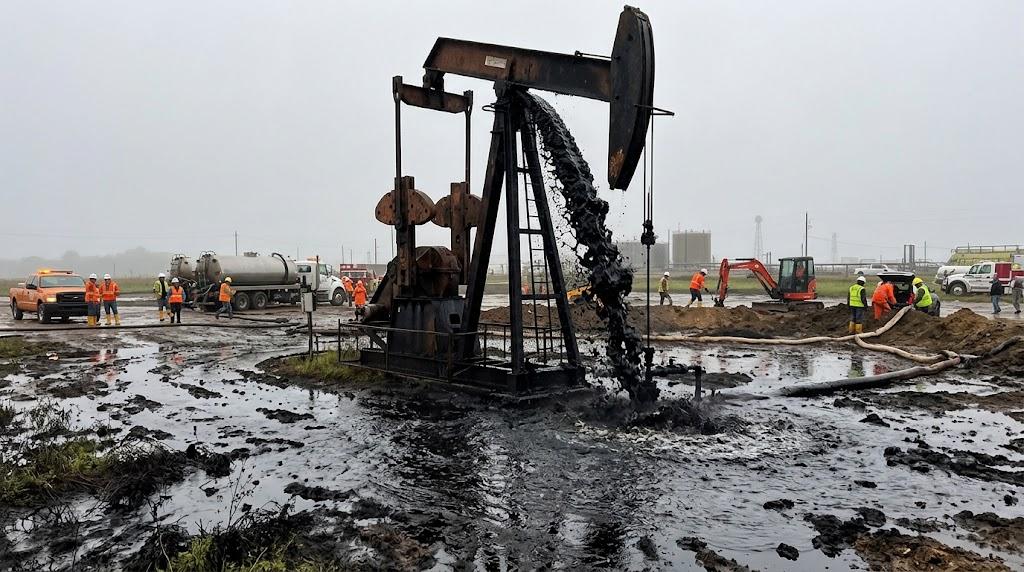

The Nigerien government’s long-overdue admission of a severe blowout at the Goumeri W-8 oil well marks a decisive turning point in the country’s energy sector. On October 12, 2026, authorities confirmed an uncontrolled eruption of crude oil and gas had devastated the site—exploited by CNPC Niger Petroleum (CNPC’s local subsidiary)—since September 25. The gushing well, spewing oil towering over 10 meters into the air, has triggered a local emergency, threatened neighboring wells, and left two workers hospitalized.
Government response faces scrutiny amid rising tensions
Despite claims ruling out sabotage or terrorism, the delayed official acknowledgment—17 days after the incident began—has intensified criticism. While civil society groups, including the Green Earth Network (GREN), had repeatedly warned about soil and groundwater contamination risks, the government’s response remained reactive. Emergency containment measures, such as dikes and retention basins, were hastily deployed to curb the spill, yet no official estimates of losses or damage scope have been released.
Sovereignty ambitions collide with technical gaps
This crisis exposes a stark paradox: as Niamey pushes for tighter control over its natural resources—demanding 80% local staffing at CNPC—the nation lacks the specialized expertise required to handle a severely damaged wellhead. The government’s struggle to contain the situation has forced a pivot in strategy, prompting a high-stakes appeal to Algeria and its state-owned energy giant, Sonatrach. With over six decades of experience in Sahara oil crises, Sonatrach’s engineers are now poised to conduct an independent audit and assist in securing the well.
Algeria’s role in reshaping Niamey’s energy future
The collaboration extends beyond immediate firefighting. Since early 2026, Niger and Algeria have deepened diplomatic and energy ties, including joint ventures on the Kafra permit and shared crude export strategies from the Agadem basin. While Sonatrach’s intervention may stabilize the Goumeri W-8 crisis, the timeline for a permanent fix remains uncertain. For Niger, this moment signals more than damage control—it’s a catalyst for recalibrating national energy sovereignty in partnership with Algiers.
What’s next for Niger’s oil sector?
- Blowout containment: Sonatrach’s engineers are assessing structural damage to determine the feasibility of a permanent seal.
- Environmental impact: Independent studies are underway to measure soil and groundwater contamination risks.
- Policy shifts: The crisis may accelerate reforms in local workforce quotas and emergency preparedness protocols for foreign-operated wells.