
From crisis to turning point: Agadem’s oil spill demands urgent action
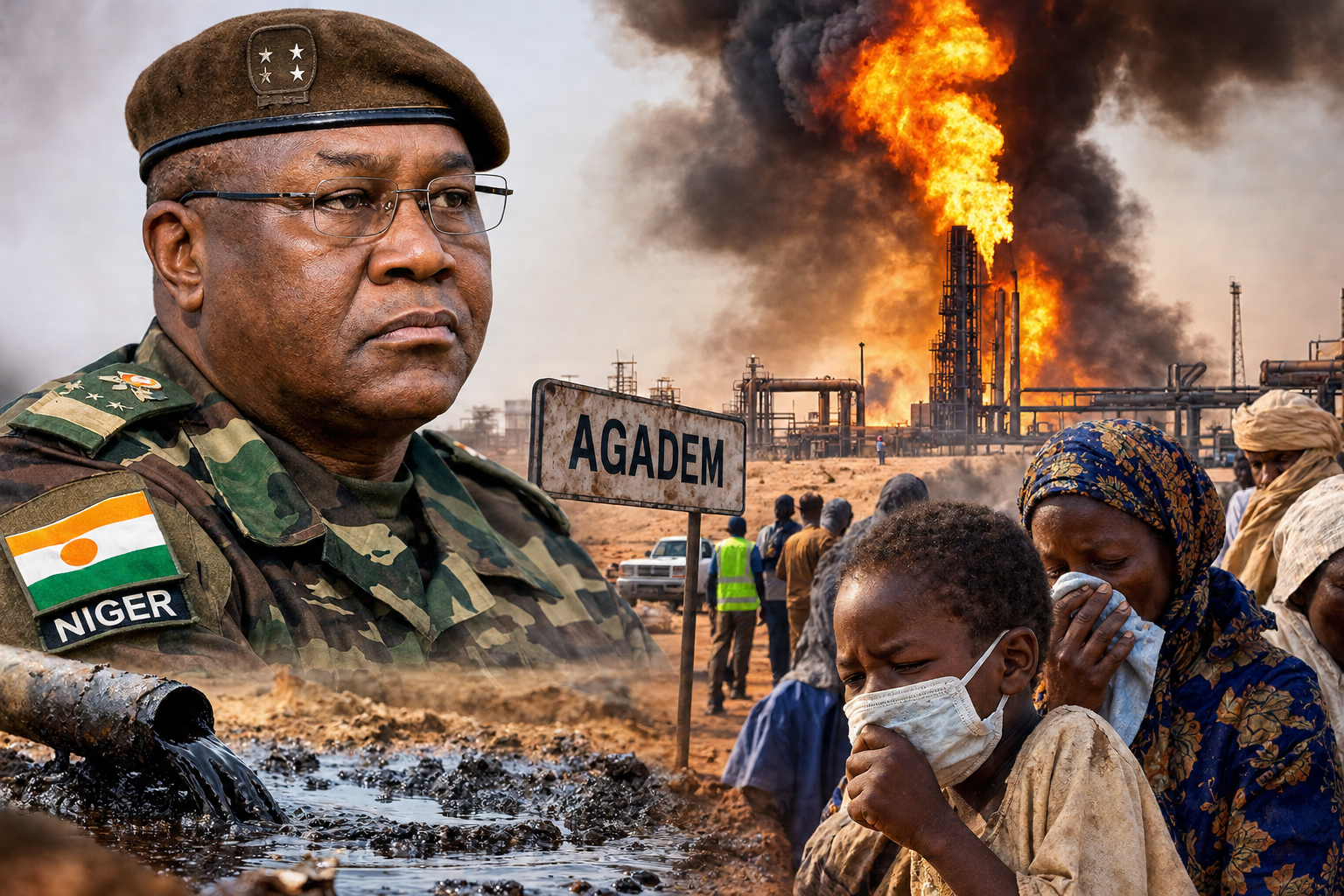
An unprecedented crude oil and gas eruption in Agadem, Diffa, has thrust Niger’s government into a defining moment. While authorities scramble to contain the rupture, the uncontrolled discharge of hydrocarbons has raised immediate concerns about public health risks and environmental contamination. The question now facing President Tiani’s administration is not just about managing the incident but about proving the state’s capacity to protect its citizens in the face of industrial disasters.
The hidden dangers of hydrocarbon exposure
Raw crude and associated gases pose severe health risks beyond surface-level contamination. Prolonged exposure to escaping hydrocarbons can lead to respiratory distress, neurological symptoms, and chronic skin and eye irritation. Certain chemical compounds present in oil and gas streams may also trigger long-term organ damage, particularly among vulnerable groups such as children and the elderly. As vapors infiltrate the air and toxic residues seep into soil and water supplies, even indirect exposure pathways such as contaminated food sources can become hazardous.
The potential consequences extend beyond individual health. Agricultural lands in Diffa’s rural communities rely on groundwater sources that could become compromised, threatening food security across the region. Without immediate containment and environmental monitoring, the ripple effects could destabilize both public health and local livelihoods for years to come.
Why Agadem’s crisis is a test of governance
This emergency is more than an industrial accident it is a critical test of Niger’s regulatory and emergency response frameworks. Reliable containment of hydrocarbon leaks requires specialized equipment, trained personnel, and real-time monitoring systems resources that are now under scrutiny. Despite official declarations classifying the incident as “exceptional,” public confidence hinges on visible, decisive intervention rather than delayed investigations or after-the-fact assessments.
In addition to physical containment, transparency will determine the government’s credibility. Residents in proximity to the spill require clear, accessible information about contamination risks and precautionary measures. Health screenings should be initiated without delay for those at risk, while environmental assessments must cover air quality, water purity, and soil integrity. This is not a matter of political debate, but a fundamental duty of care owed to the affected population.
Economic progress must not come at the cost of public safety
Agadem’s oil fields are central to Niger’s economic aspirations, promising revenue that could fund infrastructure, education, and healthcare. However, these benefits cannot supersede the right to a safe living environment. The national discourse often emphasizes energy sovereignty and resource control, yet sovereignty is hollow if the state cannot secure the communities living alongside its most valuable assets.
Can Niger’s government balance rapid hydrocarbon exploitation with robust safety standards? The current crisis will serve as a benchmark. If regulations are enforced, emergency protocols are executed efficiently, and public health is prioritized, the nation will reinforce its legitimacy as a responsible steward of its resources. Failure, however, risks eroding both trust and stability.
What comes next: demands for accountability and solutions
The situation in Agadem raises pressing questions that demand concrete answers:
What is the current status of the spill containment? Authorities must disclose real-time updates on efforts to seal the rupture and prevent further leakage.
Which hydrocarbons have been released, and in what quantities? Accurate data on these compounds is essential to assess both immediate and long-term health risks.
Has environmental contamination been confirmed? Comprehensive testing must evaluate air, soil, and water for toxic residues before normal activities resume.
What monitoring systems are in place for public health? Continuous oversight is required to track potential illnesses linked to exposure, particularly among agricultural workers and nearby residents.
Are affected communities receiving clear safety guidance? Evacuation protocols, use of protective equipment, and health advisories should be disseminated promptly and in local languages.
The path forward hinges on decisive action. Every moment of delay increases the likelihood of irreversible damage both to public health and to Niger’s reputation as a stable and responsible energy producer. The turning point is now: will the government rise to the challenge, or will the crisis become a symbol of unfulfilled promises?
By Idriss MAMADOU — Journaliste / Rédacteur