
In a decisive move reshaping regional alliances, France and Chad have jointly declared a renewed defense partnership, marking a turning point in the Sahel’s security landscape. The landmark agreement, signed on October 13, 2026, signals a strategic reset between Paris and N’Djamena after years of diplomatic strain and military reconfigurations across the Sahel.
From rupture to revival: the Franco-Chadian defense agreement
The historic accord signed in Paris restores formal defense cooperation between France and Chad, following the dissolution of their previous military arrangement in late 2024. Under the new framework, defense ministers from both nations inked a declaration of intent aimed at strengthening bilateral defense ties, with a focus on training, expertise, industrial cooperation, and technological collaboration.
This agreement comes nearly two years after Chad’s decision to terminate its military cooperation with France, a move that culminated in the withdrawal of French forces and the return of military bases in early 2025. The shift reflects Chad’s evolving strategic priorities and France’s adaptation to changing regional dynamics across the Sahel.
Chad: a linchpin for Sahel security
Chad’s geographical position makes it indispensable to regional security efforts. Bordering war-torn Sudan, Libya, and the Lake Chad Basin—a hotspot for armed groups—the country plays a critical role in border surveillance, counterterrorism, and capacity-building for its armed forces.
The new defense pact prioritizes operational support tailored to Chad’s immediate needs, emphasizing the development of local military capabilities rather than a permanent foreign military presence. This approach aligns with Chad’s insistence on maintaining full sovereignty over its strategic choices while fostering bilateral trust.
Regional tensions and diplomatic complexities
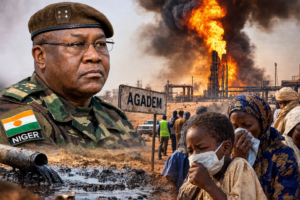
The timing of this agreement is particularly sensitive given escalating diplomatic frictions between France and Niger. Following the alleged coup attempt in Niamey on August 28–29, 2026, Niger’s government implicated Chad alongside France, accusing both nations of involvement. Paris vehemently denied these claims, intensifying regional scrutiny of the Franco-Chadian rapprochement.
While both Chad and Niger share security concerns, their divergent foreign policy orientations—with Chad now aligning more closely with France—have drawn sharp reactions from Niamey. The new defense framework deliberately limits its scope to bilateral relations, avoiding entanglement in broader regional disputes.
Beyond defense: paving the way for economic and cultural collaboration
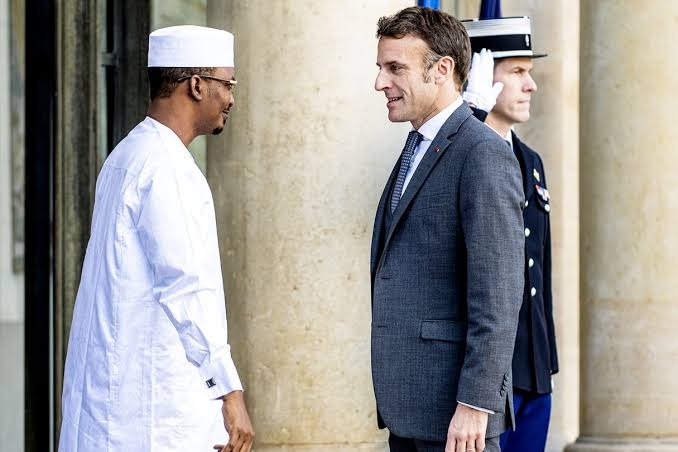
The October 13 meeting between President Emmanuel Macron and Chad’s President Mahamat Idriss Déby transcended military cooperation, laying the groundwork for expanded partnerships in infrastructure, energy, healthcare, education, and trade. This holistic approach seeks to move beyond a historically militarized relationship, placing greater emphasis on development and mutual prosperity.
For Chad, the agreement addresses pressing domestic priorities: job creation, public service enhancement, and economic resilience amid regional instability. By linking security cooperation with targeted investments, the two nations aim to address the root causes of instability while reinforcing bilateral stability.
A litmus test for France’s Sahel strategy
The renewed Franco-Chadian defense pact represents more than just a reset—it serves as a blueprint for France’s evolving policy in the Sahel. After the withdrawal of troops from Mali, Burkina Faso, and Niger, Paris is recalibrating its approach, shifting from large-scale military presences to targeted cooperation that respects host nations’ autonomy.
For Mahamat Idriss Déby, the agreement offers a pathway to modernize Chad’s military while preserving national sovereignty. For Macron, it reflects a pragmatic adaptation to a region where traditional alliances are no longer viable. Together, they signal a new chapter in Sahel diplomacy, one built on mutual benefit and strategic foresight.