

Le PSG conserve sa Ligue des champions: un doublé que personne n’imaginait il y a deux ans
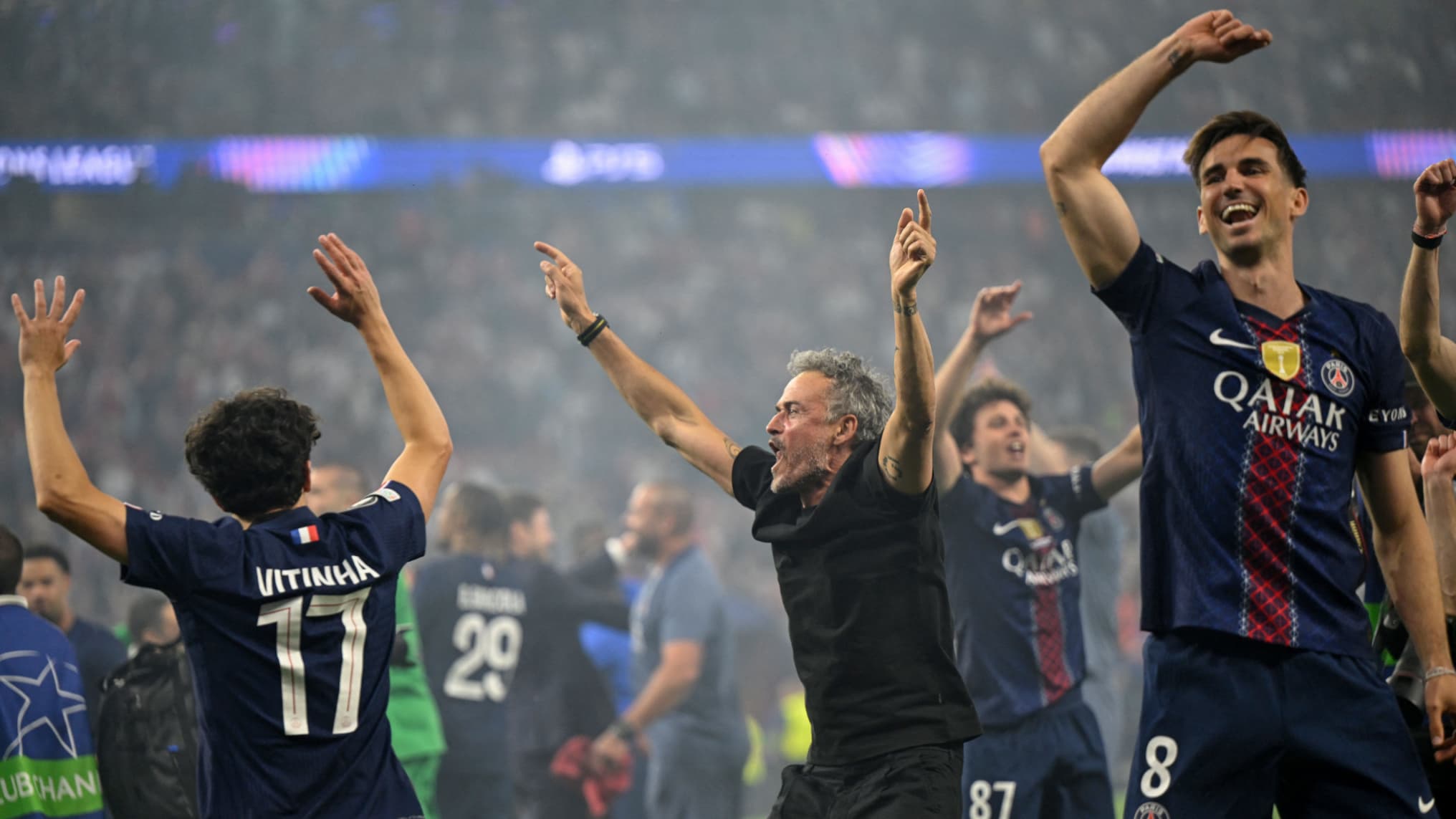
Head coach Luis Enrique had clearly articulated his ambition: securing a second consecutive Champions League victory was an even more compelling objective than clinching the initial title. The electrifying semi-final clash against fellow contenders Bayern Munich (a 5-4 aggregate win, followed by a 1-1 draw) served as a powerful testament to PSG’s insatiable hunger for silverware and their determination to forge an enduring legacy in football history. Enrique’s vision, declared at the close of the previous season, aimed to establish a dominant PSG era in Europe. His squad evidently embraced this challenge, even navigating a final where their performance wasn’t consistently flawless.
Despite conceding an early goal to Kai Havertz in the 6th minute, the Parisian side demonstrated resilience, with Dembélé converting a penalty in the 65th minute to level the score. The decisive moment arrived at the very end of the dramatic evening, as Gabriel’s penalty sailed high over the crossbar in Budapest, sealing PSG’s triumph.
This penalty shootout victory marks the sixth consecutive success under Luis Enrique’s leadership, maintaining his astonishing 100% record in such high-pressure situations, including four crucial final shootouts this season alone.
Achieving a back-to-back Champions League title remains an exceedingly rare feat. Since the modern Champions League format was introduced in 1993, only Zinedine Zidane’s Real Madrid managed this, securing three consecutive titles between 2016, 2017, and 2018. Paris Saint-Germain now proudly joins this elite Spanish club, celebrating their first two European crowns in 2025 and 2026.
Luis Enrique’s tactical mastery
Over the past two seasons, the capital club has exuded an impressive sense of composure and strategic depth. Despite being pushed hard by RC Lens throughout the Ligue 1 season – ultimately clinching the domestic title in the penultimate match – Paris displayed immense heart and determination to secure this latest European triumph, marking Luis Enrique’s third season at the helm.
The euphoria of their first victory in Munich on May 31, 2025, was unforgettable. The celebration in Budapest on May 30, 2026, will similarly resonate deeply with Parisians, representing the culmination of an arduous journey: minimal inter-season rest due to the Club World Cup, a relentless string of injuries, and a challenging path through the playoff rounds to reach the knockout stages. Once past these initial hurdles, PSG truly embodied their status as reigning European champions, convincingly overcoming Chelsea (5-2, 3-0 aggregate) and Liverpool (2-0, 2-0 aggregate) before demonstrating formidable strength against Bayern Munich (5-4, 1-1 aggregate).
Dembélé and Kvaratskhelia: the dynamic duo
Ousmane Dembélé and Khvicha Kvaratskhelia, pivotal figures in their Munich victory, once again spearheaded the Parisian attack, even if both experienced a less-than-perfect final performance. Dembélé navigated a complex season, often deployed as a false nine and frequently hampered by recurring hamstring and calf injuries. Nevertheless, he maintained remarkable consistency when fit, tallying seven goals and two assists across 12 Champions League appearances, alongside 10 goals and seven assists in 22 Ligue 1 matches, where the 2025 Ballon d’Or winner was named best player for the second consecutive time.
Khvicha Kvaratskhelia, the Georgian sensation, could realistically contend for this year’s Ballon d’Or. He proved just as instrumental as Dembélé in igniting the reigning European champions’ charge in the continent’s premier competition, contributing 10 goals and six assists in 15 matches. Notably, he frequently resolved precarious situations for PSG. It was Kvaratskhelia who, coming off the bench, scored a crucial brace to overcome Chelsea at the Parc des Princes, subsequently extinguishing any doubt in the return leg at Stamford Bridge. Yet, the true power of this Paris Saint-Germain squad lies not in individual brilliance, but in a cohesive collective force that has dominated European football for two consecutive years.

Related Posts