
Burkina Faso launches nationwide polio vaccination campaign in seven regions
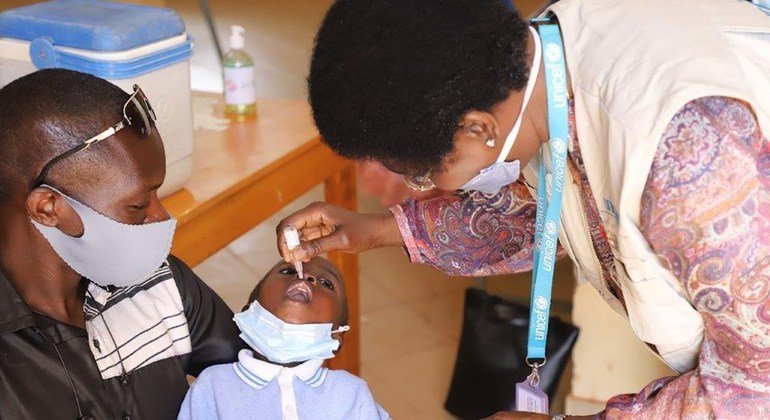
The Ministry of Health in Burkina Faso, in collaboration with the United Nations Children’s Fund (UNICEF) and the World Health Organization (WHO), has initiated a critical polio vaccination drive spanning seven regions across the country. This initiative aims to protect over 2 million children under five years of age from the devastating effects of poliomyelitis.
campaign timeline and target regions
The vaccination campaign is scheduled to run from September 18 to 21, 2020, targeting children in the following regions:
- Plateau Central
- Centre
- Centre-Nord
- Centre-Ouest
- Centre-Sud
- Est
- Centre-Est
polio resurgence and covid-19 challenges
The urgency of this campaign stems from the detection of a poliovirus case in the Ouargaye health district in January 2020. While an initial localized vaccination response was deployed in the Centre-Est region, the subsequent Covid-19 pandemic disrupted these efforts, leading to gaps in immunization services.
James Mugaju, Deputy Representative of UNICEF Burkina Faso, highlighted the consequences of these disruptions: « The Covid-19 pandemic led to a temporary suspension of vaccination campaigns, resulting in interrupted immunization services and a rise in epidemic-prone diseases, including polio. »
By June 2020, the national disease surveillance system had identified nine new polio cases alongside over 600 instances of acute flaccid paralysis, a condition often linked to polio.
strategic mobilization for mass vaccination
To ensure comprehensive coverage, UNICEF has supplied 2.29 million vaccine doses and supported community engagement initiatives. A team of over 5,000 health workers and mobilizers will conduct house-to-house visits to identify, sensitize, and vaccinate children aged 0 to 59 months.
In adherence to Covid-19 safety protocols, the campaign has distributed 39,500 masks and over 26,500 bottles of hand sanitizer to protect both children and health workers during door-to-door activities.
Mugaju emphasized the collective responsibility: « UNICEF and WHO are fully committed to ending the polio outbreak. We urge all stakeholders—local authorities, community leaders, and parents—to support and facilitate the work of vaccination teams. Polio poses a severe threat to children’s health, and we must eradicate this disease from the country. »
He further stressed: « Amid reduced access to healthcare due to insecurity and the Covid-19 pandemic, it is more vital than ever to intensify efforts to reach every child, vaccinate them, and protect them from vaccine-preventable diseases, including polio. »
understanding polio: transmission and risks
Polio (poliomyelitis) is a highly contagious viral infection primarily affecting young children. The virus spreads through contaminated water or food and, upon multiplying in the intestines, can invade the nervous system, leading to paralysis.
While Burkina Faso was declared free of wild poliovirus in 2015, the country currently faces outbreaks of paralysis linked to other forms of poliovirus, placing it among the 15 African nations experiencing such challenges.
next steps: extending protection to nine regions
A second phase of the vaccination campaign is planned for early October 2020, targeting nine regions, including the previously covered areas as well as Sahel and Nord. This follow-up aims to ensure no child is left unprotected against polio.