
Polisario’s military weakness exposed as Morocco’s drone strikes mount
Polisario’s military weakness exposed as Morocco’s drone strikes mount

The Polisario Front continues to voice openness to dialogue with Rabat, even after one of its senior commanders was killed in a Moroccan airstrike. This contradictory stance reveals the desperation of a movement that is outmatched militarily and increasingly isolated on the world stage.
The death of Lahbib Mohamed Abdelaziz—a high-ranking Sahrawi military leader and son of the movement’s former president—has laid bare the harsh reality on the ground. He was struck by a precision-guided weapon while pulling back from an operation, joining dozens of others killed by drones in recent years. Morocco’s technological edge crushes the capabilities of the independence fighters, who have long relied on modified Spanish Land Rovers. Faced with this overwhelming asymmetry, the Polisario delegate in Madrid, Jalil Mohamed Abdelaziz, could only speak of the “heavy price” paid to defend their dignity.
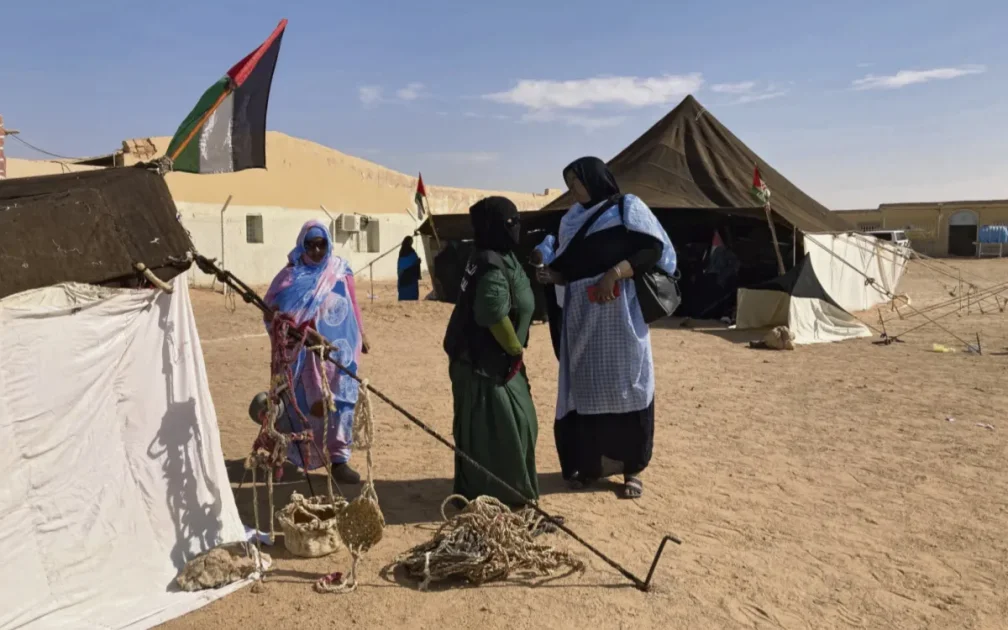
Despite this deadly vulnerability, the separatist movement sends mixed signals. Abdoullah Arabi, their representative in Spain, insists the group “is used to holding talks in any possible setting,” refusing to close the door on bilateral contacts. This fluctuating approach was on display in April from the Tindouf camps in Algeria, where 175,000 people live. There, leader Brahim Ghali softened his usual martial rhetoric, saying his camp wanted to act as a peaceful neighbour to all countries, including Morocco, while demanding that UN resolutions be respected.
Such tactical zigzagging stems directly from the Polisario’s growing marginalisation globally. The conflict attracts little interest because of its limited geostrategic significance, while Rabat has solidified support from major Western powers like the United States and France. Spain itself shifted in 2022 when President Pedro Sánchez called the Moroccan autonomy plan the most serious basis for a solution. Abdoullah Arabi criticises this turnaround, denouncing Madrid’s “deafening silence and double standards” when Sahrawi lives are lost.
On the ground, the encirclement is concrete: a fortified sand wall built in the 1980s slices across the 250,000 square kilometres of the region, keeping most of the coastline firmly under Moroccan control. Confined to barely 20% of the territory inland, the independence fighters face a physical barrier they cannot breach. Activist Aminatou Haidar insists the people’s determination remains unbroken, but intimate knowledge of the desert is no longer enough to counter Morocco’s powerful military machine.