
Under the leadership of Reporters Without Borders (RSF), nearly 30 human rights organizations and media outlets have jointly issued an urgent call to authorities in Mali and Burkina Faso as well as regional and international bodies, demanding an immediate halt to ongoing violations against press freedom in both nations.
a coordinated appeal for journalists’ safety
The coalition, spearheaded by RSF, has sent an open letter to the governments of Mali and Burkina Faso, along with African regional institutions and the international community. The signatories strongly condemn the systematic harassment, intimidation, and attacks targeting journalists in both countries, calling for strict adherence to international commitments regarding freedom of expression and press freedom—particularly the African Charter on Human and Peoples’ Rights.
urgent concerns highlighted by regional leaders
Sadibou Marong, RSF’s Sub-Saharan Africa Director, emphasized the critical importance of this solidarity initiative, stating: “This collective action underscores the vital need to uphold and promote press freedom in Mali and Burkina Faso. As World Press Freedom Day approaches, authorities in both nations must recognize the gravity of the situation and take decisive action to ensure journalists can work without fear of retaliation.”
alarming decline in press freedom rankings
The plea comes amid a sharp deterioration in press freedom indices. In the latest 2023 World Press Freedom Index, Burkina Faso ranked 58th out of 180 countries, while Mali plummeted to 113th position. The signatories warn that these rankings reflect a dangerous erosion of democratic values and civic space in both nations.
disturbing patterns of repression
The open letter details a growing pattern of repression against media professionals in both countries:
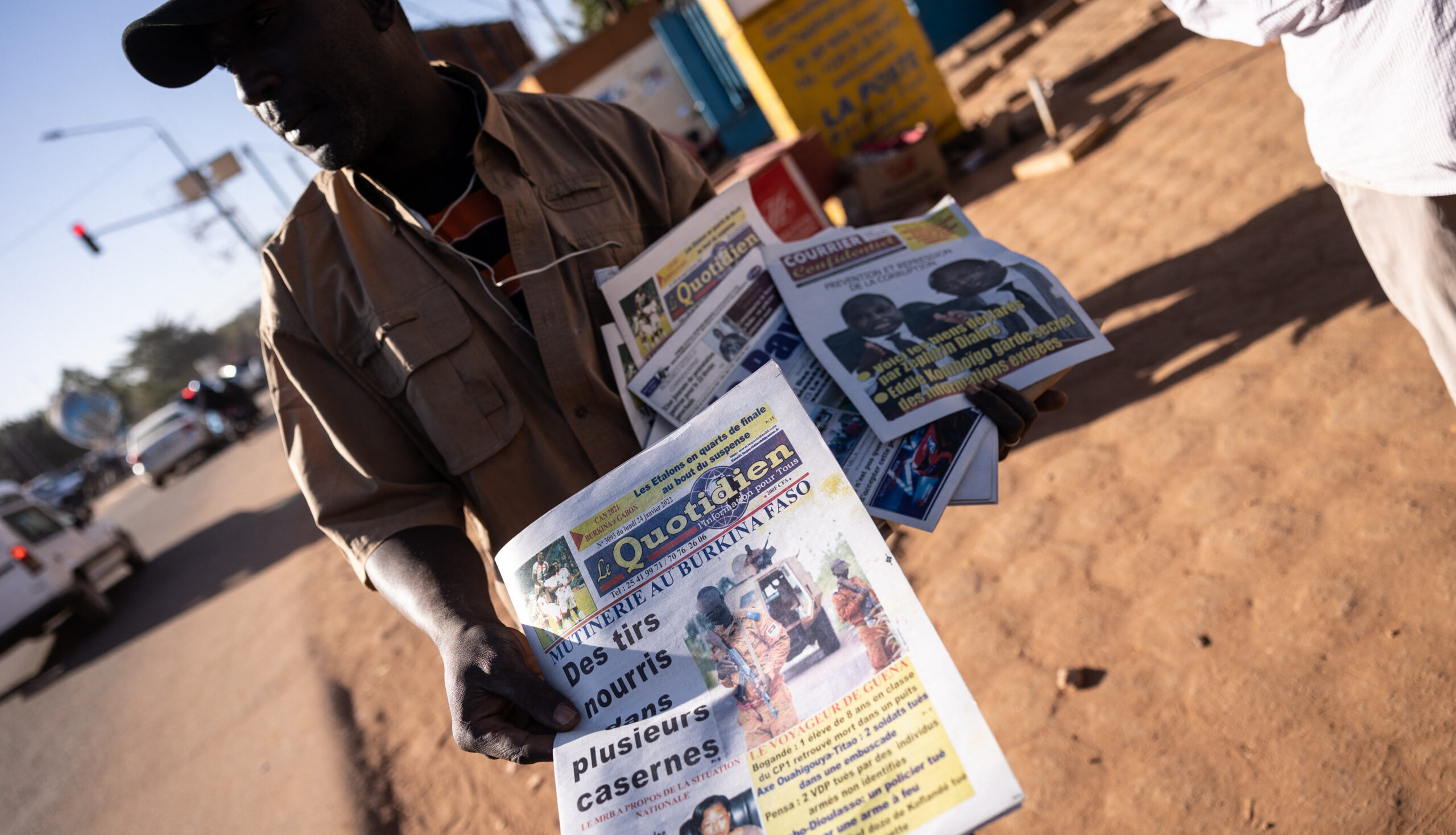
- Burkina Faso: Journalists face mounting threats, including suspensions of international outlets like RFI and France 24, expulsion of foreign correspondents, and violent intimidation campaigns. The Superior Council of Communication (CSC) has publicly expressed alarm over the “recurring threats” against media outlets, urging authorities to “take appropriate measures to ensure the safety of journalists.” The UN High Commissioner for Human Rights, Volker Türk, has also voiced deep concern, emphasizing that “the protection of independent voices is more crucial than ever during this transitional period.”
- Mali: Independent journalism is under severe strain, with attacks on press freedom escalating. The House of the Press in Bamako was ransacked in February 2023. Prominent commentators like Mohamed Youssouf Bathily (Ras Bath) have been arrested for criticizing government actions, while journalists such as Aliou Touré have been abducted by armed men. International media, including Jeune Afrique and Libération, have also faced expulsion or broadcasting bans.
Both nations are witnessing a surge in “fake news” and disinformation campaigns propagated by pro-regime influencers, further undermining public discourse. L’Observateur Paalga, a leading Burkinabè newspaper, has described this as the “imposition of a reign of terror,” where truth is systematically suppressed.
a united call for action
The coalition’s demands include:
- An immediate end to all measures restricting press freedom in Mali and Burkina Faso.
- Stronger protection for journalists facing threats, intimidation, or physical attacks, with impartial investigations into abuses.
- Full compliance with international human rights obligations, including the African Charter on Human and Peoples’ Rights and the International Covenant on Civil and Political Rights.
- Active support from regional and global institutions to defend press freedom as a fundamental right.
who are the signatories?
The initiative has garnered support from nearly 30 organizations, including:
- Media outlets: Joliba TV News (Mali), Lefaso.net (Burkina Faso), Le Monde, France 24, and RFI.
- Press freedom advocates: Fédération des Journalistes Africains (FAJ), Union Internationale de la Presse Francophone (UPF), and Media Foundation for West Africa (MFWA).
- Human rights bodies: Human Rights Watch (HRW), Fédération Internationale des Journalistes (FIJ), and Cellule Norbert Zongo pour le Journalisme d’Investigation (CENOZO).
This unified stance reflects growing international concern over the deteriorating conditions for journalists in Mali and Burkina Faso, where the fight against terrorism is increasingly cited as justification for suppressing dissent and restricting access to independent information.
a plea for democracy and transparency
The letter concludes with a powerful reminder: “Access to information is a fundamental right of all people.” As World Press Freedom Day approaches, the signatories urge authorities and global institutions to prioritize the protection of journalists, ensuring that the pursuit of security does not come at the cost of democratic freedoms.