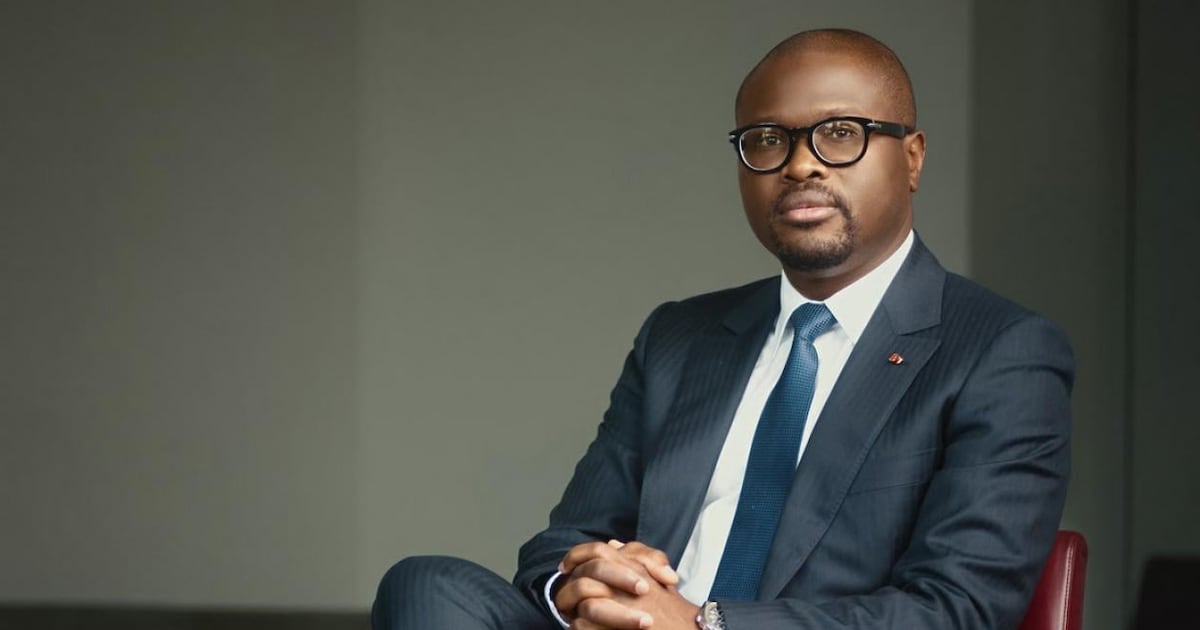

Mr. Wadagni, who is set to celebrate his 50th birthday next month, has officially commenced his seven-year, renewable term as Bénin’s head of state.
Following his formal proclamation by the Chief Clerk of the Constitutional Court, he took the oath of office on Sunday morning during a concise ceremony held at the presidential palace in Cotonou, the nation’s economic hub. Notably, no foreign heads of state were invited, a practice consistent with Bénin’s recent presidential inaugurations.
His election on April 12 was largely a formality, as he faced only one challenger, Paul Hounkpè, a relatively minor opposition figure whose party, the Forces Cauris pour un Bénin Émergent (FCBE), has since aligned with the presidential majority.
The primary opposition party, Les Démocrates, found itself unable to participate in the election due to a shortfall in the required endorsements and is currently navigating a period of significant internal turmoil.
After his investiture, Romuald Wadagni delivered a speech, commencing with a tribute to his predecessor before reiterating several key campaign pledges.
“National growth only holds meaning when it becomes tangible in the everyday lives of our people,” he asserted.
“To the youth of Bénin, who reject old fatalisms and aspire to succeed right here at home through their hard work, I want to convey this message: Bénin believes in you, and it will provide you with the opportunities to achieve success,” the new president added.
Strengthening regional ties, addressing security
Romuald Wadagni is expected to continue the economic development projects initiated by his predecessor, initiatives in which he played a pivotal role as the former Minister of Finance.
He also faces the critical challenge of security in the northern regions of the country, which have been plagued by recurrent violence from jihadist groups actively recruiting from the Béninese population.
“Bénin will yield neither to fear nor to complacency. The state will stand firm against anything that threatens our cohesion and our security,” Mr. Wadagni declared on Sunday, urging for collaborative efforts with neighboring nations.
On the diplomatic front, this self-proclaimed Francophile must endeavor to reconcile his nation with its Sahelian neighbors, particularly Niger. These countries, governed by sovereignist juntas, have distanced themselves from the West and frequently accuse Bénin of attempting to destabilize them. This situation is a significant aspect of current Sahel news English and Mali Niger Burkina reporting.
Sunday’s ceremony saw a notable sign of diplomatic thawing, with Niger dispatching its Prime Minister, Ali Mahaman Lamine Zeine, who received warm applause. Burkina Faso and Mali were also represented by their respective Ministers of Foreign Affairs, underscoring efforts to improve Sahel current affairs.
Mr. Wadagni’s initial decisions regarding public liberties will be closely scrutinized, especially given accusations that his predecessor, Patrice Talon, steered the country towards an authoritarian path, leading to the imprisonment of several prominent opposition figures.
Reporters Without Borders (RSF) issued an appeal this week, urging Romuald Wadagni to “make the promotion of press freedom a priority” of his mandate and to secure the release of imprisoned journalists.
Bénin now enters a period of over six years without national elections, a consequence of constitutional reforms that align all national and local polls to occur in the same year.
Hailing from a family of intellectuals – his father, Nestor, was a distinguished Béninese economist, and his mother an entrepreneur – “RoW,” as his supporters affectionately call him, was born on June 20, 1976, in Lokossa, located in the southwest near neighboring Togo.
He maintains a strong connection to his roots, often remarking on his active involvement with an agricultural farm he has consistently overseen.
However, much of his early life unfolded far from Bénin. After pursuing finance studies at the École Supérieure de Commerce de Grenoble in France, he undertook further training at Harvard in the United States. He then joined the prestigious firm Deloitte, where he rose to partner, notably overseeing African operations.
In April 2016, just months before his 40th birthday, Patrice Talon, newly elected president, entrusted him with the Ministry of Economy and Finance to implement an ambitious economic reform agenda.
Under his leadership, Bénin successfully stabilized its finances, reducing the deficit by two-thirds to 3% of GDP, embarking on major infrastructure projects, and modernizing its economy.
When Mr. Talon was re-elected in 2021, he maintained his trust in Mr. Wadagni, further promoting him to Minister of State.
A path of continuity
Bénin has consistently achieved robust economic growth, averaging over 6% annually for the past decade, earning it favor among international investors as a high-performing West African nation.
As president, Mr. Wadagni “will build upon the foundations already established,” noted political analyst Franck Kinninvo.
Yet, national governance extends beyond economic development; the president must also confront the severe jihadist violence impacting the army in the country’s northern regions.
Those close to the president confirm that Mr. Talon involved Wadagni in all security decisions made in recent years and personally endorsed him as his successor.
During his campaign, he garnered support from the two main ruling parties and even secured the backing of some opposition figures. “He is a unifier,” remarked an insider.
“While some criticize his relative political discretion, this can also be a strength in an environment where sobriety and effectiveness are highly valued. For us, Wadagni embodies a new generation of leadership, focusing less on rhetoric and more on tangible impact,” opined Lucien Fayomi, a prominent supporter.