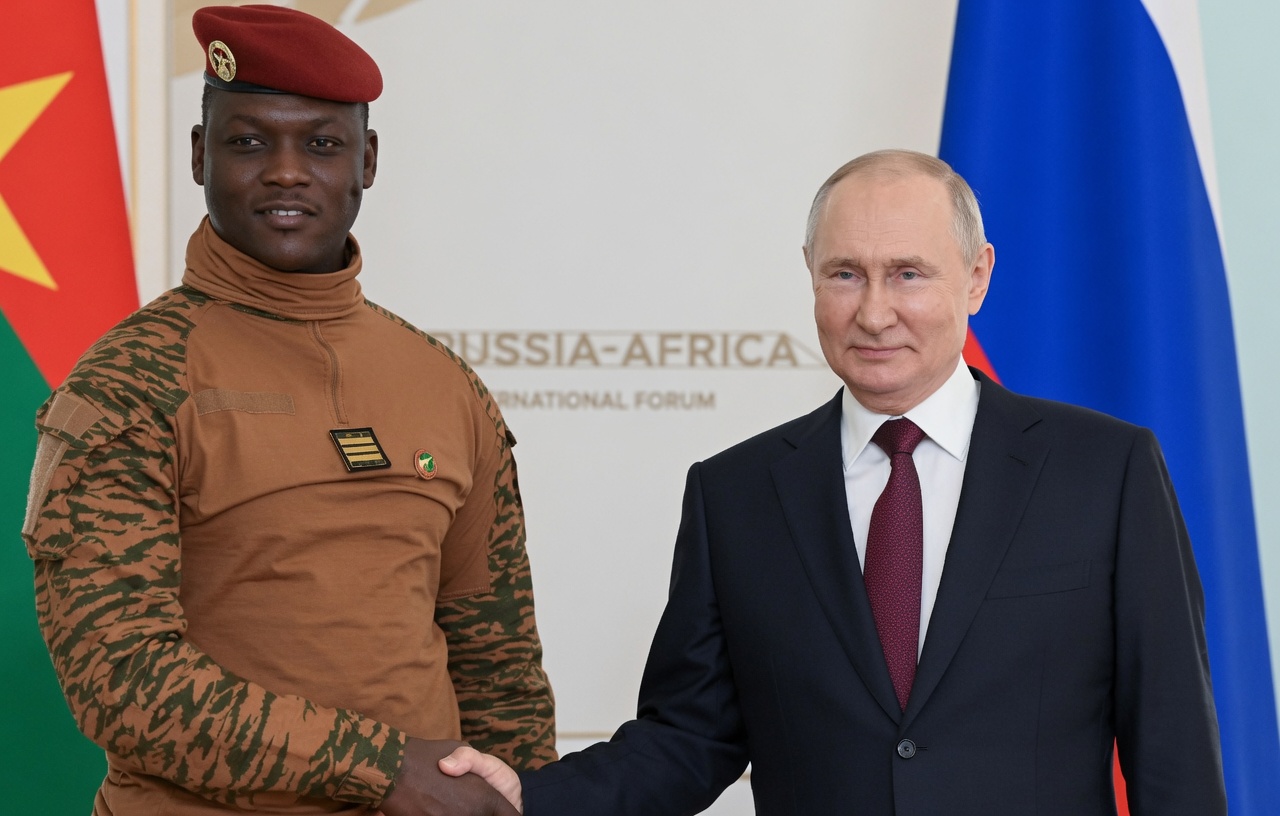

Ouagadougou’s strategic pivot toward Moscow: promises versus realities
Since deepening its ties with Russia, Burkina Faso has positioned Moscow as a key ally, framing the cooperation as a path to restored sovereignty and enhanced security. Official statements emphasize mutual respect, absence of political strings, and a so-called “win-win” relationship. Yet beneath the polished rhetoric lies a more complex picture—one that raises questions about the true depth and sustainability of this partnership.
Security cooperation: progress or persistence of instability?
The Burkinabè government argues that realigning with Russia has boosted its security capabilities. However, despite expanded military collaboration, attacks by armed groups continue to devastate regions across the country. Civilian casualties mount, forced displacements surge, and communities remain under constant threat. While Russian support may have bolstered operational capacity, it has not yet translated into a decisive shift in the conflict’s trajectory. The persistent violence suggests that no single foreign partnership, no matter how robust, can single-handedly resolve a crisis rooted in internal fragility and regional instability.
Economic engagement: investments on paper vs. tangible gains
Moscow’s promises of investment and trade expansion have sparked optimism in Ouagadougou. Yet, economic indicators tell a different story. Pressure on public finances remains high, supply chains are disrupted, and local businesses struggle to regain momentum. The anticipated dividends from this partnership have yet to materialize at a scale that could revitalize the economy or improve livelihoods. Without concrete, large-scale projects that create jobs or boost productivity, the strategic value of this cooperation risks being confined to diplomatic symbolism rather than real economic transformation.
Resource swap: trading gold for wheat—a bold or desperate move?
Recent discussions around exchanging Burkinabè gold reserves for Russian wheat have ignited debate. Proponents argue it ensures food security amid global supply chain disruptions. Critics counter that such a deal exposes structural weaknesses, turning a national treasure into a bargaining chip for basic necessities. True sovereignty, they contend, lies not in trading one critical asset for another, but in building domestic capacity to produce food, secure supply chains, and reduce dependency on external actors—whether from the West or the East.
Education and human capital: limited but meaningful exchanges
One area where the partnership shows tangible promise is in education. Burkinabè students gaining access to Russian universities represent a vital channel for knowledge transfer and skill development. Still, these opportunities remain accessible to a small elite and do little to address systemic challenges in Burkina Faso’s education sector—such as underfunded institutions, brain drain, and youth unemployment. While educational exchanges are a step forward, they cannot alone reverse decades of educational gaps or foster inclusive growth.
No strings attached? The geopolitical reality behind the rhetoric
Burkina Faso’s leadership has repeatedly emphasized that its partnership with Russia comes without hidden conditions. Yet international relations rarely operate on pure altruism. Moscow’s engagement in Africa aligns with its broader ambition to challenge Western influence, secure new markets, and strengthen its global standing amid sanctions and isolation. For Ouagadougou, this means gaining leverage in a multipolar world—but it also means navigating a relationship where its own strategic autonomy could be subtly constrained over time.
Diplomatic diversification: avoiding the trap of new dependencies
While turning away from traditional Western partners may have been a strategic necessity, the rush to embrace a single new ally carries risks. A foreign policy overly concentrated around one power risks narrowing Burkina Faso’s diplomatic maneuverability. It may deter investment from other regions, complicate relations with neutral or rival blocs, and leave Ouagadougou vulnerable to shifts in Moscow’s priorities. A truly sovereign foreign policy demands balance—not a pivot from one dependency to another.
The ultimate test: does this partnership improve lives?
At its core, any international partnership must be judged by its impact on ordinary citizens. Have communities seen improved safety? Are public services more accessible? Has economic activity rebounded? On these fronts, the results remain inconsistent. While diplomatic realignment has opened doors, tangible benefits for the average Burkinabè are still largely aspirational. Sovereignty is not declared—it is earned through consistent progress in security, economy, and governance. Until Burkina Faso sees measurable improvements in the daily lives of its people, claims of a fully realized “win-win” partnership will ring hollow.
For now, the Russia-Burkina Faso relationship offers potential, but it has not yet proven itself as a catalyst for transformation. The true measure of its success will lie not in the strength of its rhetoric, but in the resilience of its outcomes.