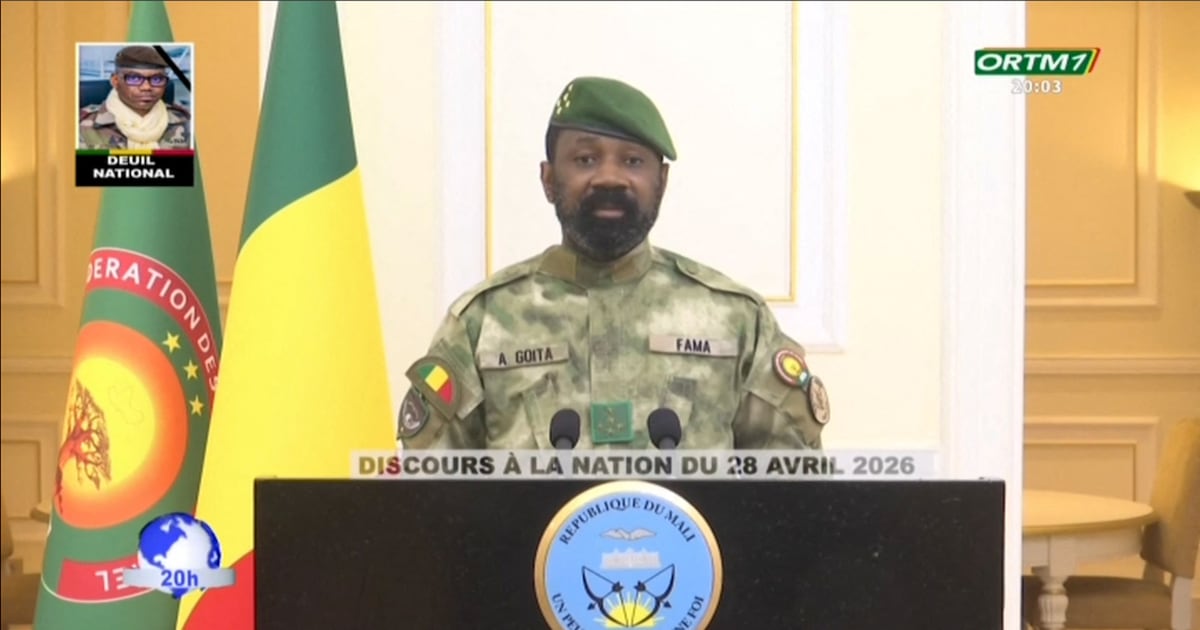

Mali’s latest security crisis sends shockwaves across West Africa. The coordinated attacks on April 25, which claimed the life of Defense Minister Sadio Camara in Kati, have left Bamako shaken but not defeated. General Assimi Goïta has since taken over the defense portfolio, yet fears of a regime collapse remain premature. Mali’s resilient population, long accustomed to turbulence, continues to navigate the storm with characteristic endurance. Behind the scenes, however, a complex web of competing factions—military authorities, the Front de libération de l’Azawad (FLA), and the Jamaat Nusrat al-Islam wal Muslimeen (JNIM)—engages in a silent war of narratives, complicating recovery efforts.
alliances in name only: the hollow promise of regional security
The Alliance of Sahel States (AES)—comprising Mali, Burkina Faso, and Niger—was meant to be a bulwark against insecurity. Yet its practical impact remains minimal. While the alliance’s legal framework, enshrined in the Liptako-Gourma Charter, mirrors NATO’s mutual defense clause, real-world implementation is stymied by internal threats. Burkina Faso, led by Captain Ibrahim Traoré, has publicly condemned what it calls a “monstrous conspiracy,” but Ouagadougou’s primary focus remains domestic. Recent attacks have claimed dozens of military lives, forcing a pragmatic withdrawal from regional commitments. Similarly, Niger’s declaration of a national day of fasting and prayer against terrorism underscores the limits of coordinated action.
The AES alliance, though symbolically powerful, lacks operational maturity. Mutual force integration remains a distant goal. Even symbolic gestures—such as Niger’s fasting day—highlight the gap between policy and practice. The alliance’s strategic vision is still in its infancy, constrained by overlapping crises that demand immediate national attention.
CEDEAO’s cautious re-entry into the sahelian chessboard
The Economic Community of West African States (CEDEAO) has called for a “regional mobilization,” but its influence is waning. Mali’s withdrawal in January 2025 has left the bloc scrambling to reassert relevance. A landmark meeting in Lomé, Togo, brought together AES members, CEDEAO representatives, the African Union, France, the European Union, and Russia—an unprecedented convergence. Mali’s Foreign Minister Abdoulaye Diop has signaled openness to dialogue, provided it respects the sovereignty of Sahelian states. This olive branch suggests a tentative CEDEAO effort to rebuild trust and reinsert itself into the Sahel’s security architecture.
Yet the bloc’s credibility has been eroded by past military interventions, notably in Niger. Its new approach prioritizes diplomatic engagement over confrontation. By the end of 2026, CEDEAO plans to deploy a 1,650-strong counterterrorism brigade, but broader peacekeeping ambitions remain uncertain. The April 25 attacks have reignited calls for joint security strategies, intelligence sharing, and resource pooling—even if only at a basic level.
african union’s continental vision: between ambition and reality
The African Union (AU) has emphasized the need for “continental mechanisms” to prevent further destabilization in central Sahel. However, the creation of the AES has fragmented regional security structures. For over a decade, the AU and CEDEAO have been sidelined in favor of the now-defunct G5 Sahel, which dissolved in 2023. Despite this, both organizations retain aspirations for a unified intervention force. Yet translating these ambitions into action has proven difficult.
The AU’s push for regional cohesion reflects a growing recognition: isolating the central Sahel from West Africa is a strategic blunder. Terrorist groups do not respect borders. Effective counterterrorism demands cross-border cooperation, shared intelligence, and pooled resources. The AU’s vision remains aspirational, but its feasibility hinges on political will and operational readiness.
The collapse of Russian influence in the Sahel is not just a military setback—it’s a symbolic one. Moscow’s promise of protection has imploded.
the russian retreat: a geopolitical earthquake
Russia’s influence in the Sahel is crumbling. The death of Sadio Camara, Mali’s most pro-Russian defense minister, marks a turning point. The withdrawal of Africa Corps paramilitaries from Kidal further underscores Moscow’s diminishing leverage. Once hailed as a guarantor of security for Sahelian regimes, Russia now faces a crisis of credibility. Its military and diplomatic model has failed to deliver tangible results.
Washington has taken notice. Despite limited African engagement under former President Donald Trump, U.S. diplomats have returned to the Sahel, even re-engaging Niger after expelling American troops. The stakes have shifted. With Russia’s decline, the U.S. sees an opening to expand its footprint, leveraging geostrategic interests and resource access. Mali, in particular, may become a focal point for renewed American involvement.
will the Sahel’s crisis spill into coastal west africa?
The immediate concern for coastal nations—Togo, Bénin, Ghana, Côte d’Ivoire—is not Mali itself, but the escalating crisis in Burkina Faso. A domino effect could destabilize the entire subregion. Senegal and Mauritania are closely monitoring events in Ouagadougou. The fragility of the AES alliance raises existential questions about its long-term viability.
Togo’s Foreign Minister, Robert Dussey, has proposed building a “bridge with the Sahel,” though the contours of this initiative remain vague. Meanwhile, public pressure mounts for concrete solutions beyond rhetoric. Populations across the region demand action—not just from their governments, but from regional blocs that have repeatedly fallen short.
You cannot extract the Sahel from West Africa. Its stability is indivisible from the region’s future.
is a domino effect inevitable?
The Mali crisis is unique. Replicating its trajectory elsewhere would be premature. The Front de libération de l’Azawad operates exclusively in Mali, and the nation’s crises are deeply intertwined—security failures in the north and political instability in Bamako. Yet paradoxically, these attacks may strengthen the junta’s grip. National unity around territorial integrity has never been more pronounced. Dissent is now equated with betrayal, silencing critics and reinforcing the regime’s narrative.
In Burkina Faso, despite vast areas outside government control, no protest movement has emerged to align with jihadist groups like the JNIM. The country’s resilience, though tested, has not yet reached a tipping point. The absence of a unifying crisis—like Mali’s—reduces the risk of a broader collapse. For now, the Sahel remains a powder keg, but the fuse has yet to ignite beyond Mali’s borders.