
Senegal’s mounting debt: experts call for bold diversification
With Senegal grappling with a concerning debt burden, a group of prominent economists gathered in Dakar has issued a clear call to action: undertake a comprehensive audit of the nation’s public debt and strategically expand financial partnerships beyond traditional multilateral bodies. This dual approach is seen as essential to navigating the country’s current economic challenges.
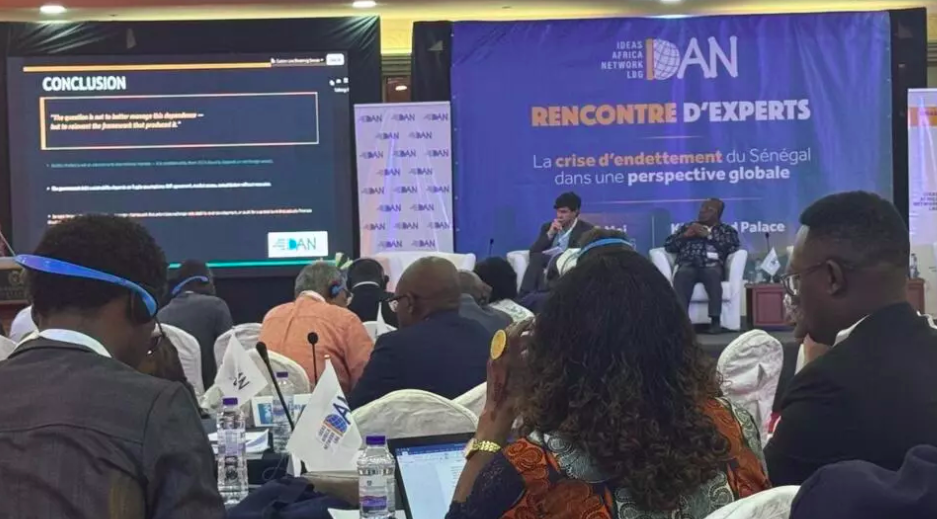
During a recent conference specifically addressing “Senegal’s Debt Crisis,” these experts proposed a fundamental shift in the state’s financial cooperation and its sources of borrowing. Their consensus points to diversification as the key antidote to the current situation.
Current Senegalese authorities have revealed what they describe as undisclosed financial commitments made by the previous administration between 2019 and 2024 – allegations vehemently denied by former President Macky Sall. According to the government, these hidden obligations have propelled Senegal’s debt-to-GDP ratio to an alarming 132%.
Demba Moussa Dembélé, a respected Senegalese analyst, urged the nation’s leadership to seek financial partnerships with countries that demonstrate greater respect for state sovereignty, contrasting them with traditional multilateral institutions. He specifically cited China as a potential partner in this regard.
“Such partners,” Dembélé asserted, “will enable us to break free from the neocolonial system.” Dembélé heads the African Research and Cooperation for Endogenous Development, an organization dedicated to fostering development rooted in local knowledge.
Furthermore, Dembélé advocated for a comprehensive audit of Senegal’s public debt to fully ascertain its scope and nature.
Echoing this sentiment, Ali Zafar, an economic advisor with the United Nations Development Programme (UNDP), encouraged Senegalese authorities to follow Turkey’s example by broadening their network of creditors. “Turkey forged new financial ties with Saudi Arabia,” Zafar noted, “Senegal could pursue similar avenues.”
“The International Monetary Fund (IMF) is not the sole provider of capital,” Zafar emphasized. He suggested that Senegal initiate bilateral discussions with countries like China, leveraging their expertise in debt management and repayment strategies.
He firmly believes that nations like Senegal must approach negotiations with the IMF equipped with robust counter-proposals to safeguard their national interests.
Crucially, Zafar advised that any debt negotiations with the IMF must prioritize the protection of vital social sectors, particularly education and healthcare, ensuring they are not compromised.
Furthermore, he argued that the IMF should refrain from imposing stringent rules on nations already facing economic hardship.
“It is unsustainable to allocate all national revenue to debt servicing or to resort to new international loans simply to repay existing creditors,” the UNDP advisor declared.
Zafar asserted that “it is high time for African nations to articulate every possible objection and alternative in these discussions.”
In his view, Senegal requires a fresh, comprehensive evaluation of its debt to truly “understand the full scope of the challenge.”
The UNDP advisor also suggested that, given the severity of the debt crisis, Senegal should even consider establishing an independent central bank.
“No Asian nation would tolerate the situation Senegal currently faces,” he emphasized, adding that “concrete solutions exist which the country can implement with full sovereignty to escape the debt crisis and reduce reliance on the IMF.”
Meanwhile, negotiations between the IMF and Senegal remain ongoing. Senegalese officials, including Alioune Diouf, the Director of Debt at the Ministry of Finance and Budget, held discussions with the financial institution’s leadership in Washington late last April.



