
Bassirou Diomaye Faye seeks to establish independent leadership in Senegal
Two years into his presidency, Bassirou Diomaye Faye of Senegal is making deliberate moves to carve out his own political identity, moving beyond the Patriotes du Sénégal pour le Travail, l’Éthique et la Fraternité (Pastef) that propelled him to victory in 2024. His recent actions suggest a strategic shift toward asserting presidential authority while addressing mounting expectations from the public.
The gathering in Mbour, presented as a routine progress update, has taken on significant political weight. Analysts view it as a critical test of Faye’s ability to mobilize support independently of the Pastef network and a preview of the political realignment ahead of Senegal’s 2029 presidential election.
Signals of presidential autonomy
Over recent months, President Faye has subtly but clearly distanced himself from Pastef, the party led by his Prime Minister, Ousmane Sonko. In an early May interview, he criticized the party’s “excessive personalization” of Senegal’s political project, widely interpreted as a direct challenge to Sonko’s dominant influence within the coalition.
The Mbour event was strategically positioned to underscore this shift. Observers see it as a launchpad for a “Faye-ist” movement—one that aligns with the presidency rather than the grassroots structure of Pastef. This move reinforces the constitutional hierarchy, emphasizing that the president, not the party, holds ultimate executive power in Senegal.
Mbour as a litmus test for political strategy
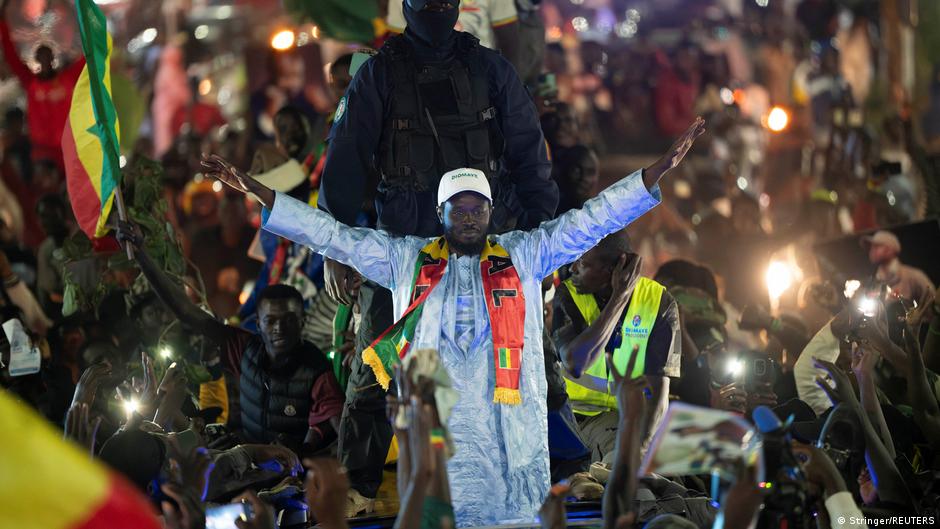
Selecting Mbour for the event was no accident: it is both a stronghold of Faye’s support and a safe venue to gauge public backing beyond Pastef’s core networks. The turnout at the Caroline-Faye stadium demonstrated substantial grassroots engagement, though the president’s absence—delivered via video address—sparked discussion about his leadership visibility.
Analysts highlight two key objectives: proving the president has a base of support independent of the party, and preparing public opinion for a potential political reshuffle ahead of mid-term legislative elections and the 2029 presidential race.
2029 looms large: ambitions and tensions
At Mbour, coalition leaders openly urged Faye to seek re-election in 2029—an early endorsement with major implications. If constitutionally permissible, this would force a reckoning within the majority: either a lasting cohabitation with Sonko or a clear delineation of roles and ambitions.
The relationship between Faye and Sonko is increasingly strained. Targeted dismissals, shifts in presidential communication strategy, and disputes over coalition control reflect a quiet power struggle at the highest level. While an open break could destabilize the majority, an ambiguous cohabitation risks eroding public confidence in the government.
Balancing expectations and governance challenges
Faye’s government faces immense social pressure: youth unemployment, rising living costs, delayed justice reforms, and economic governance concerns. Despite progress in some areas, delayed implementation of key promises is fueling public impatience across Senegal.
The Mbour gathering also served as an attempt to re-energize supporters, coming at a time when the executive acknowledges “challenging times” ahead due to budget constraints and rising debt.
A turning point for Senegal’s leadership
More than a political rally, the Mbour event marks a pivotal moment in Faye’s presidency. It signals his transition into a more conventional—and riskier—phase of leadership: one where he must balance party loyalty, institutional authority, and long-term political strategy.
The central question remains: will this strategy of differentiation strengthen his position, or will it deepen internal fractures within the majority? In a country where unity has been touted as the foundation of the “rupture” promised in 2024, the stakes could not be higher.