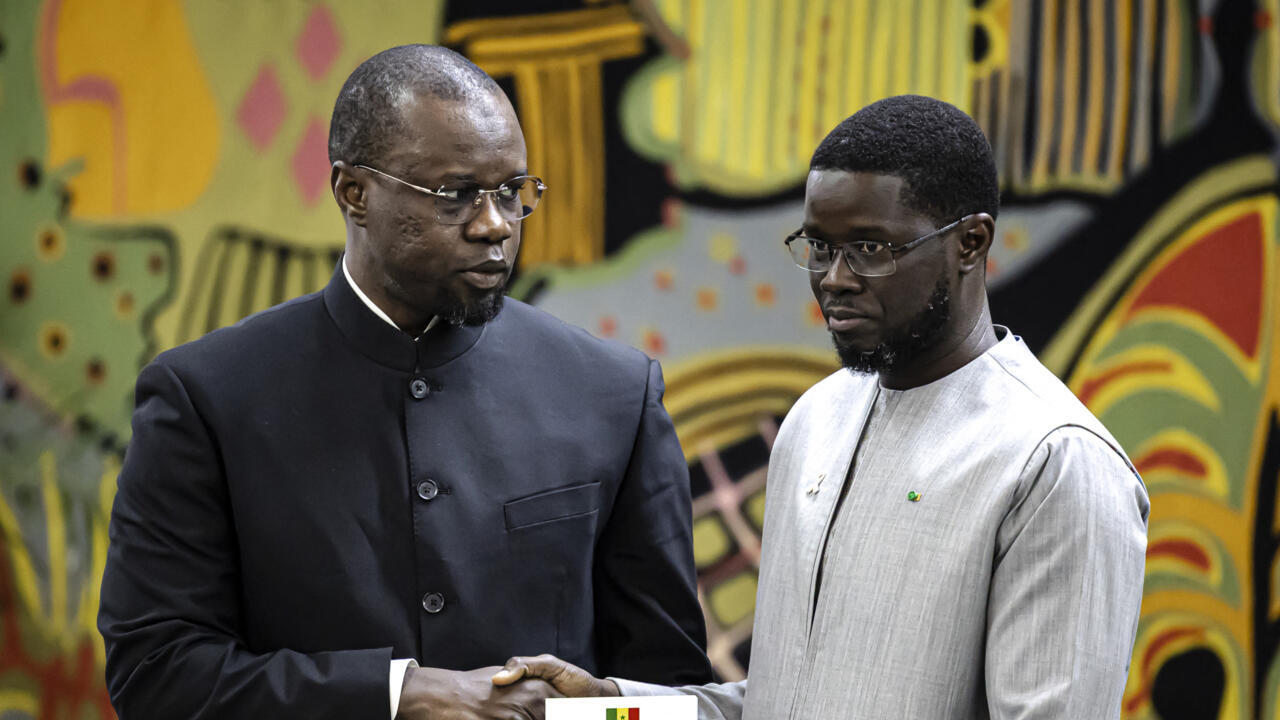

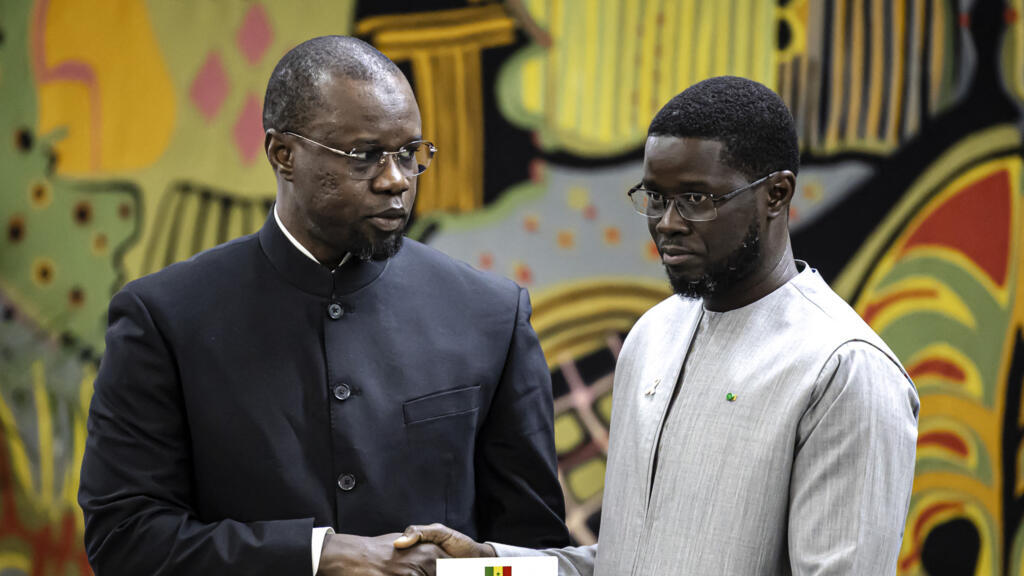
A significant political shift is underway in Senegal following President Bassirou Diomaye Faye’s decision on Friday, May 22, to dismiss his long-standing ally, Ousmane Sonko, along with the entire government. In a rapid turn of events, the now former Prime Minister reclaimed his parliamentary seat on Sunday. Simultaneously, Malick Ndiaye, the President of the National Assembly, tendered his resignation. The election for the new Assembly President is scheduled for Tuesday, with Ousmane Sonko emerging as a potential candidate. This series of events strongly suggests an impending confrontation between the executive and legislative branches of power.
For the Senegalese information platform Xalima, this separation was inevitable: “The Faye-Sonko dynamic inherently contained a fundamental and insurmountable contradiction. This wasn’t due to a lack of talent from either individual, nor a radical divergence in their political visions. Rather, a Republic is not a jazz duet where two soloists can improvise simultaneously without a shared score. Executive power, in its fundamental nature, is singular. African history, from Nkrumah to Sankara, from Modibo Keïta to Laurent-Désiré Kabila, teaches us that cohabitations at the summit between two wills of equal strength invariably conclude in the ousting of one or the destruction of both.”
Growing political fractures
Indeed, Dakar Actu further elaborates, this outcome is the culmination of months of friction between the two leaders, who ascended to power in April 2024 amidst widespread popular hope. The political rupture had been brewing since last July, when initial cracks appeared in their partnership. At that time, Ousmane Sonko publicly spoke of an “authority problem,” accusing the President of failing to adequately defend him against political attacks. The final breakdown occurred just hours after a National Assembly session where the former head of government openly challenged several presidential decisions, including the management of political funds, asserting that the President had “made a mistake.”
Executive vs. legislative power struggle?
So, Le Monde Afrique questions, has the former Prime Minister now become the President’s chief opponent? Bolstered by his considerable popularity, Ousmane Sonko poses a genuine threat to Bassirou Diomaye Faye. The next round in this unfolding drama is likely to play out within the legislative chamber. “The political battle risks shifting to the National Assembly, evolving into a standoff between the head of state and the legislature,” commented Moussa Diaw, a professor of political science at Gaston-Berger University in Saint-Louis. He suggests that a significant risk of governmental paralysis looms large, particularly as the executive aims to introduce a series of institutional reforms. Four key legislative texts concerning constitutional revision, the Constitutional Court, political parties, and the establishment of an independent national electoral commission are soon to be presented to the National Assembly. Such a scenario would leave the head of state with very limited room to maneuver.
Indeed, as highlighted by Aujourd’hui in Ouagadougou, the situation now pits Pastef, under Ousmane Sonko’s control, against the Coalition Diomaye Faye président. In essence, it is the Executive versus the Legislative, an intense power struggle with the 2027 communal elections and, more significantly, the 2029 presidential election in sight. Among the “Pastefists,” particularly the youth of Senegal who had invested their hopes in the Faye-Sonko duo, there is now palpable doubt, anger, and disillusionment, leaving them uncertain of whom to trust.
Could Ousmane Sonko emerge victorious?
The power struggle has officially begun, and it could potentially favor Ousmane Sonko, notes Adrien Poussou, a former Central African Minister of Communication and geopolitical analyst, in Le Point Afrique. He asserts that the current political landscape in Senegal remains undeniable: Pastef holds significant national dominance, backed by an exceptional grassroots presence, a mobilized youth base, and a powerful narrative forged during years of opposition to the Macky Sall regime. Within this dynamic, Sonko remains the central figure. Even when previously hindered by legal challenges and absent from presidential ballots, the aspiration for change coalesced around him. While Adrien Poussou concedes that the President possesses institutional legitimacy, he emphasizes that his former Prime Minister retains a formidable popular and militant legitimacy. In any future political or electoral contest, this factor could prove decisive.