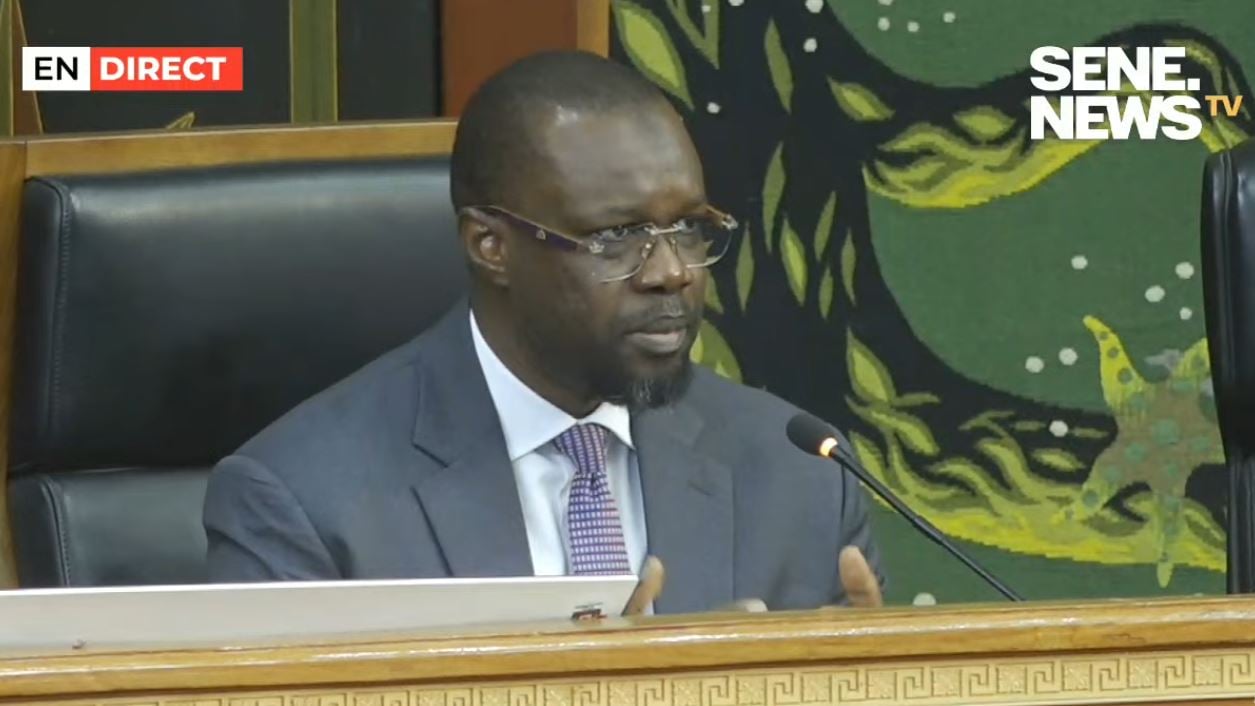

Sonko explains why he parted ways with Faye
In a moment of national reflection, newly elected National Assembly President Ousmane Sonko has shed light on the fundamental reasons behind his political split with President Bassirou Diomaye Faye. Speaking with philosophical depth, he framed the rupture as a clash between power for power’s sake and ethical governance.
Within days of his removal from the Prime Minister’s office and subsequent election as National Assembly President, Ousmane Sonko delivered a thought-provoking address that transcended personal politics. He argued that the real fracture in their relationship stemmed not from ambition, but from a fundamental disagreement over the purpose of governance.
Sonko anchored his argument in philosophy, declaring that the heart of the matter was not about individuals but about the intersection of morality and politics. Drawing from Aristotle’s teachings, he emphasized that true leadership must serve the common good—not private interests. « Politics, when practiced with virtue, becomes the highest form of human endeavor, » he asserted, warning that a nation’s decline begins when leaders lose sight of their ethical duty.
To illustrate his point, Sonko turned to Senegal’s own political history, invoking the legacy of Mamadou Dia, one of the country’s founding fathers. He recalled Dia’s early warnings against conflating state authority with personal enrichment, stressing that sovereignty is not merely political—it must also be moral, economic, and social. « A nation may possess all the symbols of statehood—a flag, an anthem, institutions—yet still be enslaved by leaders who hollow out the Republic from within, » he remarked.
Beyond historical parallels, Sonko addressed what he sees as a broader crisis in contemporary governance. He argued that nations do not fall solely because of material deprivation, but because of moral fatigue. When institutions stop serving the people and instead become tools for personal gain, the very spirit of democracy erodes. Without naming names or assigning blame, he implied that his break with the President was rooted in an irreconcilable vision of leadership—one founded on transparency and service, rather than power retention.



