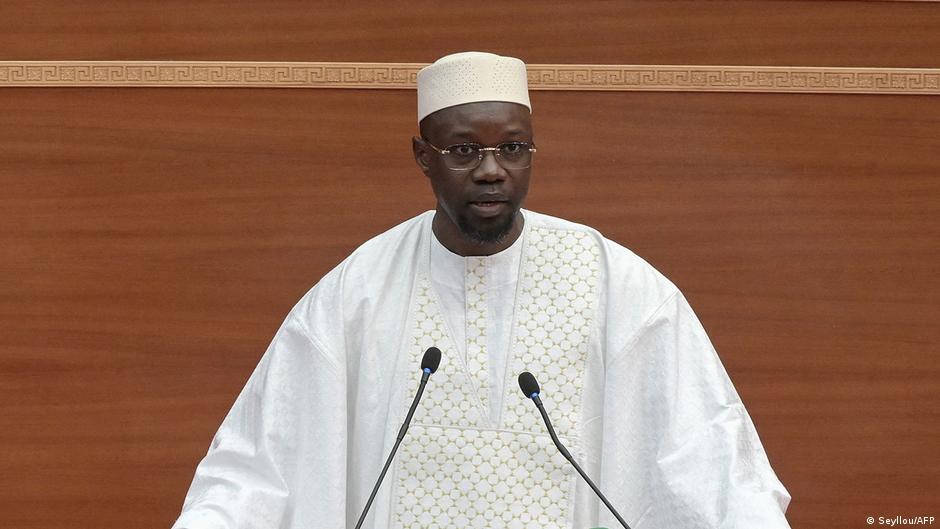

Political tensions escalate as Senegal’s parliament convenes
Dakar is bracing for a pivotal parliamentary session today, as legislators prepare to reinstate Ousmane Sonko as a deputy and elect a new assembly president. The opposition has slammed the move as unconstitutional, setting the stage for a high-stakes political confrontation.
A crowd gathered outside Ousmane Sonko’s residence in the Cité Keur Gorgui neighborhood, with supporters chanting his name in solidarity. Among them was Nourdine Diallo, a former campaign volunteer who had vigorously promoted the now-fractured alliance between Sonko and President Bassirou Diomaye Faye.
“It was deeply painful to see the president dismiss the prime minister. During the campaign, we chanted ‘Diomaye is Sonko — Sonko is Diomaye’ with conviction. These weren’t just empty words; we truly believed in their shared vision. We told Senegalese voters they were brothers—bound by party, ideology, and institutional loyalty.”
Institutional clash looms as Sonko’s fate hangs in balance
Ousmane Sonko’s removal as prime minister followed his sharp criticism of key presidential decisions during a parliamentary session. Now, lawmakers are set to vote on his reinstatement as a deputy—he had temporarily suspended his mandate to serve as head of government.
The assembly will also elect a successor to El Hadj Malick Ndiaye, the recently resigned assembly president and a staunch Sonko ally. His departure came just hours after Sonko’s dismissal, signaling a potential power shift within the ruling coalition.
Political analyst Malao Kanté warns of escalating tensions: “Sonko is emerging as the face of opposition in a parliament now controlled by his former allies. This creates a dangerous dynamic. A no-confidence motion against the new prime minister seems likely, threatening to paralyze governance and destabilize the country.”
Opposition cries foul over Sonko’s parliamentary return
Adama Fall, a senior figure in the Pastef-Les Patriotes party, framed the situation as a test for Senegal’s democratic future: “History has shown us the dangers of power struggles—from Sankara to Lumumba to Mamadou Dia and Senghor. But this generation is different. We are not doomed to repeat past mistakes; we can forge a new path.”
In a show of defiance, several Sonko-aligned officials have resigned in protest, while opposition lawmakers have declared El Hadj Malick Ndiaye’s resignation invalid. Aïssata Tall Sall, leader of the Takuu Walu opposition bloc, accused the government of orchestrating a constitutional coup and urged President Faye to challenge Sonko’s reinstatement before the Constitutional Council.
In a swift response, the president appointed Ahmadou Al Aminou Mohamed Lô—a former central bank executive and government minister—as the new prime minister. Lô’s appointment comes as Faye urges national unity, warning that Senegal stands at a critical juncture.