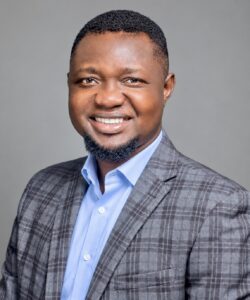

The plight of Succès Masra, now entering its second year, has become a focal point for Western chanceries monitoring Chad’s political transition. Twelve months after his arrest in N’Djamena, the former Prime Minister and leader of Les Transformateurs party remains incarcerated, serving a twenty-year sentence. From her base in France, his sister, Chancelle Masra, has broken her silence to denounce detention conditions she deems incompatible with her brother’s deteriorating health. Her urgent appeal emerges amidst a tense political climate, characterized by Mahamat Idriss Déby Itno’s firm consolidation of power.
A Contested Twenty-Year Conviction
Chadian authorities convicted the opposition figure for allegedly disseminating an audio message in 2023, which prosecutors claimed incited inter-communal violence two years later in the country’s southern regions. This unusually protracted causal link has baffled human rights advocates and many within the legal community. Numerous observers interpret the judicial process as a calculated effort to permanently sideline a prominent political rival. The severe sentence, among the harshest ever handed down to a civilian under the younger Déby’s rule, stands as a stark warning to the entire Chadian opposition.
Officially placing second in the May 2024 presidential election with 18% of the vote, Succès Masra had presented a civilian alternative to the dominant military establishment. His brief tenure as Prime Minister, from January to May 2024, was initially presented as a gesture of openness by the transitional regime. However, the presidential ballot ultimately cemented a decisive break, followed months later by his arrest. For his supporters, this trajectory mirrors a now-familiar pattern of institutional capture designed to neutralize dissenting voices.
Family’s Plea for Medical Attention
Chancelle Masra’s advocacy centers on the humanitarian aspects of the case. She asserts that her brother is suffering significantly in detention and requires medical care that the Chadian penitentiary system is reportedly unable to provide. While the precise nature of his ailments has not been publicly detailed, those close to him speak of a continuous decline since his incarceration. The family is demanding, at a minimum, access to independent medical monitoring and the opportunity for relatives to personally verify the detainee’s actual condition.
This campaign, launched from Paris, forms part of a broader strategy to internationalize the issue. Les Transformateurs party, now without its primary spokesperson, is relying on the diaspora and European contacts to sustain pressure. Several French political figures have already been approached, as have organizations specializing in the defense of prisoners of conscience. Sources close to the party suggest that the African Court of Human and Peoples’ Rights may also be petitioned.
A Symbolic Case for Chad’s Transition
Beyond the individual circumstances, the opposition leader’s detention crystallizes profound questions about the true nature of the transition initiated in N’Djamena following Idriss Déby Itno’s death in April 2021. Western donors, with France at the forefront, had backed an electoral timetable aimed at restoring civilian governance. Three years on, the tightening political control and the judicial targeting of opposition figures cast doubt on the stability of this framework. The relative silence from external partners regarding Succès Masra‘s fate is a point frequently raised by Chadian civil society organizations.
The regional context further complicates the situation. Faced with pressure from armed groups around Lake Chad and the repercussions of the Sudanese conflict on its eastern border, N’Djamena enjoys increased leverage in negotiations with its partners. This security imperative tends to relegate democratic governance concerns to a secondary position, much to the dismay of public liberties advocates. Nevertheless, the Masra case, due to its high visibility, could quickly become a renewed point of contention should the former Prime Minister’s health seriously deteriorate.
Specifically, the family hopes to secure, if not his outright release, at least a transfer to a specialized medical facility and the lifting of restrictions on visits. Such an outcome would necessitate a political gesture from the Chadian head of state, who has thus far shown no public willingness to engage on this matter.