
Tchad quits the international criminal court amid sovereignty debates

N’Djamena’s bold move shakes global justice landscape
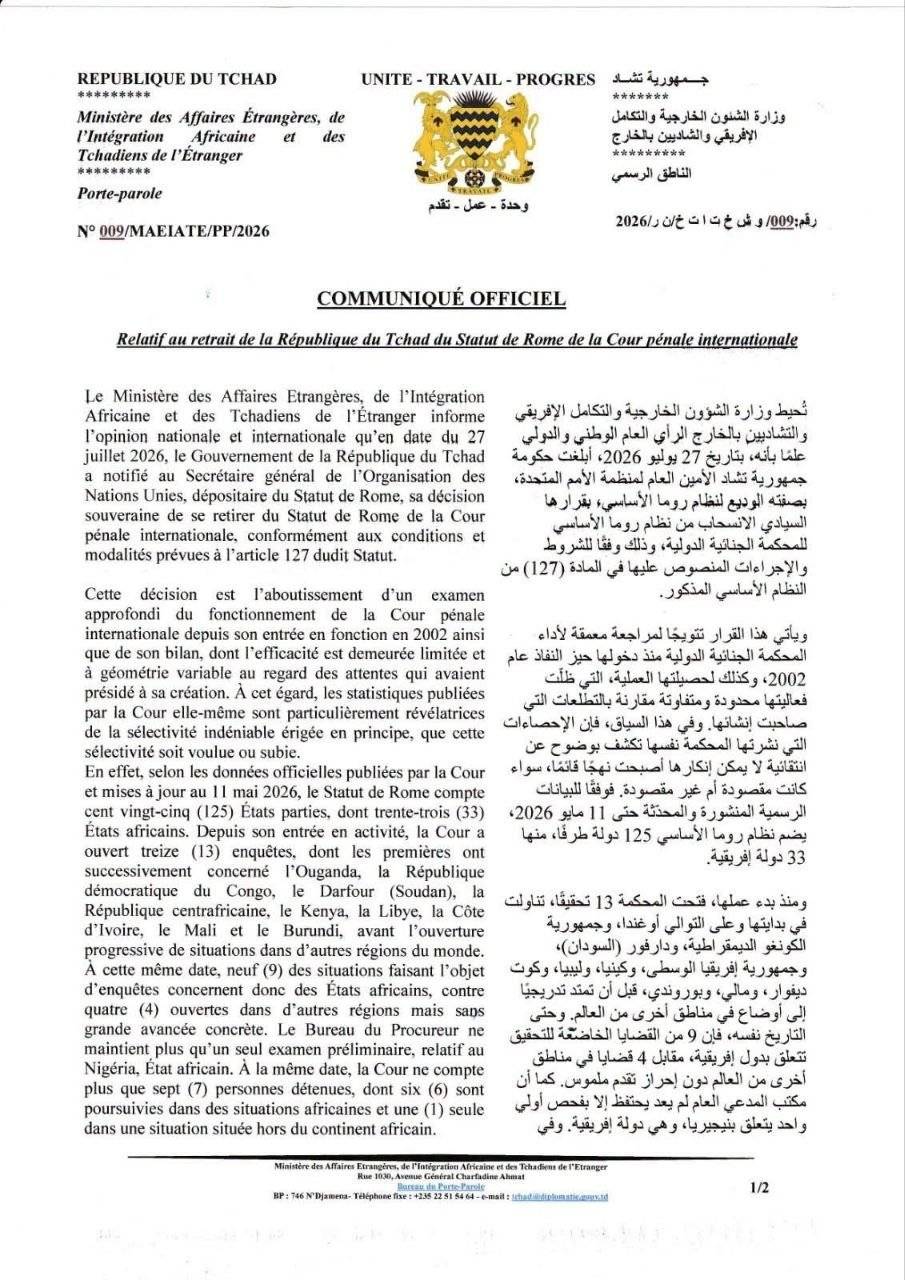
In a landmark diplomatic decision, Chad has formally notified the United Nations of its intention to withdraw from the International Criminal Court (ICC). The announcement, made on 27 July, sends shockwaves through international legal circles and raises critical questions about human rights protection and judicial sovereignty in the country.
Breaking ties with The Hague
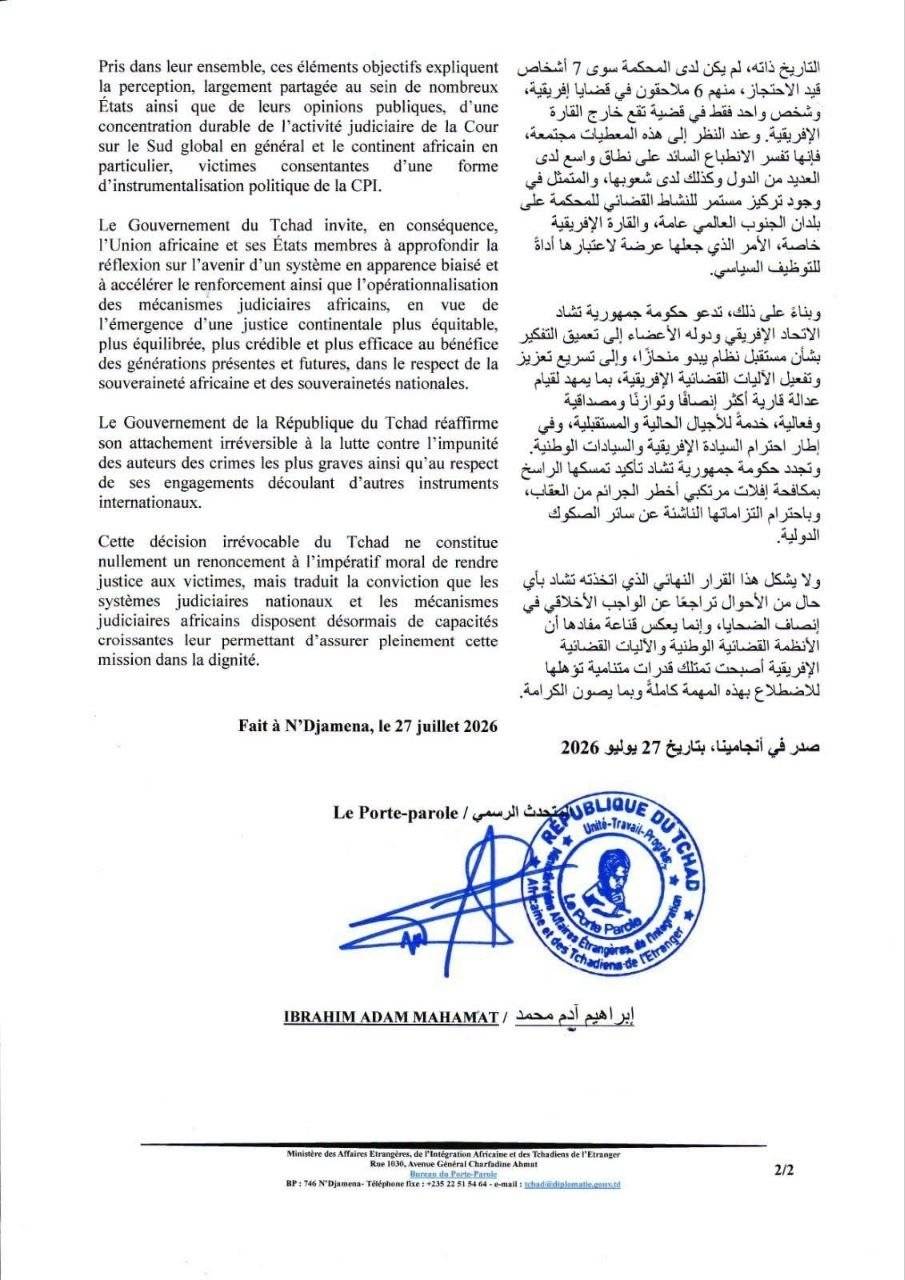
The withdrawal process has now begun. Through an official letter submitted to the United Nations headquarters in New York, the Chadian government triggered the formal procedure to exit the Rome Statute, the treaty that established the ICC. Authorities did not mince words in explaining their reasoning, condemning what they describe as an “uneven application of justice” that disproportionately targets African nations while overlooking similar crimes elsewhere.
The Chadian authorities argue that the ICC suffers from “geographical imbalance” in its prosecutions, with nearly all investigations focusing on leaders from the Global South. This move aligns with a growing trend among African states questioning the court’s impartiality and independence.
What this means for victims and justice in Chad
While the decision carries significant geopolitical weight, its most immediate impact will be felt domestically. For Chadian citizens, the ICC’s departure removes a crucial safeguard against mass atrocities and human rights violations.
Closing the last door to international justice
The ICC operates on the principle of complementarity, intervening only when national courts fail to prosecute grave crimes. By withdrawing from the Rome Statute, Chad eliminates this final layer of international oversight, leaving victims dependent solely on the country’s judicial system.
Can local justice systems deliver?
Without the ICC’s oversight, the burden falls entirely on Chad’s judiciary to investigate and prosecute war crimes, crimes against humanity, and genocide. Civil society organizations warn that this shift could weaken protections for victims, particularly when abuses involve state actors or armed groups. The lack of an independent international mechanism may also complicate evidence collection and witness protection.
Sovereignty vs. accountability: The diplomatic tightrope
Chad’s decision reflects broader regional tensions over judicial sovereignty. By distancing itself from the ICC, N’Djamena seeks to assert full control over its legal affairs. However, this move carries risks:
- Financial implications: Western donors and financial partners often tie aid to human rights commitments and adherence to international legal standards.
- Investor confidence: Independent judicial oversight remains a key factor for foreign investors considering long-term commitments.
- Regional divisions: While some African states share Chad’s frustrations with the ICC, others remain cautious about abandoning multilateral legal frameworks.
The road ahead: Strengthening domestic justice
Government officials argue that Chad’s justice system is fully capable of handling its own cases. However, this will require substantial reforms, including:
- Increased funding and resources for courts
- Stronger guarantees for judicial independence
- Robust witness and victim protection mechanisms
The one-year transition period outlined in the Rome Statute—during which the ICC retains jurisdiction over crimes committed before the withdrawal notification—will be critical. Yet, cooperation from Chad during this time may already be limited.
A turning point for African justice
The 27 July announcement marks a pivotal moment in Africa’s relationship with global governance institutions. While many applaud the push against perceived double standards in international justice, the practical consequences remain uncertain.
The true test of this decision will not be in diplomatic chambers or courtrooms abroad, but in the everyday lives of Chadians. Will they find justice within their own borders? The government’s next steps will determine whether this move strengthens sovereignty or erodes protections for the most vulnerable.