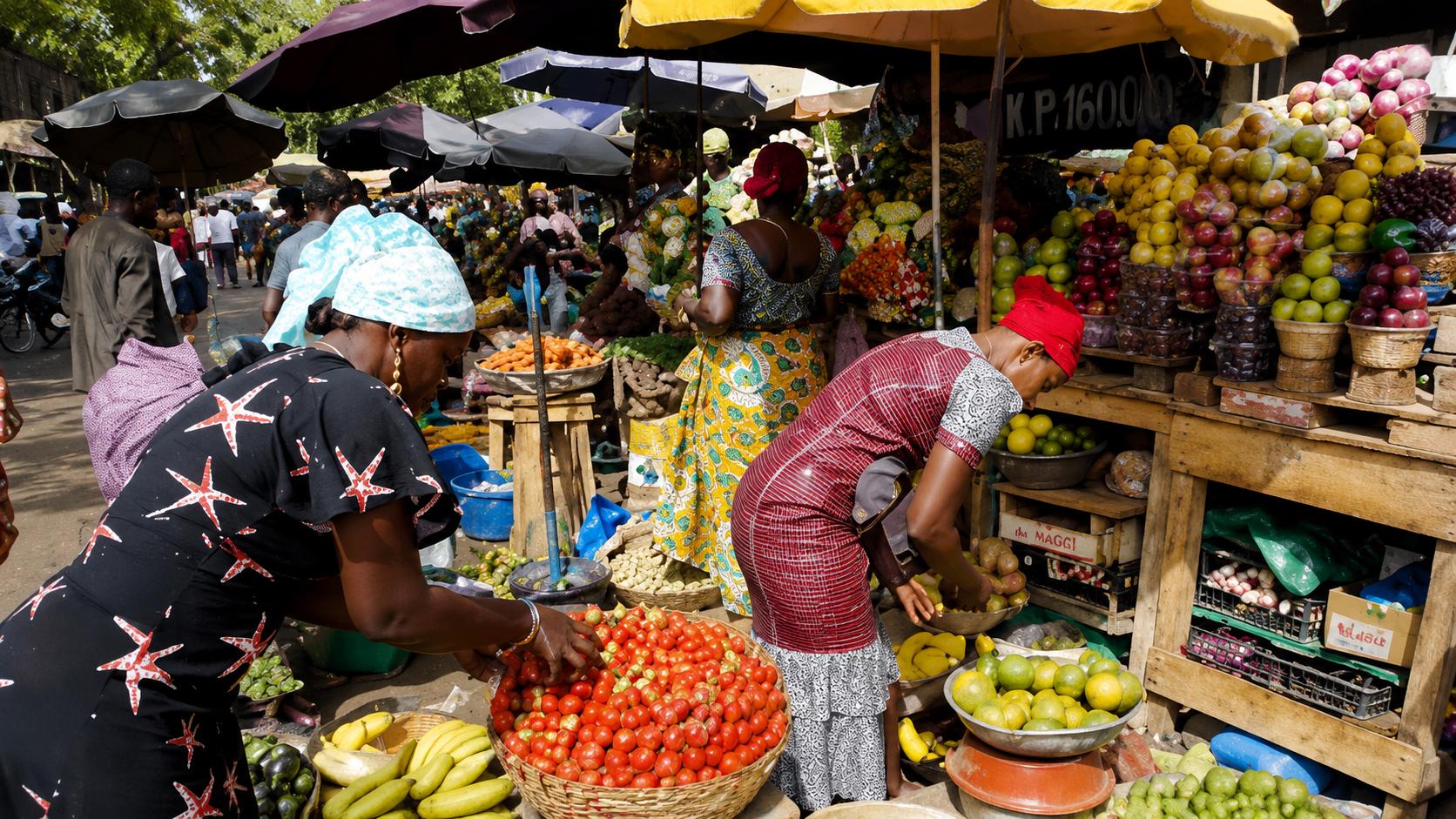

While official data from the Central Bank of West African States (BCEAO) indicates an average overall inflation rate of 0.0% across the zone, this statistic appears to be an illusion for the populations residing in the Sahel. In Mali, Niger, and Burkina Faso, the calm celebrated within the air-conditioned offices of Dakar has not extended beyond the borders of the Alliance of Sahel States (AES) bloc.
Although declining global commodity prices and favorable weather conditions have provided some relief to the coastal strip, the central Sahel region remains mired in persistent price surges. This situation is consistently attributed by the official narratives from Bamako, Niamey, and Ouagadougou to external factors or alleged ‘plots,’ thereby obscuring the direct repercussions of their own political and economic decisions.
The dead end of military-first policies and market disruption
The primary driver of inflation in the Sahel continues to be insecurity, yet its enduring presence directly questions the effectiveness of current transitional strategies. Despite promises of swift territorial reconquest, major road corridors remain paralyzed. Blockades imposed by armed groups are not merely tactical challenges; they underscore the regimes’ inability to secure vital economic flows. This is a critical aspect of on the ground Sahel realities.
By concentrating the bulk of budgetary resources on war efforts and military equipment procurement, authorities have neglected investments in storage infrastructure and direct support for agricultural campaigns. Access restrictions to farming lands are continuously expanding, stifling local production. In essence, the excessive militarization of the economy has failed to restore security, but it has succeeded in depleting the food supply.
Facade sovereignty versus logistical realities
The proclaimed sovereignist and economic rupture discourse championed by the AES collides with the harsh reality of escalating prices. The ambition to bypass traditional commercial networks in favor of new routes deemed ‘politically correct’ directly translates into additional costs for consumers. Diverting from natural sub-regional ports for diplomatic reasons necessitates longer, more complex, and inevitably more expensive journeys. Sahelian households are ultimately paying the price for these ideological shifts at the market.
Furthermore, the centralized and at times authoritarian management of distribution channels by military regimes creates adverse ripple effects. Attempts at bureaucratic price controls or pressures on traditional economic operators discourage the private sector, leading to artificial shortages and fueling a black market where prices soar uncontrollably. This is a key finding in Mali Niger Burkina reporting.
The limitations of economic denial in the face of monetary reality
In response to this structural inflation, the BCEAO’s credit tightening policy reveals its limitations. Real shortages and severed supply routes cannot be remedied by merely increasing interest rates. However, beyond the central bank’s actions, it is the internal budgetary strangulation of these states that causes significant concern.
By isolating themselves from various financial donors and regional solidarity mechanisms, Mali, Niger, and Burkina Faso have severely constrained their financial maneuvering room. State coffers, drained by security expenditures and the maintenance of transitional apparatuses, leave governments unable to implement genuine social safety nets or substantial subsidies to cushion the impact of the high cost of living. This is a crucial piece of Sahel news English analysis.
As long as AES leaders prioritize a rhetoric of victimhood and political rupture over pragmatic economic governance and the genuine security of economic actors, the repercussions of the high cost of living will continue to destabilize populations, rendering UEMOA inflation statistics completely detached from the daily experiences of Sahelian citizens. This perspective is vital for any Sahel Reporter covering current affairs.