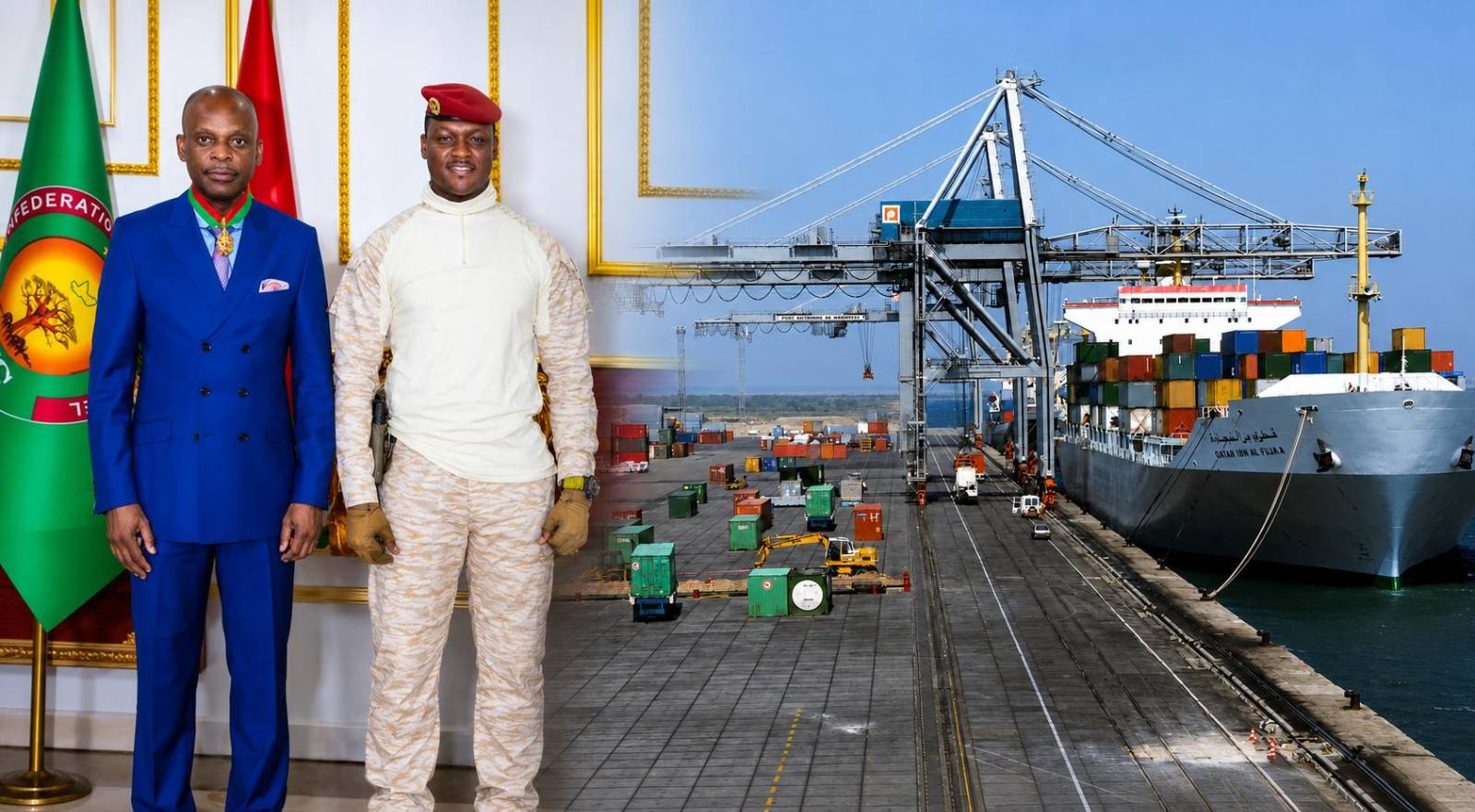

The recent elevation of Togo’s Foreign Minister to the rank of Commander of the Order of the Stallion—the highest honorific distinction in Burkina Faso—has been hailed by official channels as a testament to Lomé’s so-called “diplomacy of openness, solidarity, and proximity” toward its neighbors. Yet, beneath the polished veneer of diplomatic ceremony lies a far more complex and less harmonious reality.
Diplomacy driven by interests, not ideals
While such distinctions are often framed as acknowledgments of exemplary diplomatic conduct, their true significance frequently resides in the unspoken alignment of strategic interests. In this instance, the convergence of political and economic challenges faced by both nations may offer a more plausible explanation for the award than any principled diplomatic endeavor.
Diplomatic honors are not merely symbolic; they often serve as tools to reinforce alliances or send calculated messages to regional partners. The timing of this accolade raises further questions: does it genuinely celebrate diplomatic virtue, or does it reflect a tacit understanding between two governments navigating shared adversities?
A brief alliance overshadowed by political betrayal
The current diplomatic thaw between Lomé and Ouagadougou follows a contentious episode that left a lasting impression. The Togolese government, under Faure Gnassingbé, had extended asylum to former Burkina Faso President Roch Marc Christian Kaboré. However, this hospitality proved short-lived, as Lomé swiftly abandoned its moral obligations in favor of securing economic advantages with the new leadership in Ouagadougou.
The weight of economic interdependence
For the Togolese administration, regional solidarity appears to be a flexible concept, easily overridden by commercial pragmatism. By compromising the safety of an exiled leader, Lomé prioritized strategic port agreements with Burkina Faso, ensuring the uninterrupted transit of goods through the Autonomous Port of Lomé (PAL). This decision underscored a harsh truth: in the realm of diplomacy, financial considerations often outweigh ethical commitments.
The economic interdependence between the two nations is undeniable. As a landlocked country, Burkina Faso relies heavily on maritime corridors for trade. The PAL serves as a vital artery for its imports and exports, making Lomé’s cooperation indispensable. For Togo, too, this relationship is economically vital, as transit fees constitute a significant revenue stream. This mutual dependence explains the accelerated diplomatic rapprochement between the two capitals—one rooted in mutual convenience rather than shared values.
Transactions disguised as diplomacy
The timing of this honor coincides with ongoing concerns about governance, political rights, and public freedoms in the region. Critics argue that this distinction reflects a convergence of strategic interests rather than a commitment to democratic principles or ethical cooperation. It exemplifies a broader trend in West African diplomacy: a shift toward transactional alliances where economic and security imperatives increasingly overshadow traditional diplomatic values.
In this evolving landscape, alliances are forged and dissolved based on commercial gains, logistical necessities, and security priorities, often at the expense of the lofty ideals proclaimed in official rhetoric.
The gap between rhetoric and reality
While authorities portray this accolade as proof of an exemplary bilateral relationship, such institutional narratives clash with the pragmatic realities shaping their interactions. When diplomatic decisions are so blatantly tied to economic incentives, the discourse on African solidarity loses credibility among an increasingly skeptical public.
Ultimately, this distinction serves as a stark illustration of a diplomacy guided by cold political realism, where state interests prevail over ideological consistency. Governments prioritize strategic gains, trade agreements, and political stability—even if it means contradicting their own stated principles. Behind the polished smiles and ceremonial medals lies a transactional relationship, where mutual benefit trumps ethical integrity.
This honor, far from symbolizing disinterested fraternity, appears to be the reward for a commercial partnership secured at the expense of ethical principles and the right to asylum. It is this fundamental disconnect that fuels contemporary debates about the true nature of relations between Lomé and Ouagadougou.