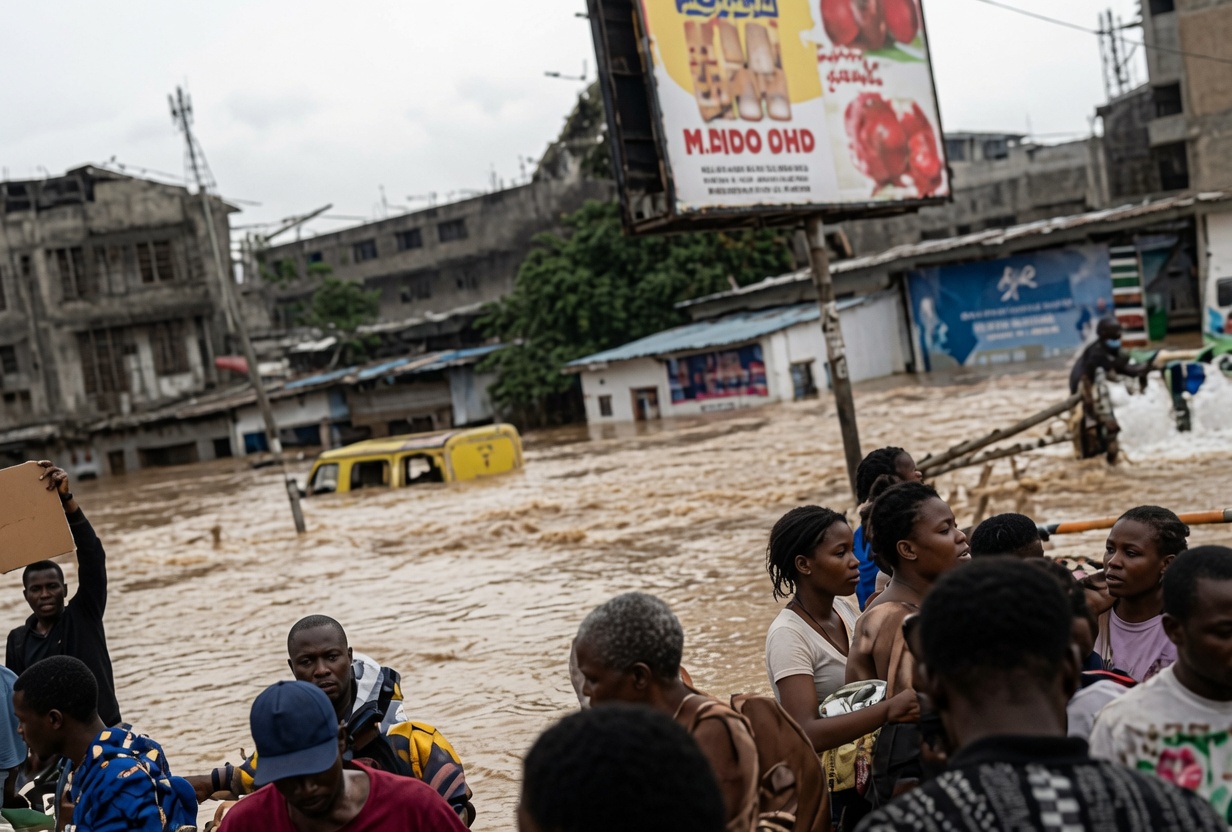

With the perennial return of the rainy season, an all too familiar scenario unfolds across Togo. Roads become inundated, neighborhoods are submerged, homes are overtaken by floodwaters, and families are left to contend with the extensive damages largely unaided. For a significant portion of the Togolese populace, these climatic events are no longer anomalies but have solidified into an almost routine hardship.
Following over six decades under the stewardship of the Gnassingbé family, a segment of the nation’s citizens believes Togo is due for a fundamental shift in its political trajectory. Despite a multitude of pledges articulated over many years, the daily struggles persist: elevated unemployment rates, a relentlessly escalating cost of living, pervasive poverty, and constrained future prospects, particularly for the younger generation.
The onset of the rains invariably reignites scrutiny regarding the state of the country’s infrastructure. In numerous urban areas, drainage systems prove woefully inadequate, rendering thoroughfares swiftly impassable and leading to substantial material losses from flooding. Many residents voiced their disapproval of the insufficient long-term investments in public amenities that could mitigate these recurrent disasters.
Within this context, voices from the political opposition and civil society accuse the ruling establishment of prioritizing the interests of an elite faction closely aligned with the regime, even as the economic hardships endured by the majority of the population continue to deepen. These groups contend that public resources ought to be more judiciously channeled towards enhancing living standards, developing critical infrastructure, fostering job creation, and safeguarding the most vulnerable communities, rather than being primarily allocated to preserving a political system that has been in place for decades.
For many observers, this latest rainy season regrettably appears unlikely to deliver the anticipated respite. Instead, it is poised to once again underscore the deficiencies in public policies concerning urban planning and risk mitigation. Without comprehensive reforms and appropriate capital injections, it is projected that the most economically disadvantaged households will continue to bear the overwhelming brunt of these consequences.
As these multifaceted challenges accumulate, an increasing segment of public opinion suggests that the nation requires a revitalized form of governance to more effectively address the social, economic, and environmental aspirations of the Togolese people.