
UN Human Rights Office stresses national consensus for DR Congo constitutional reform
- Politique
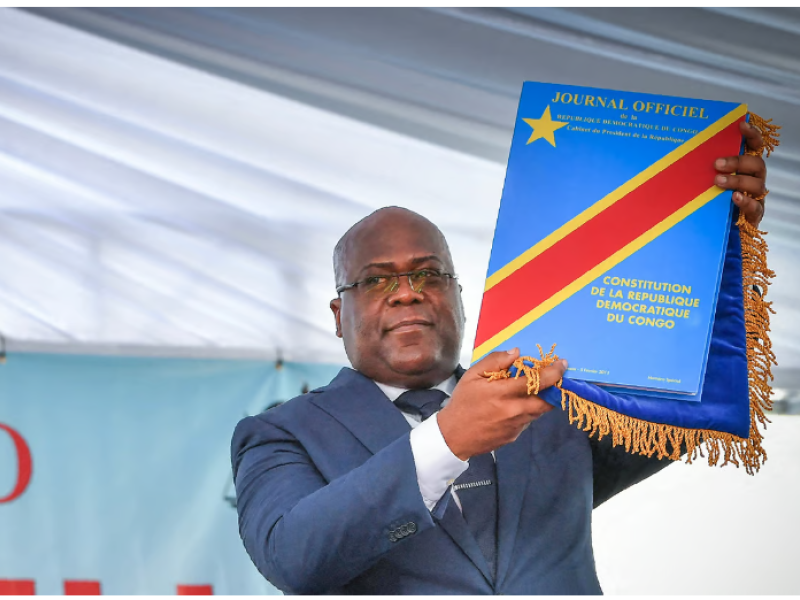
The ongoing debate surrounding constitutional reform in the Democratic Republic of Congo continues to divide the nation’s socio-political landscape. This critical issue recently garnered international attention in Geneva, Switzerland, on Monday, June 29, 2026, during an interactive dialogue held as part of the 62nd session of the UN Human Rights Council.
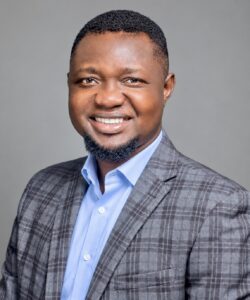
During this significant gathering, Abdoul Aziz Thioye, the Deputy Director of the Global Operations Division at the United Nations Human Rights Office, delivered a statement on behalf of High Commissioner Volker Türk. He expressed profound concern over the shrinking civic and political space within the Democratic Republic of Congo. Thioye specifically referenced recent opposition-led demonstrations in Kinshasa, which protested against proposed constitutional changes.
Drawing on his extensive experience in the Democratic Republic of Congo, having previously led the UN Joint Human Rights Office (BCNUDH) for several years, Abdoul Aziz Thioye emphasized that any process of constitutional reform must be founded on a broad national consensus to safeguard social cohesion.
“Any constitutional reform process must be based on national consensus and respect the country’s human rights commitments. All voices must be heard and taken into account, otherwise, social cohesion could suffer severe consequences,” warned Thioye, underscoring the imperative for inclusive dialogue.
Furthermore, the former head of BCNUDH highlighted the substantial support provided by the United Nations, through BCNUDH, in the fight against impunity across the Democratic Republic of Congo. Despite financial limitations and reduced staffing, this crucial assistance has facilitated the conviction of 109 individuals. He also noted that support was extended to 150 human rights defenders, journalists, and their families, offering psychological, legal, and financial aid, as well as relocation measures.
“Since our last update to the Council, we have supported authorities in organizing three judicial investigations into serious human rights violations and five mobile court hearings. These procedures have led to the conviction of 109 individuals. We have also provided support to 150 human rights defenders and journalists or their family members, notably through psychological, legal, and financial assistance, as well as relocation measures,” Abdoul Aziz Thioye elaborated.
Within the Democratic Republic of Congo, the discourse surrounding constitutional reform has spawned two distinct movements: the Coalition Article 64 for the Defense of Constitutional Order (C64) and the Coalition of Congolese for Constitutional Change (C4). Both platforms assert widespread popular backing for their respective objectives.
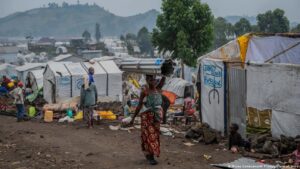
This internal political debate unfolds against a backdrop of the country’s persistent security crisis in Eastern DR Congo. This crisis is marked by the relentless activities of local and foreign armed groups, as well as confrontations involving the Rwandan-backed AFC/M23 rebellion, which controls significant territories in North Kivu and South Kivu provinces. The ongoing activism of the ADF further complicates the situation, while diplomatic initiatives, regrettably, show more progress on paper than tangible results on the ground.

Related Posts