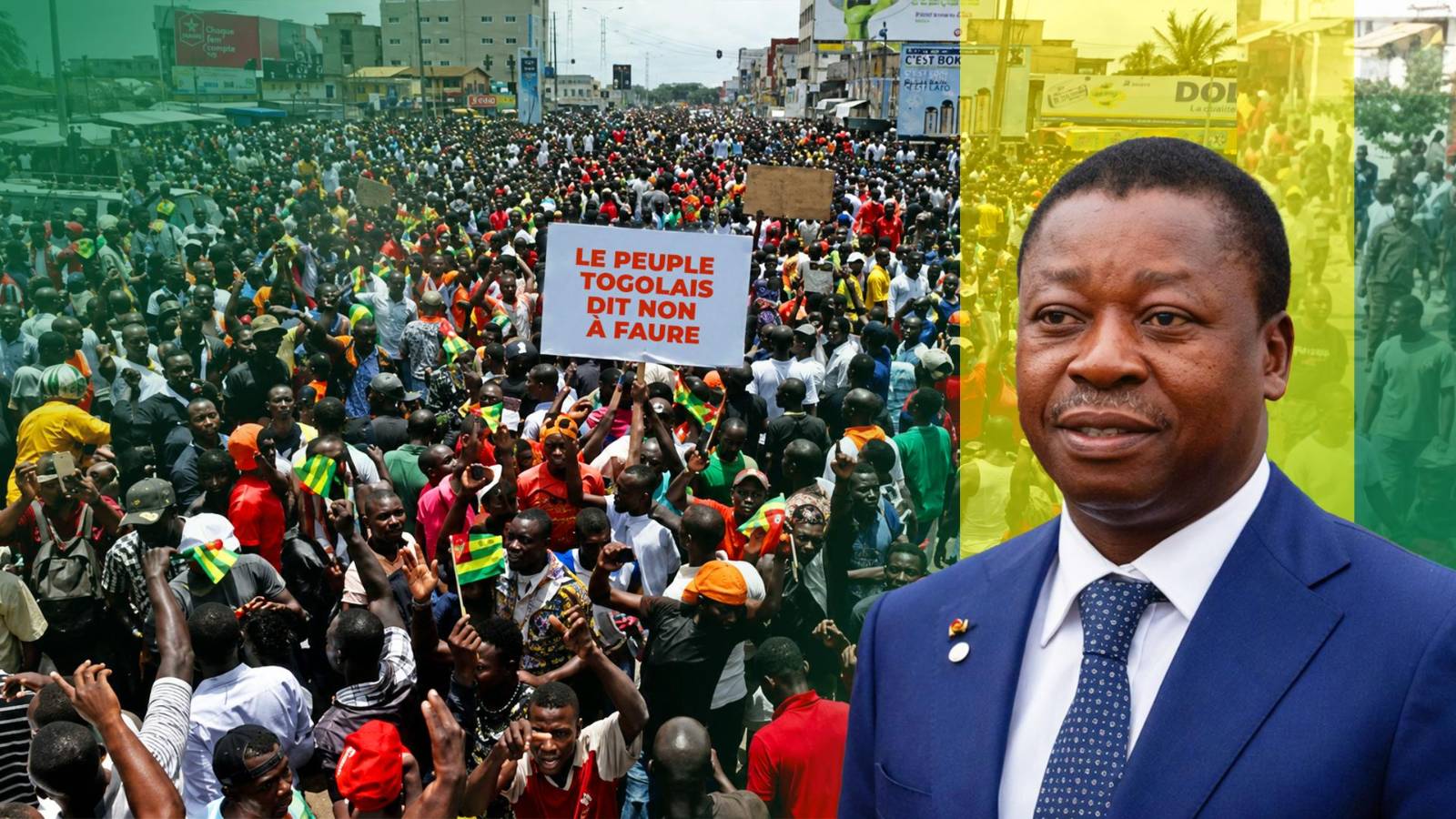

Young Togolese at a crossroads: migration or stagnation
For an increasing number of young people in Togo, the choices they face are stark and unforgiving. The decision to remain in their homeland often means sacrificing their aspirations to a system that offers little promise of progress, while departure—though difficult—has become synonymous with the only viable path to a dignified future. This stark reality has fueled growing discontent, particularly toward the long-standing leadership of Faure Gnassingbé, whose governance model is increasingly seen as a barrier to opportunity and prosperity.
The generational divide has widened significantly. Where previous generations once clung to the hope of building their lives within Togo’s borders, many of today’s youth no longer entertain such illusions. Emigration is no longer a distant dream but a pragmatic necessity, a calculated strategy for survival in a country that seems incapable of providing meaningful prospects for its citizens.
The illusion of progress and the harsh reality of unemployment
Official narratives touting economic modernization and job creation reforms paint a deceptive picture. Beneath the surface, the labor market remains deeply fractured. While government statistics present an artificially low unemployment rate, the true crisis lies in the prevalence of underemployment and the dominance of the informal sector, which engulfs over 70% of young workers.
Each year, universities in Lomé and Kara graduate tens of thousands of students, yet the state’s initiatives—such as the National Employment Agency (ANPE) and the National Coalition for Youth Employment (CNEJ)—are woefully inadequate in addressing the scale of the challenge. With few formal employment opportunities available, many graduates resort to precarious livelihoods, driving motorbike taxis (zémidjans) or running small, unstable businesses. Their years of education, once a source of pride, are reduced to hollow achievements, stripping them of both professional pride and economic stability.
This systemic failure represents a catastrophic waste of human capital. Families invest their savings and resources into educating their children, expecting that their efforts will yield a return. When a qualified engineer is forced to sell goods on the street or a law graduate resorts to informal trade, the loss extends beyond individual hardship. The nation’s economic potential withers, innovation stagnates, and the country’s competitiveness in an increasingly globalized world remains critically undermined.
The industrial landscape offers little relief. High-value job creation remains severely limited, leaving a vast majority of graduates with no recourse but to accept positions that do not align with their qualifications. The economy continues to rely on low-productivity sectors, incapable of sustaining careers that match the intellectual and professional capabilities of the youth.
A system entrenched in favoritism
The sense of injustice among young Togolese is palpable. Families sacrifice everything to finance education, believing that hard work and merit will secure their children’s futures. Yet, in Togo, meritocracy has failed to take root. Access to entrepreneurial opportunities and financial support remains a near-impossible hurdle for those without political connections or financial backing.
Government initiatives, such as the Youth Economic Initiatives Support Fund (FAIEJ), exist in theory but are inaccessible in practice without substantial collateral or political patronage. Public contracts and lucrative economic opportunities are overwhelmingly concentrated in the hands of a select few closely aligned with the ruling party (UNIR). For the average young Togolese, the path to social advancement is effectively barred without access to influential networks colloquially referred to as « le piston ».
The erosion of trust in merit-based success has fostered deep disillusionment. Many young people conclude that persistence, education, and diligence no longer guarantee progress. When equality of opportunity is perceived as a myth, the very foundations of social cohesion begin to crumble.
Even the private sector, which could serve as an engine for job creation, operates under crippling constraints. Entrepreneurs cite bureaucratic obstacles, limited access to financing, weak purchasing power, and economic uncertainty as prohibitive factors. These challenges stifle investment, suppress hiring, and further constrict the job market.
Emigration as the only viable path forward
With the prospect of success at home increasingly remote, emigration has shifted from a distant aspiration to a survival strategy. This exodus manifests in two particularly alarming trends for Togo’s future:
- Diplomatic queues as a symbol of desperation: Daily, long lines form outside the embassies of France, the offices of Campus France, and immigration agencies in Canada and Gulf states, as young people queue in hope of securing a future abroad.
- A brain drain with severe consequences: The country’s healthcare system is depleted as doctors, nurses, and engineers flee to more stable environments. Simultaneously, academics, IT specialists, teachers, digital experts, and entrepreneurs relocate, taking with them the skills and innovation necessary for national development.
The irony is stark: Togo invests in educating its youth, only for the benefits of that investment to enrich foreign economies. Host nations gain access to highly skilled labor nurtured at the cost of Togolese families, while the nation itself struggles to cultivate new generations of professionals and leaders.
Political stagnation: the death of hope for change
The economic despair is compounded by a profound political crisis. For many young people, the systemic challenges they face are inextricably linked to a political system that refuses to evolve.
The controversial adoption of the Fifth Republic Constitution in 2024, which transformed the country into a parliamentary system, has dashed the last remnants of hope for democratic renewal. The reform is widely interpreted as a legal maneuver to indefinitely extend Faure Gnassingbé’s tenure by rebranding his role as Prime Minister. By eliminating any prospect of democratic alternation or generational leadership transition, the regime has pushed its youth toward political disengagement, leaving them with no faith in domestic solutions.
For many, the problem transcends economics. Without institutional renewal, stronger rule of law, independent judiciary, and genuine political competition, economic reforms are doomed to fail. This conviction reinforces the belief that the path to a better life lies beyond Togo’s borders rather than within them.
This disillusionment has also sparked a withdrawal from civic engagement. A growing number of young people are rejecting participation in political parties, civil society organizations, and public initiatives, convinced that their voices carry no weight in shaping the nation’s future. This disengagement weakens democratic vitality and deprives the country of the creativity and energy essential for progress.
Can a nation thrive without its youth?
Critics argue that Faure Gnassingbé’s two decades in power have failed to deliver an inclusive economic model capable of meeting the needs of an expanding youth population. Instead, wealth and opportunity remain concentrated among a privileged minority, while the majority grapple with precarity or contemplate exile.
Historical precedents demonstrate that no nation can sustain long-term prosperity when its most dynamic and educated citizens view migration as their only recourse. Successful economies are built on the retention of talent, the encouragement of innovation, the guarantee of equal opportunity, and the establishment of trust between citizens and institutions.
A pressing question looms over Togo’s future: How can a country progress when its most ambitious and educated youth dream only of leaving? Unless decisive action is taken to address unemployment, governance transparency, economic climate improvement, and democratic aspirations, Togo risks losing the very people who should be the driving force behind its development.