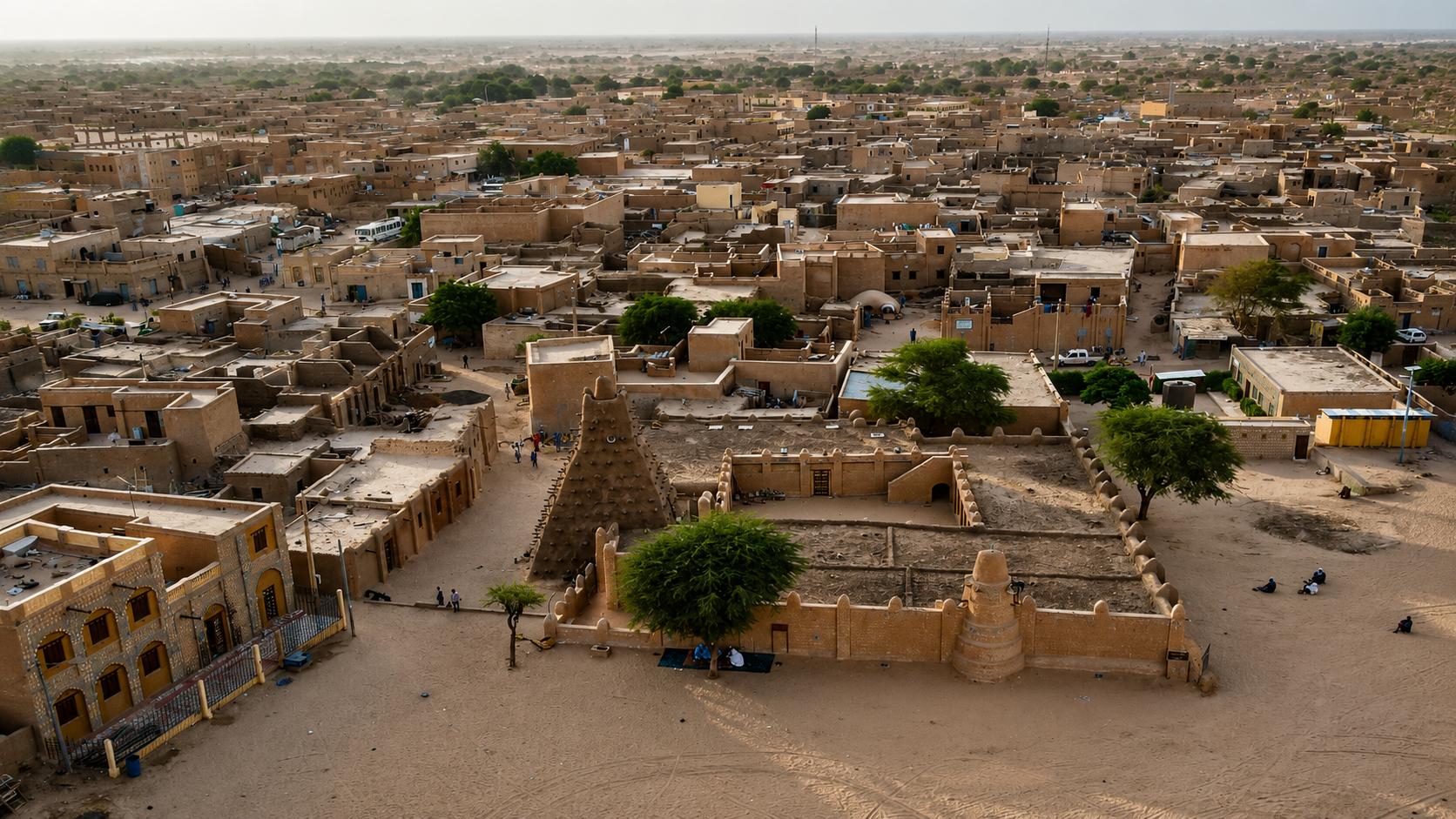

Nestled in the heart of Mali, the legendary city of Tombouctou faces an unprecedented humanitarian and logistical crisis. Cut off from the rest of the country due to escalating insecurity, the ancient desert metropolis now battles a silent but devastating energy blackout that has left its 50,000 residents in despair.
An unprecedented energy collapse
With temperatures soaring well above 40°C, Tombouctou’s inhabitants endure unbearable heat without a single fan spinning, a refrigerator humming, or a tap dispensing water. The city’s lifeline—its thermal power plant operated by the state-owned Énergie du Mali (EDM-SA)—has ground to a halt. Depleted fuel reserves have crippled the generators, plunging the entire city into darkness and cutting off water supply managed by the Société malienne de gestion de l’eau potable (Somagep).
The invisible blockade strangling Tombouctou
The crisis stems from a severe fuel shortage that has persisted for over a month. While Bamako grapples with routine power cuts, Tombouctou suffers a brutal double penalty—geographical isolation and relentless security threats. The fuel crisis has morphed into a strategic weapon, crippling the city’s already fragile lifelines.
Jihadist chokeholds on supply routes
The Group for the Support of Islam and Muslims (JNIM) has tightened its grip on key road arteries leading to northern Mali. Fuel tankers, once a lifeline for Tombouctou, are now systematically targeted—blocked, diverted, or permitted passage only under heavy military escort. This has severed the city’s regular supply chains, forcing it to rely on erratic, costly informal networks.
The spiraling cost of survival
With official fuel supplies nearly nonexistent, the black market has exploded in price. Small businesses and private generators, the last resort for many households, now face exorbitant costs that push them beyond affordability. The economic ripple effects are crippling, leaving residents with no choice but to adapt to a life of scarcity.
A health emergency unfolding in the dark
The absence of electricity has shattered the cold chain, jeopardizing the preservation of essential medicines and perishable goods. At the Tombouctou Regional Hospital, the situation is dire. Medical staff are forced to prioritize life-saving emergencies under the dim glow of phone flashlights or makeshift solar setups—equipment that barely scratches the surface of the hospital’s needs. Vaccines spoil, critical treatments fail, and patients wait in limbo for a power source that never comes.
State abandonment fuels public outrage
In response, local authorities have organized emergency water deliveries via tanker trucks, a stopgap measure that does little to mask the city’s abandonment. Residents voice frustration over the capital’s inability—or unwillingness—to secure their most basic needs. Promises of road security and energy autonomy remain unfulfilled, leaving Somagep and EDM-SA powerless against the relentless blackouts.
The government’s approach has been overwhelmingly military, focusing on securing supply routes without ensuring the continuity of essential services. Without reliable fuel deliveries, the state’s agencies are hamstrung, unable to restore power or water to the city that once thrived as a beacon of knowledge and culture.
A city on the brink of collapse
Tombouctou cannot survive indefinitely on empty generator tanks and sporadic humanitarian aid. For Mali’s transitional government to prove its legitimacy, restoring basic services is just as vital as reclaiming territory from armed groups. Until the roads are secured and fuel tankers can reach the north safely, the fabled desert jewel will continue to fade, neighborhood by neighborhood.