
Assamaka junction: where the digital future of the Sahel is being forged
At the edge of the Sahara in Assamaka, Algeria and Niger have officially launched their trans-Saharan fiber optic link—a project that transcends simple connectivity. Beyond the promise of high-speed internet lies a strategic shift: reduced digital dependence, new revenue streams for operators, and for Algiers, a chance to cement its influence south of its borders. Yet in a Niger facing the growing threat of jihadist groups, safeguarding this critical infrastructure presents a formidable challenge.
Why Assamaka became the crossroads of a digital turning point
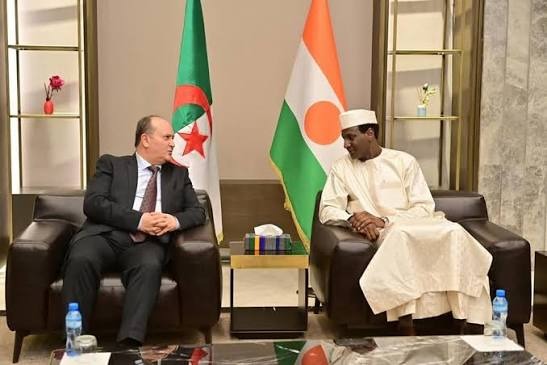
The selection of Assamaka—located in the Agadez region on the Algeria-Niger border—was no accident. It was here, on 6 October 2026, that ministers from both countries presided over the inauguration of the trans-Saharan fiber optic link, a milestone years in the making. This launch marks a key step in the Trans-Saharan Fiber Optic Backbone (TSFOB) initiative, a regional project under the New Partnership for Africa’s Development (NEPAD) agenda that aims to eventually connect Algeria, Niger, Nigeria, Chad, Mali, and Mauritania.
The project’s financial structure is far from a simple bilateral agreement. Public records reveal a multi-layered financing model, not a single transaction from Niamey to Algiers. The Nigerien component alone, funded largely by the African Development Bank (AfDB), amounts to approximately 43 million euros. This sum covers 1,031 kilometers of fiber optic cable across five major routes, a Tier III national data center, and a local loop spanning 88 kilometers.
Niger’s digital leap: breaking free from isolation
For landlocked Niger, this project is a game-changer. Historically reliant on international connections routed through neighboring countries, Niamey now gains a direct link to the global internet, primarily via Algeria. The benefits extend beyond mere bandwidth:
- Enhanced internet capacity and service quality
- Reduced reliance on congested or costly routes
- Increased competition among bandwidth providers
- Stronger foundations for e-government, e-commerce, and mobile financial services
- Improved connectivity for northern regions
- Potential for future integration with Nigeria, Benin, Burkina Faso, and Chad
While the long-term economic impact—including state savings or revenue gains—remains undisclosed, the infrastructure itself represents a critical step toward digital sovereignty.
Algeria’s long game: from fiber to regional digital dominance
Algeria’s ambitions stretch far beyond building a cable. Algiers has been positioning itself as a digital gateway to the Sahel, leveraging its existing international bandwidth capacities via submarine cables. With over 2,548 kilometers of fiber optic infrastructure already in place between Algiers and In Guezzam (near the Niger border), Algeria aims to channel Sahelian data traffic through its networks.
In September 2026, Algérie Télécom and Niger Télécom formalized this vision by signing an agreement for the donation of transmission equipment, enabling a 100-gigabit link between In Guezzam and Agadez. This move signals a deliberate shift from infrastructure provider to regional digital facilitator—one that could yield commercial, diplomatic, and strategic dividends.
The geopolitical stakes: who controls the digital corridor?
The project is not isolated but part of a broader strategy. In March 2026, Algeria and Niger reaffirmed their commitment to deepening ties, prioritizing security coordination and cross-border infrastructure—including a trans-Saharan highway, fiber optic link, and trans-Saharan gas pipeline. For Algiers, strengthening economic and digital ties with Niamey is a tool to counterbalance the growing influence of other actors in the Sahel, from Russia and Turkey to Gulf states and China.
In this context, the fiber optic link becomes more than infrastructure—it’s a tool of soft power and economic sovereignty.
The security paradox: protecting the backbone in a conflict zone
Yet the greatest uncertainty looms over security. The fiber optic corridor traverses a high-risk area in northern Niger, where jihadist groups like the Islamic State in the Greater Sahara (ISGS) and the Jama’at Nusrat al-Islam wal Muslimin (JNIM) contest state control. ACLED data highlights the west of Niger as a major battleground, and in June 2026, JNIM militants attacked Niamey’s airport and military base—demonstrating their capacity to strike even capital city infrastructure.
The risks are twofold: deliberate sabotage or accidental damage could disrupt the network, while the desert terrain complicates maintenance and repair. The Nigerien government is addressing this by pairing the fiber with a Tier III national data center—a step toward digital sovereignty. But as the country digitizes its administration and economy, the fiber optic link itself becomes a critical asset, requiring protection akin to a highway or pipeline.
In February 2026, Algeria and Niger agreed to enhance border security and strengthen counterterrorism cooperation, recognizing that the fiber’s survival depends on regional stability. The paradox is clear: a project promising digital transformation could falter without addressing the very instability it traverses.
From milestone to legacy: is this a viable digital corridor?
The numbers tell a partial story. Niger invested roughly 43 million euros in its national segment, largely financed by the AfDB, while Algeria built over 2,500 kilometers of fiber within its borders. These investments have now been stitched into a cross-border digital corridor—but the financial returns remain unclear. What will Algeria earn annually from Nigerien traffic? How much will Niamey save on connectivity costs? What price will transit gigabits command? Public data has not yet provided answers.
What is certain is that the true ‘deal’ lies not in a financial transaction but in an architectural shift. For Niamey, it’s a path out of digital isolation. For Algiers, it’s an opportunity to become the Sahel’s digital gateway. In the sands of the Sahara, laying fiber is a technical marvel. Ensuring its survival and profitability over the next decade will be the real test.