
The United Nations human rights chief has expressed grave concerns regarding the worsening political climate in Mali. He highlighted a significant shift away from democratic norms toward an increasingly repressive administration where the democratic process is rapidly eroding.
Indefinite postponement of democratic elections
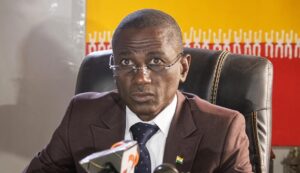
At the heart of the issue are several measures implemented by the junta that has governed the nation since 2020. These actions have consolidated authority under the current head of state, General Assimi Goïta. According to Volker Türk, these legal adjustments have effectively barred the possibility of democratic elections in Mali for the foreseeable future. He has called for an immediate restoration of the fundamental freedoms of the Malian people.
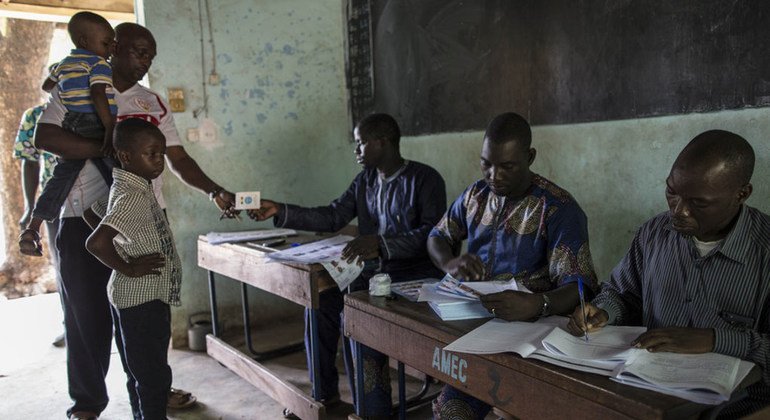
It has been nearly five years since the military coup that ousted President Ibrahim Boubacar Keïta—an event previously condemned by the UN Security Council. Since the 2018 elections, Mali has not held a presidential vote, and promises of a transition back to civilian rule appear to have been abandoned. On July 8, a new law granted Assimi Goïta the power to extend his leadership indefinitely until the country is deemed “pacified.” This follows a May decree that dissolved all political parties and organizations, a move the High Commissioner says violates the citizens’ right to vote and engage in public affairs.
Systematic crackdown on political opposition
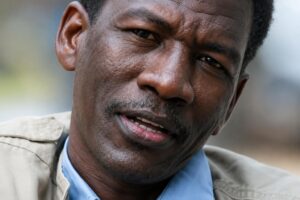
This institutional shift is accompanied by a severe security crackdown. Former Prime Minister Moussa Mara was recently targeted by the regime, having been arrested on August 1. He was accused of undermining state credibility after posting a message on X expressing support for political detainees. Volker Türk denounced what he described as the weaponization of the law to stifle dissent, noting a sharp rise in arrests of individuals from various sectors of society under similar charges.
Conflict impact and human rights violations
The security situation in Mali remains precarious due to frequent attacks by jihadist groups such as the GSIM (affiliated with Al-Qaeda) and Daech. these groups are active across the borders of Mali, Burkina Faso, and Niger. In response, the Malian military—supported by the Africa Corps, a Russian paramilitary group that succeeded the Wagner Group—has intensified its operations.
However, these military responses are also taking a heavy toll on the civilian population. Reports from Volker Türk’s office indicate that since April, there have been hundreds of instances of extrajudicial executions, arbitrary detentions, and forced disappearances carried out by all parties involved in the conflict. In a nation already struggling with instability, the UN warns that the combination of suspended elections and widespread repression threatens to trap Mali in a lasting cycle of political deadlock and violence.