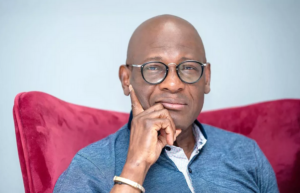

Geopolitical shifts in the Sahel region are unfolding quietly. As European presence wanes in Mali, Burkina Faso, and Niger, and Russian influence grows through para-state structures, the United States appears to be regaining momentum. However, according to Emmanuel Dupuy, president of the IPSE, this perception requires nuance. He argues that “it’s not a return to prominence, but rather confirmation that Washington has never truly left and waited for others to weaken before repositioning itself.”
In Dupuy’s view, the U.S. never abandoned the Sahel but adopted a strategy of indirect engagement, allowing internal balances to realign and European influence to erode. This approach aligns with a longstanding American tradition of pragmatic diplomacy. “Americans prioritize pragmatism,” he explains. “They negotiate with partners whose positions may not align with theirs,” prioritizing security and economic interests over ideological alignment.
Dupuy adds: “Washington does not view Russia as a threat. Instead, it sees complementary opportunities with actors who have capitalized on the strategic vacuum left by Western retreat, particularly the Europeans.” Rather than direct confrontation, a nuanced coexistence emerges, where each power leverages the space vacated by others.
Several factors, according to Dupuy, create a window of opportunity for the U.S. “Everything aligns in America’s favor. The UN’s credibility is waning, and Russia struggles to counter armed terrorist groups effectively.” The erosion of UN authority and Russia’s operational limitations open indirect redeployment pathways for Washington.
strategic dialogue and pragmatic partnerships in the Sahel
American methodology hinges on structured dialogue with existing authorities, regardless of how they came to power. Dupuy draws a parallel: “The U.S. employs the same structured dialogue with Malian authorities as it did with Afghan officials, ultimately leading to negotiations with the Taliban.” This pragmatic engagement marks a key distinction from European approaches, which have refrained from recognizing military-led governments in the region.
The U.S. strategy extends beyond bilateral engagement with Sahelian regimes. Dupuy highlights converging interests with other actors, noting: “Washington aligns closely with Turkey, and China’s limited role in certain Sahel security segments presents an additional opportunity.” On the economic front, he points to the revival of the African Growth and Opportunity Act (AGOA), a program offering tariff exemptions to African nations, including 30 Sahel countries, as a tool to deepen economic ties.
private military firms and the future of Sahel security
The question of U.S.-Russia coexistence in the Sahel frequently arises in strategic debates. Dupuy addresses this directly: “This can work precisely because neither the U.S. nor Russia will engage directly. Instead, private military companies (PMCs) and security firms will take the lead—exactly as the Americans intend.” Externalization of security operations forms the core of this model. He cites the facilitated deal between the Democratic Republic of the Congo (DRC) and Rwanda as an example: “Americans facilitated this agreement, but regular armed forces were not involved. This is the Blackwater model in action.”
Dupuy highlights the proximity of U.S.-backed PMCs to Russian Wagner Group affiliates in Libya as evidence of tacit operational understanding. “These private actors operated in close proximity without direct conflict,” he notes. Sudan serves as another testing ground, where U.S. mediation between Generals al-Burhan and Daglo could involve American contractors, mirroring Russian approaches. Here, political mediation and security presence are decoupled from traditional military projection.
Beneath these shifts lie clear economic interests. Dupuy explains: “The U.S. outsources its African presence to extractive industries it requires: gold in Mali and Burkina Faso, and uranium in Niger.” The intersection of security and resource access is central to this strategy.
Morocco’s rising role as a u.s. ally in the Sahel
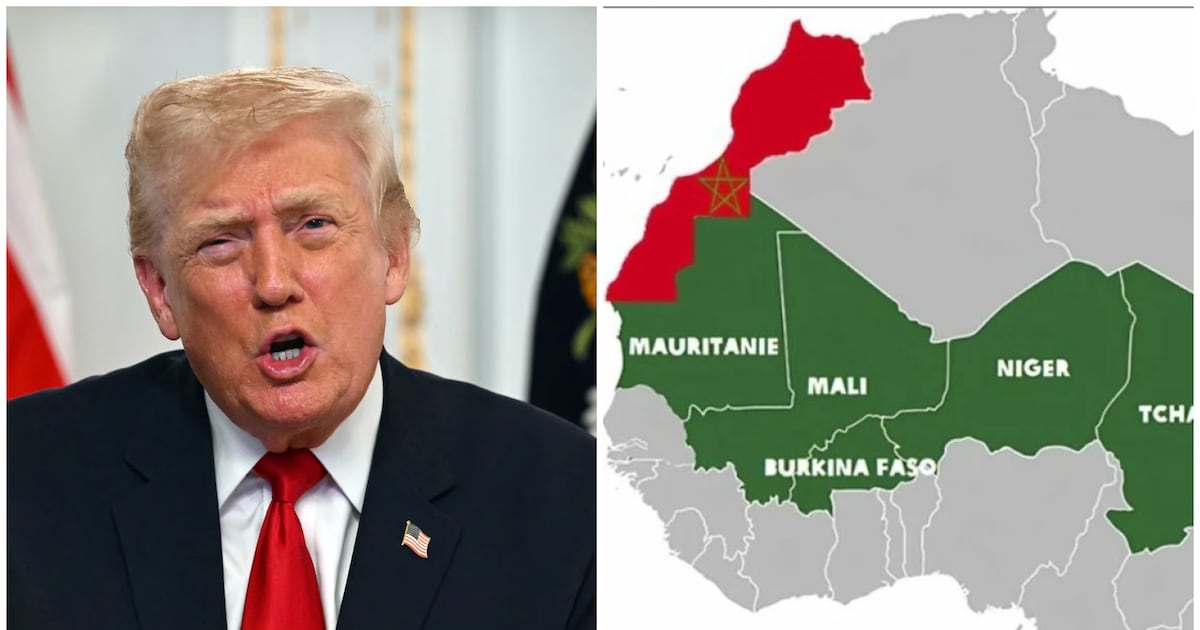
Amid this fluid landscape, Morocco occupies a unique position. Bilateral cooperation with Rabat has intensified across military, economic, and diplomatic spheres. Dupuy suggests broader convergence in the Sahel: “Likely, yes. Morocco is the ideal partner the U.S. needs.” He emphasizes that Washington cannot intervene overtly and relies on Morocco’s positive regional image to engage with governments born from military coups in Mali, Niger, and Burkina Faso.
Dupuy notes that “Malian authorities view Morocco favorably, despite their rhetoric against external interference.” Rabat’s distinct relational capital stems from this dynamic. While long-term infrastructure projects—such as logistical corridors linking Burkina Faso, Niger, Mali, and Mauritania—are decades away, other tools are already in play. He highlights Morocco’s “diplomacy of the spirit”: since 2015, the Mohammed VI Institute has trained imams from across the region, promoting a moderate, Maliki-Sufi Islam as a soft-power tool for stability and influence.
Beyond religious diplomacy, Morocco offers “economic perspectives of connectivity that few actors can match today.” This aligns with a broader strategy of African projection, visible in banking, telecom, and industrial investments. Dupuy underscores the depth of U.S.-Morocco ties: “Washington’s 2016 designation of Morocco as a Major Non-NATO Ally reflects a triangulation of African, Atlantic, and Mediterranean interests.”
He traces this alignment to Morocco’s consistent commitment to Euro-Mediterranean integration since the 1995 Barcelona Declaration, the 2005 Euromed Partnership, and the Union for the Mediterranean. This continuity enhances Rabat’s credibility as a stable interlocutor.
regional power shifts: Algeria’s diminishing leverage
The Algerian question remains a critical variable. Dupuy expresses skepticism about Algiers’ remaining options: “Honestly, I don’t see any.” He argues that Algeria’s diplomatic maneuverability is constrained, particularly on the Sahara issue, where Washington has reaffirmed the autonomy plan as the sole basis for discussion. Algerian initiatives appear designed to maintain diplomatic stasis or create temporary tensions rather than alter power dynamics substantively.
He points to Algeria’s failed alternative energy projects as evidence of its shrinking influence, constrained by shifting regional alliances and global power priorities. The Madrid meeting marked a turning point in the Sahara dossier, shifting debates from ideology to practical implementation: governance, economic development, maritime zones, agriculture, and exclusive economic zones.
In this evolving chessboard, the Sahel is no longer merely a theater of security rivalries but a space for strategic realignment. Extractive interests, military outsourcing, religious diplomacy, and logistical corridors intertwine. The U.S. adjusts its posture, while Morocco emerges as a pivotal player bridging the Atlantic, Mediterranean, and African depths.