Government leaders across several West African nations have significantly ramped up their suppression of civil liberties while tightening their grip on political power throughout 2025, according to the latest World Report 2026 released by Human Rights Watch.
In Nigeria and across the Sahel, civilians and vital infrastructure have faced repeated assaults from both Islamist insurgent groups and state security forces alongside their partners. Simultaneously, military regimes in the Sahel have sidelined international and regional monitors, effectively dismantling the institutions responsible for holding human rights violators accountable.
“The military junta leaders in the Sahel region have intensified their efforts to silence free speech and restrict other fundamental rights, showing little interest in returning to promised democratic governance,” noted Mausi Segun, the Africa director at Human Rights Watch. “There is an urgent need for broader regional action to pressure West African authorities into restoring democratic spaces and protecting the human rights of their people.“
In its 36th annual World Report, a 529-page document, Human Rights Watch evaluates the state of human rights in more than 100 countries. In the introductory essay, Executive Director Philippe Bolopion warns that reversing the global tide of authoritarianism is the defining struggle of this generation. As the international human rights framework faces unprecedented threats from various global powers and the Trump administration, Bolopion calls for a strategic alliance between civil society and rights-respecting democracies to safeguard basic freedoms.
- In Niger and Mali, the ruling authorities have suggested extending their democratic transition periods by five years and have banned activities by political parties. Meanwhile, Chad has moved to eliminate presidential term limits.
- Governments have persistently attacked freedom of expression and independent media. In Burkina Faso and Mali, activists, journalists, and critics of the military regimes have been victims of arbitrary arrests, enforced disappearances, or illegal conscription. In Nigeria, the government has used broad interpretations of cybercrime laws to prosecute journalists and social media users. Former Nigerien President Mohamed Bazoum continues to be held in arbitrary detention without a trial, and in Chad, opposition leader Succès Masra was sentenced to 20 years in prison following politically charged accusations.
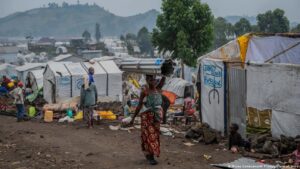
- Islamist militant groups, specifically the Islamic State in the Sahel (EIS) and the Group for the Support of Islam and Muslims (JNIM), have carried out massacres against civilians in Burkina Faso, Mali, and Niger. Simultaneously, the Burkina Faso military and state-backed militias, along with Malian forces and the Russian-linked Wagner Group (now rebranded as “Africa Corps”), have been implicated in the summary execution of Peul civilians.
- In Nigeria, a resurgence of the Boko Haram faction known as Jama’atu Ahlis Sunna Lidda’awati wal-Jihad has led to deadly assaults in Borno State. In the northwest, bandit gangs continue a campaign of kidnapping and murder as the government struggles to protect local communities or hold those responsible to account.
- Mali, Niger, and Burkina Faso have accelerated their isolationist policies by completing their withdrawal from the Economic Community of West African States (ECOWAS) and announcing plans to leave the International Criminal Court (ICC), which severely threatens the ability of victims to seek justice.
Human Rights Watch emphasized that the African Union and other international bodies must take more decisive steps to protect civilians from these escalating abuses and violent attacks.