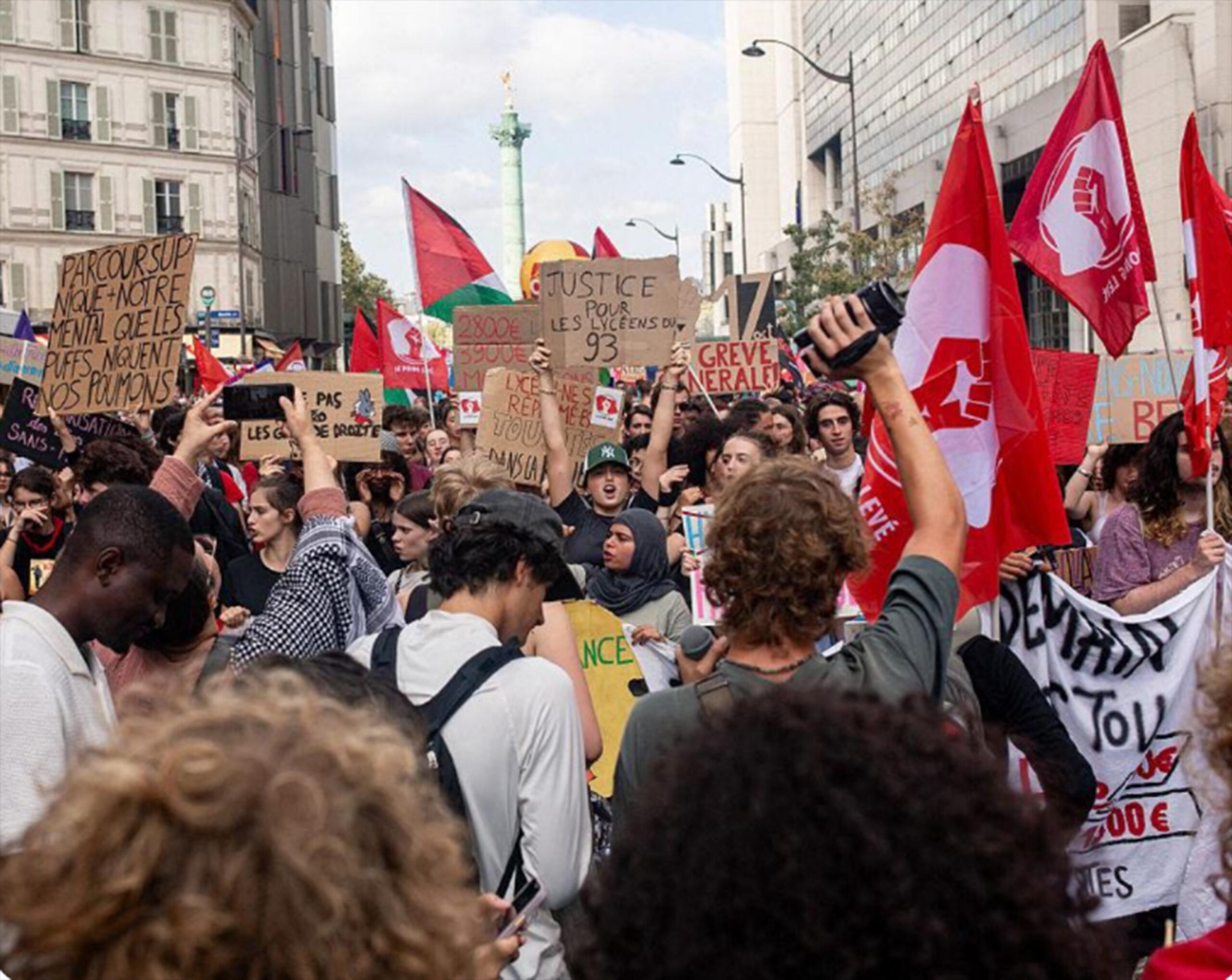

The streets of France are once again echoing with the voices of a generation that feels unheard. As the country inches closer to a pivotal presidential election, the ongoing youth protests have evolved from isolated classroom grievances into a nationwide movement questioning the very foundations of the nation’s education system.
Unpacking the roots of a growing educational discontent
The spark that ignited this fire was lit in the classrooms of France. From the first weeks of the school year, high school students began speaking out against the crumbling infrastructure, overcrowded classes, and persistent teacher shortages that have plagued their learning environment. These concerns are not merely logistical—they reflect a systemic failure that threatens to undermine the future of an entire generation.
The grievances extend beyond material conditions. The pressure of university admissions, particularly through the Parcoursup platform, has added a layer of anxiety, leaving many young people feeling trapped between unrealistic expectations and scarce opportunities. What began as a series of localized complaints has rapidly gained momentum, drawing in university students, teachers, and even parents into a shared demand for change.
The widening gap between ideals and reality in French schools
France’s education system is built on the principle of equal opportunity, yet the current crisis exposes glaring disparities. In some neighborhoods, students attend schools with outdated facilities and chronic staff shortages, while others benefit from better resources and more personalized support. The result is a fractured system where geography and socioeconomic background determine academic fate more than ever before.
Recent government consultations revealed that school schedules—often criticized for being overly rigid—ranked among the top complaints, alongside deteriorating buildings and the persistent challenge of finding substitute teachers. While authorities have pledged to allocate additional funding in the 2027 budget, skepticism lingers. Critics argue that financial promises alone won’t address the uneven distribution of resources or the structural flaws that perpetuate inequality.
When education protests merge with broader social unrest
October 17 marked a turning point. What started as a youth-led movement has intersected with broader social discontent, uniting students with workers, retirees, and activists from movements like the Yellow Vests. The convergence of these groups underscores a shared frustration with economic hardship, crumbling public services, and a political class perceived as out of touch with ordinary citizens.
Yet this alliance is not without tension. While some demonstrators focus on education reform, others rally against inflation or pension cuts, highlighting the fragmented nature of the protest. The diversity of demands complicates efforts to channel the movement into a unified agenda, even as it amplifies the collective frustration.
Violence overshadows peaceful dissent in key cities
Protests in Paris and Marseille took a violent turn, with clashes between demonstrators and law enforcement leaving property damage in their wake. While the majority of marches remained peaceful, these incidents have reignited debates about police tactics, the right to protest, and the responsibility of authorities to safeguard both public order and civil liberties.
Such confrontations risk overshadowing the legitimate concerns fueling the movement. Behind the headlines of unrest lies a generation demanding recognition—not just for their immediate struggles, but for their role in shaping France’s future.
The 2027 election looms large over the education debate
With President Emmanuel Macron’s second term nearing its end, the youth protests present a critical test for his administration. The questions raised—how much should France invest in education? How can systemic inequalities be dismantled? What safeguards can protect young people from economic precarity?—will undoubtedly shape the political discourse ahead of the 2027 vote.
Yet the movement’s significance extends beyond electoral politics. It forces a reckoning with France’s social contract: Can the republic truly deliver on its promise of equal opportunity when its schools are a microcosm of deepening divides? The answer may well determine whether this generation remains disengaged or becomes a driving force for change.
The path forward: From outrage to action
The challenge now is to transform raw emotion into sustainable reform. Protests have succeeded in exposing systemic failures, but lasting solutions require more than slogans. It demands a collaborative approach—one that includes students, educators, and families in the decisions that directly impact their lives.
As the 2027 election approaches, the youth protests serve as a reminder that education is not just a service but a cornerstone of France’s social fabric. The question is no longer whether the system is broken, but whether the nation is ready to fix it.